There’s an economy that became invisible from sheer familiarity: the economy of the click. Everything you see today — the headline, the thumbnail, the pinned comment, the whole channel — competes for your attention, and it discovered a while ago that outrage pays better than admiration. Biting gets more views than applauding. And wherever something pays, something multiplies.
This isn’t an impression: it’s measured, and with the most demanding design there is. A team of researchers took advantage of an archive of thousands of real randomized controlled trials — variants of the same headline tested on real readers, nearly twenty-three thousand experiments, some five and a half million clicks across more than three hundred seventy million impressions — and found that negative words in a headline increase consumption, and positive ones reduce it. The magnitude, stated without inflating it, is modest: in an average-length headline, each additional negative word raises the probability of a click by 2.3% (Robertson et al., 2023). A 2.3% doesn’t sound like much. Multiply it by every headline, from every outlet, every day, for years, with everyone learning from the outcome — and you have an entire civilization training itself to bite. Small, constant biases are the ones that end up reshaping the landscape.
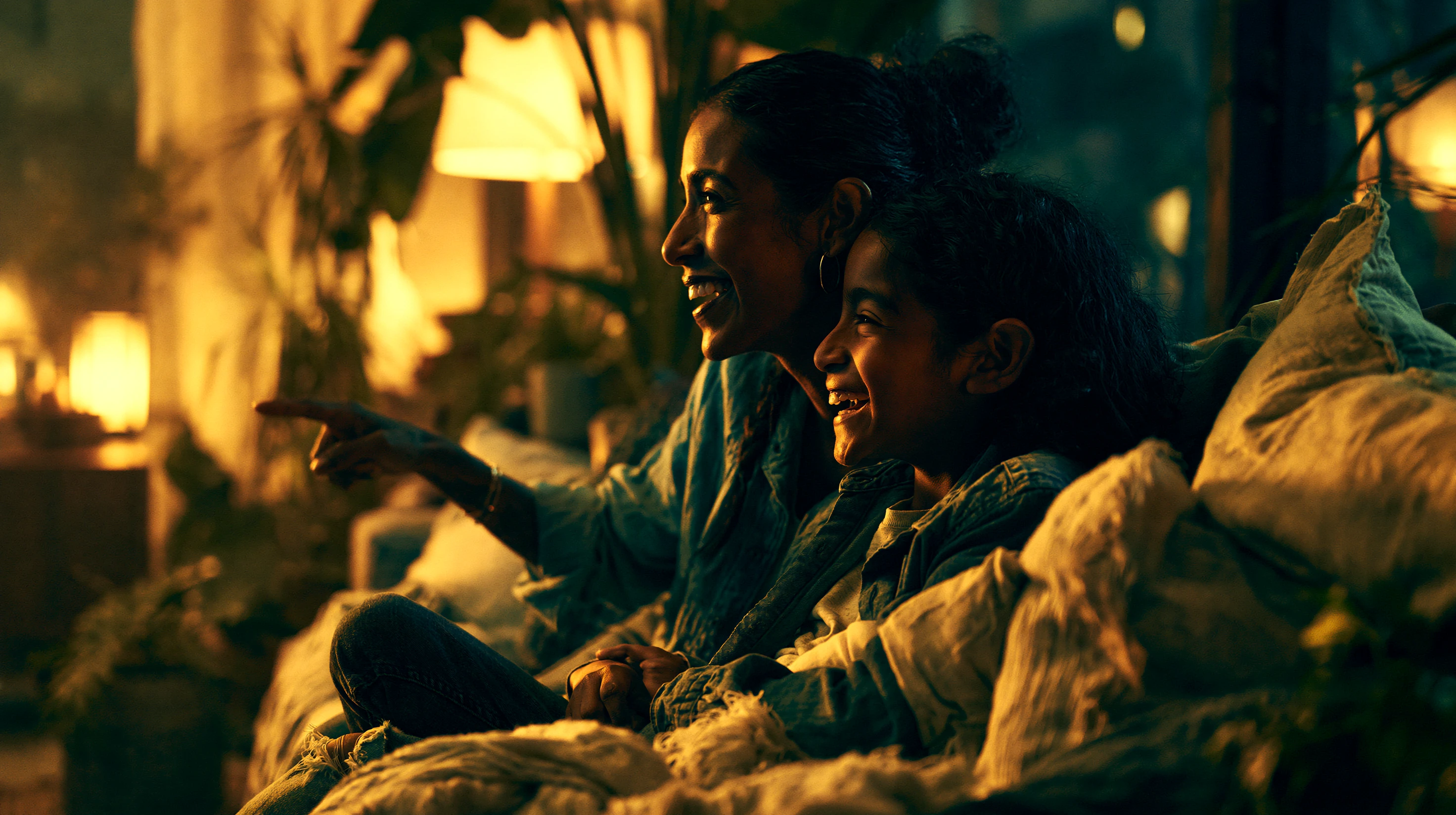
Our sons and daughters grow up inside that economy. Not just in their timeline: in the trending topics, in what the machine suggests to them, in what their friends forward to the group chat. They ingest, daily and without noticing, a model of how to talk about other people’s work. And the dominant model is the school of fish: fast, acidic, in a pack, always ready to discard.
The irony is that the trap includes us. We spent decades mocking Hollywood’s formula — how predictable, how commercial — and today we descend like piranhas on the movie that wasn’t a box-office hit, on the athlete who had a bad game, on the artist who dared something strange. People who never kicked a ball or got up early to train hand down verdicts on those who did. And we call it “having standards.”
What the school of fish didn’t see coming
Citizen Kane didn’t recoup its cost at the box office. Eighty-five years later we’re still arguing over whether it’s the best film in history: it topped, for fifty years — five consecutive polls, from 1962 to 2002 — the once-a-decade Sight and Sound list, the trade’s benchmark; in 2022, with more than sixteen hundred voters, it came in third, behind Jeanne Dielman and Vertigo. And it’s still number one on the American Film Institute’s list. That’s the point: a film the market rejected has spent nearly a century on the podium of the conversation.
Blade Runner underperformed expectations in 1982 and polarized critics — today it’s an undisputed science-fiction classic. The Shawshank Redemption closed its theatrical run with about 16 million against a 25 million budget, and became a cultural phenomenon years later, through video and television. It’s a Wonderful Life lost half a million dollars for the studio and finished 26th at the 1947 box office; its rise to classic status came three decades later. The Iron Giant cost around 50 million, grossed 31 worldwide, and was buried by a studio that, in its own director’s words, didn’t understand what it had on its hands: they made it a single poster. Fight Club divided critics in its day and disappointed in theaters before becoming, according to The New York Times, the cult film that defines our era. The Thing, by John Carpenter, was a critical and box-office failure in 1982 and is today a cult horror classic. The Big Lebowski, by the Coen brothers, passed almost unnoticed at the 1998 box office and divided critics; today it has dedicated festivals and a cult status few comedies reach. And Scott Pilgrim vs. the World failed commercially in 2010 despite good reviews, before becoming a cult phenomenon.
A nuance worth adding makes the case more interesting, not less: in several of these, the critics weren’t wrong — the market was. Kane and Shawshank were celebrated on release and still failed at the box office. The school of fish isn’t always the critics. Sometimes it’s us, voting with our wallets and our thumbs.
And Messi lifted his first World Cup in 2022, at age 35, after entire years in which the school of fish had already passed judgment on his legacy with the national team: no goals and eliminated in the quarterfinals in 2010 and 2011, three finals lost in three consecutive years, and a retirement from the national team that he walked back.
The point isn’t that criticism is always wrong. It’s that the instant bite is a terrible judge, and yet it’s the one that gets rewarded most, copied most, and the one our children see modeled a thousand times a day.
What it can leave them with
A child who grows up seeing this is how everyone talks about everything learns that this is how everyone thinks. That discussing means discarding. That having an opinion means having a complaint ready to go. A reflex can take shape in them that confuses things that aren’t the same:
- Confuses passion with aggression.
- Confuses constructive criticism with criticism, period.
- Confuses high standards with arrogance.
- Confuses demanding excellence with contempt.
And that reflex costs dearly. It clouds thinking for yourself — because repeating the group’s verdict is easier than forming your own. It gets in the way of enjoying art and culture. And, most quietly of all, it can snuff out the desire to create: nobody works up the nerve to step onto the field if what they’ve seen their whole life is how the ones who dare get torn apart. The theater of toxic criticism doesn’t just hurt the one on the receiving end; it scares off the one watching from the seats who was thinking about trying.
Appreciating is the hard skill
Here’s the twist, and it’s worth stating in full: trash talk is the easy part. It costs nothing. It requires having done nothing. Appreciating, on the other hand, asks for more: it asks you to look at the process and not just the result, to see the good parts of a whole that failed, to recognize the brave idea behind the clumsy execution, to notice what was ahead of its time. Appreciating takes creativity, maturity, and sometimes courage. And doing something — anything — is worth more, and deserves more respect, than tearing down what someone else made.
That’s what we want them to learn. And it isn’t taught with a lecture: it’s taught by modeling it, out loud, at the table, in front of the same screen.
This isn’t about banning criticism — raising appreciators isn’t raising flatterers. It’s about order and tone. Facing a movie, a song, a classmate’s assignment, someone’s project: what worked first. What worked, what was brave, what part shined, what it attempted. The criticism comes after, and it comes out better, because by then you’ve actually looked.
And some things don’t even call for criticism. Not everything has to be analyzed. The dog enjoys one hundred percent of the walk: it doesn’t examine every step, doesn’t question where the bone came from, doesn’t rate the park with stars. Sometimes maturity isn’t having the last word: it’s letting go of the need to have it and simply enjoying what’s there.
Tagore put it in an image that isn’t forgotten: “If you shed tears when you miss the sun, you also miss the stars.” (Stray Birds, 1916, in Tagore’s own English translation.) The grief over what you expected can block out all the good that’s actually there.
Don’t let expectation block your appreciation. Don’t let what you already know keep you from seeing what’s new. Form your opinion — and leave it open to change. Look in the mirror before handing down verdicts. Be humble. Focus on your own: your effort, your creativity, what you did accomplish.
Why it’s on us
Because the reflex is inherited, and so is the antidote. A child who watches their mother or father look first for what’s good — in an average movie, in the team that lost, in the teammate who made a mistake — learns that this is one possible way of being in the world. One that doesn’t bite for sport.
Dorothy Law Nolte wrote it in 1954, for a family column in a California newspaper, in a poem that went on to travel the world: “Children learn what they live.” Two of its lines are, word for word, this same conversation: “If children live with criticism, they learn to condemn… if children live with praise, they learn to appreciate.”
It’s a poem, not a study, and it’s worth not confusing the two. But it points at something psychology did document: children acquire new behaviors simply by watching an adult perform them, without anyone rewarding or explaining them. It’s the finding behind Albert Bandura’s experiments with his colleagues Dorothea and Sheila Ross, in 1961 — which, to be precise, measured the imitation of aggression, not of appreciation. That appreciation travels through the same channel is our reasoned bet, not a laboratory result. But if the behavior children copy without anyone teaching it to them is the one they see you do, the question that remains is uncomfortable, and it’s the right one: what do they see you do when something doesn’t sit well with you?
A more positive world doesn’t start with a campaign. It starts at a table, with a family that learns to look first at what worked. It’s on us to model the world we want our children to see — and, above all, the one we want them to believe is possible.
Sources and references
Only sources that were consulted and read directly are listed.
Evidence
- Robertson, C. E., Pröllochs, N., Schwarzenegger, K., Pärnamets, P., Van Bavel, J. J., and Feuerriegel, S. (2023). “Negativity drives online news consumption.” Nature Human Behaviour, 7(5), 812–822. — https://pmc.ncbi.nlm.nih.gov/articles/PMC10202797/
- Bandura, A., Ross, D., and Ross, S. A. (1961). “Transmission of aggression through imitation of aggressive models.” Journal of Abnormal and Social Psychology, 63, 575–582. — https://pubmed.ncbi.nlm.nih.gov/13864605/ (the study’s bibliographic record was verified; the repository does not offer an abstract)
Texts cited
- Tagore, R. (1916). Stray Birds. New York: The Macmillan Company; translated from Bengali into English by the author himself. — https://www.ibiblio.org/eldritch/rt/stray.htm (the line was checked against the text of that edition; its numbering varies between editions, so none is given)
- Nolte, D. L., “Children Learn What They Live,” first published in 1954 in a column of The Torrance Herald; expanded in 1998 into the book of the same name written with Rachel Harris. — https://www.rootsofaction.com/children-learn-what-they-live-lessons-from-dorothy-law-nolte/ (the lines quoted correspond to the wording circulated from the 1998 book; no facsimile of the original 1954 column was located)
Rankings
The box-office figures, budgets, and critical reception of the films that carry numerical data were checked one by one against each film’s documented record. Three other titles from the original draft list — The Thing, The Big Lebowski, and Scott Pilgrim vs. the World — are kept at the author’s discretion, characterized in qualitative terms for their well-known initial commercial failure and later cult status.
A clarification about praise, because it’s where the most exaggeration happens. This text is about modeling appreciation in front of your children, not about how to praise a child. Those are two different things, and the second is scientifically disputed territory: the literature on praise and “growth mindset” has been going through an open methodological debate for years over the real size of its effects, with meta-analyses and counter-replies published in the same journal. That’s why we don’t cite it here, and don’t need to. Anyone who tells you “science proved” how you should praise a child is selling you as settled something that isn’t. The full audit of this article, with that discussion and the sources that could not be read and were therefore not cited, is at resources/research/aplaudir-cuesta-mas.md.