Situations
When what happens, happens
The call from the teacher, the party they weren't invited to, the night they came home different. Real scenarios, with what's worth looking at before you act — and several ways in, never just one.
The call from the teacher, the party they weren't invited to, the night they came home different. Real scenarios, with what's worth looking at before you act — and several ways in, never just one.
First, what we believe. Your child isn't one person: they're many — changing from day to day, from hour to hour, from one context to the next. Raising them well demands reading the person who arrived today, while holding steady what doesn't change: the stability, the structure and the clear rules that keep them safe.
That's why there are no formulas here. There's no single recipe — no two daughters or sons are alike, and yours isn't even the same as yesterday. Every situation in this section offers context, awareness, what's better avoided, and several different ways in — no ranking — so you decide which one fits your home, your child, today. Just like the whole library: raw material, not an instruction manual.
And make it yours. The best response to a situation is the one you build: reflect, adapt, combine ways in — and if you want more perspectives, check the panel (six at once) or talk with any of the voices at the table, who would see each situation differently on purpose.
What this is — and what it isn't. Everything this house offers, in any form, is peer commentary and suggestion — not medical, psychological or legal advice. It's every mother's and every father's responsibility to stay alert, to notice the situations and to seek professional help when it can serve — and some situations require professional intervention: each entry flags its warning signs. In an emergency, contact your local emergency services.
Directory of helplines by country → Official emergency, child-protection and crisis numbers, verified one by one.
At the daycare door, at a relative's house, even when you go to the bathroom: he clings, cries, begs you not to leave. Every goodbye is a drama, and you leave with a tight heart and the doubt: are you leaving him well, or abandoning him?
At bedtime he drops the question that squeezes your chest: «are you going to die?», «am I going to die?». It's not a ploy to delay bed: he's just discovered that life ends and doesn't know what to do with that.
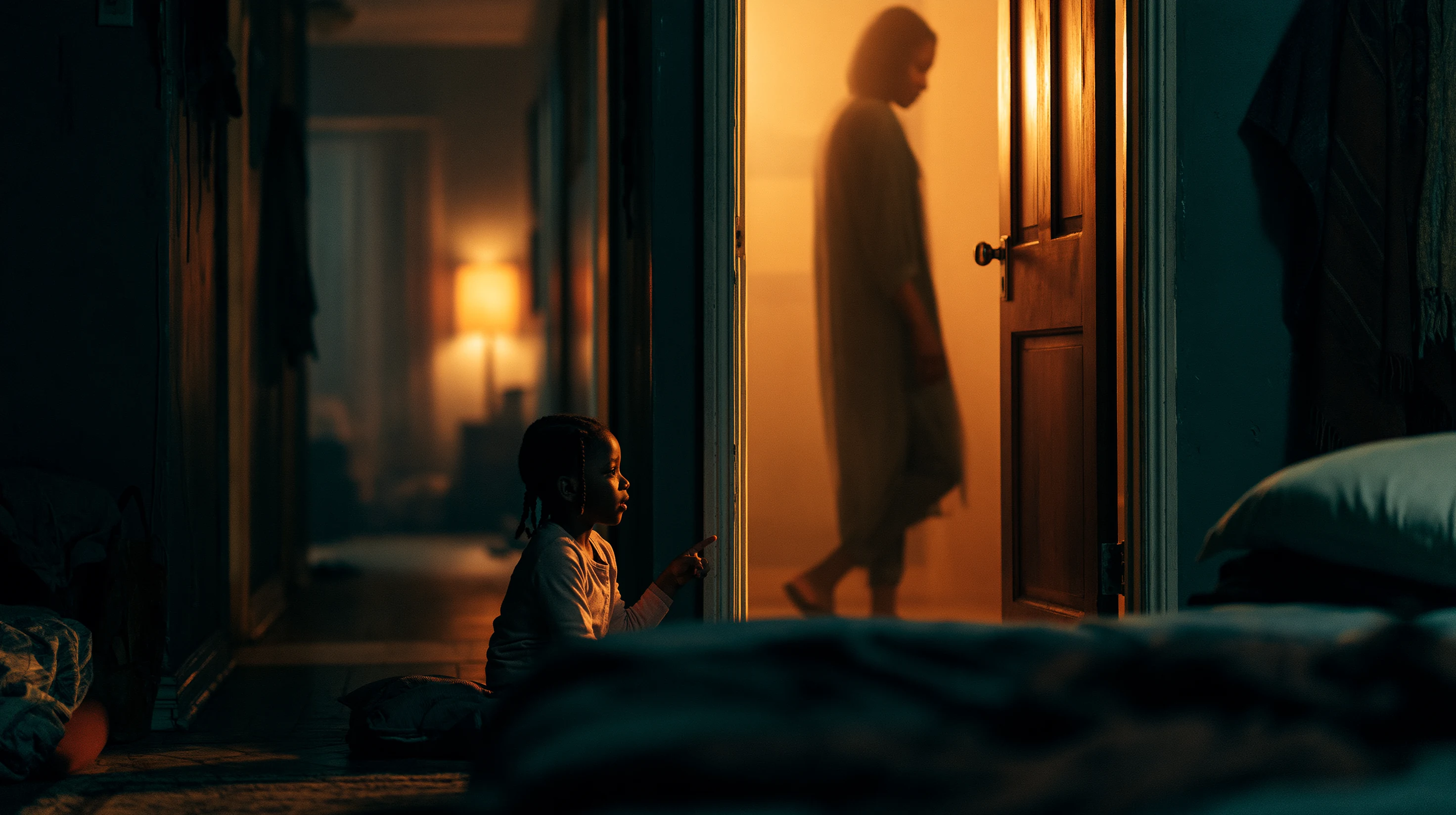
You turn off the light and the negotiation begins: the door a little more open, water again, «stay a little while». Your five-year-old daughter isn't afraid of the bed — she's afraid of what the dark lets her imagine.

The sky darkens, the first thunderclap falls and he runs to hide: covering his ears, trembling, seeking your arms or crawling under the bed. Every storm is a small earthquake at home, and you can't always calm the weather.
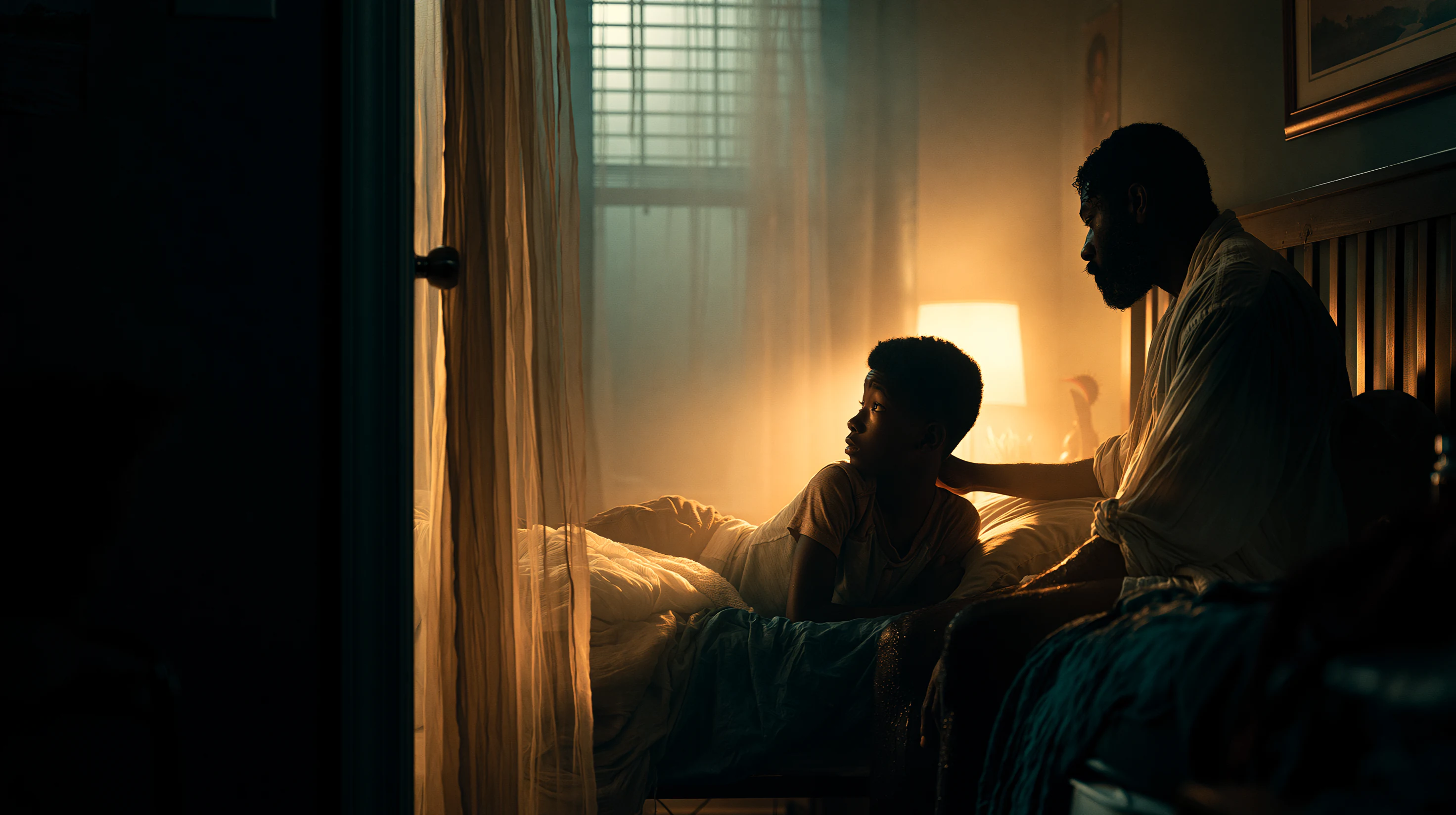
It was a crash, a dog that lunged at him, an earthquake, a moment lost in a crowd. The danger passed, but your son is different now: he jumps at any noise, won't sleep alone, and keeps retelling it.
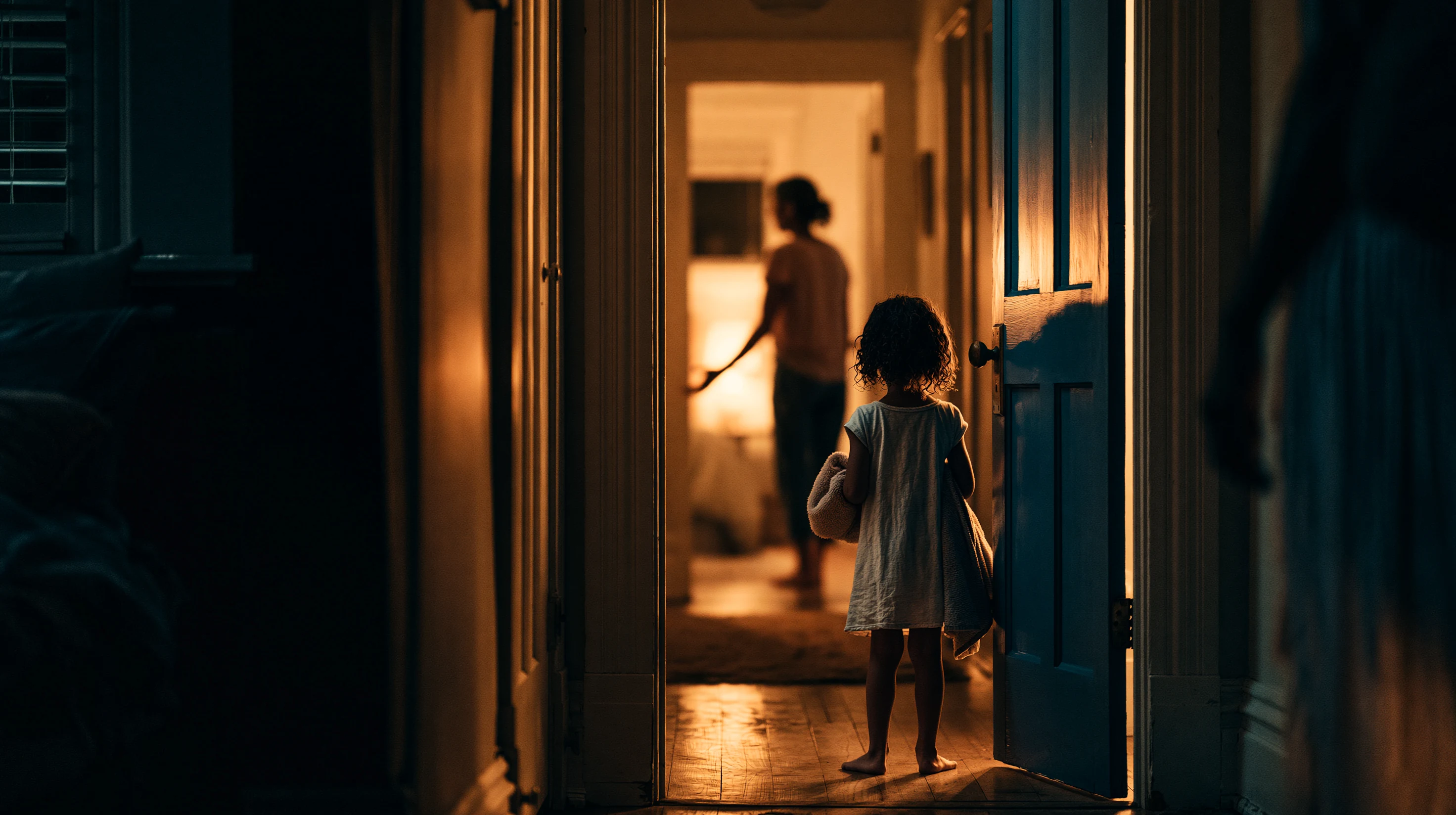
You've put her to bed, read to her, given her water. And ten minutes later she appears again at your door: 'I can't sleep alone'. Your seven-year-old asks it every night, and every night you waver between giving in and holding firm.
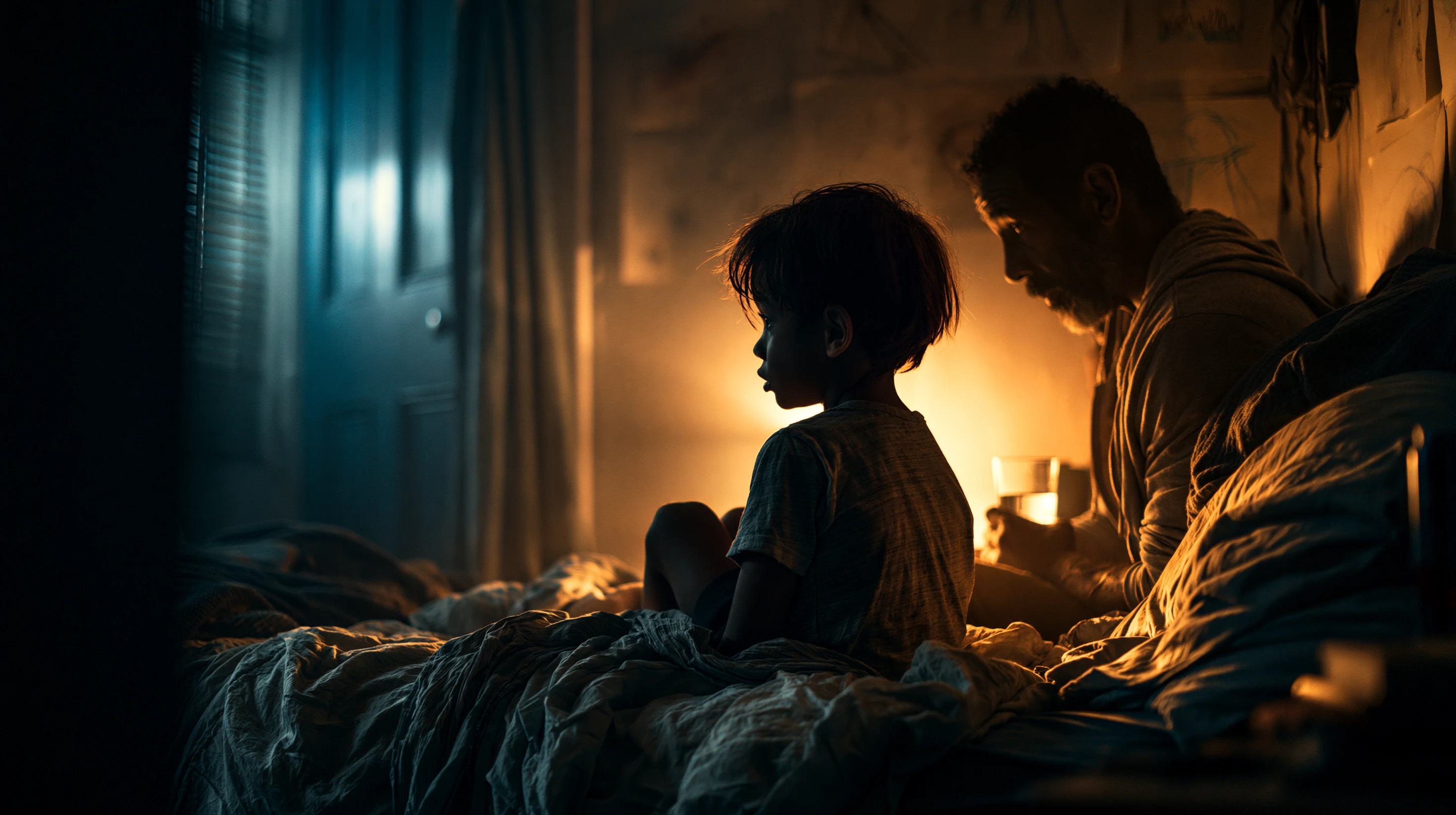
Again, at the same hour, the crying from his room. You arrive and your son is sitting up, sweaty, telling you in pieces a dream that keeps repeating. It's not the first night this week — and you're starting to worry.
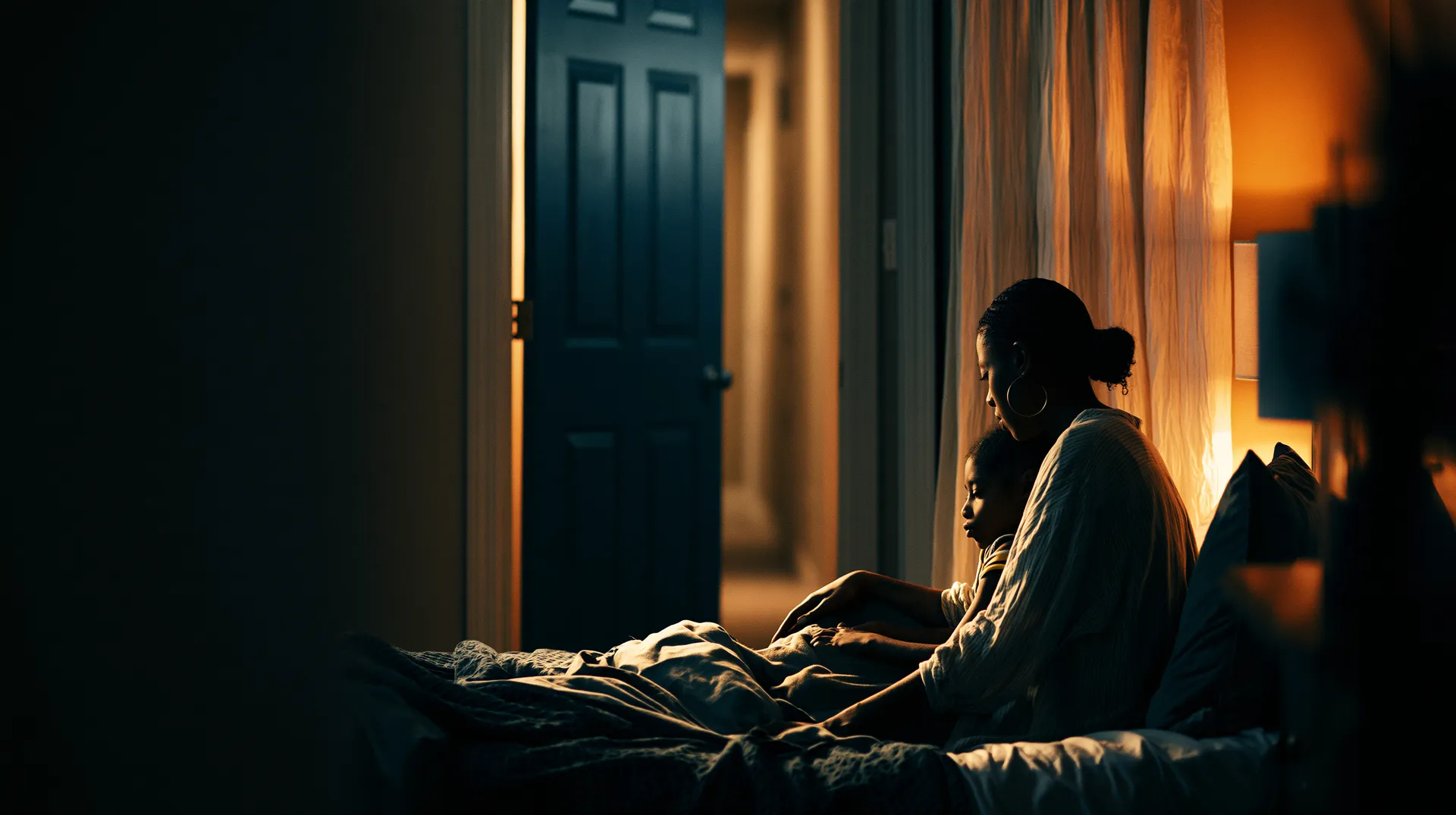
A couple of hours after falling asleep, he bolts upright screaming, eyes open, sweaty, agitated. You call him, no answer: he seems awake but doesn't see you, doesn't recognize you, and all you do to calm him seems to make it worse.

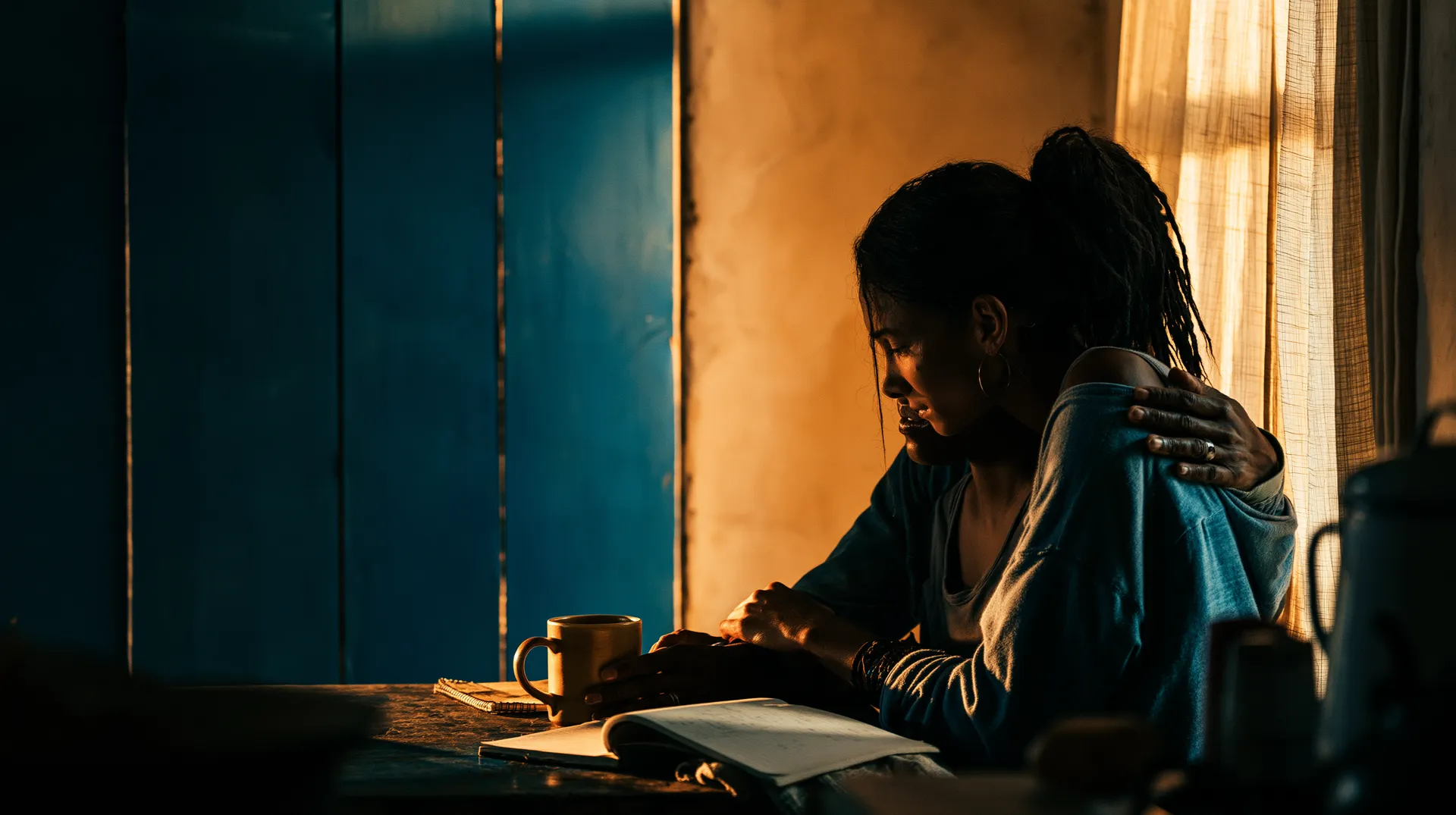
He knows the material — you went over it together — but the night before the test his stomach hurts, he doesn't sleep, and the next day he goes blank. The grade doesn't reflect what he knows, but the fear that took hold of him.
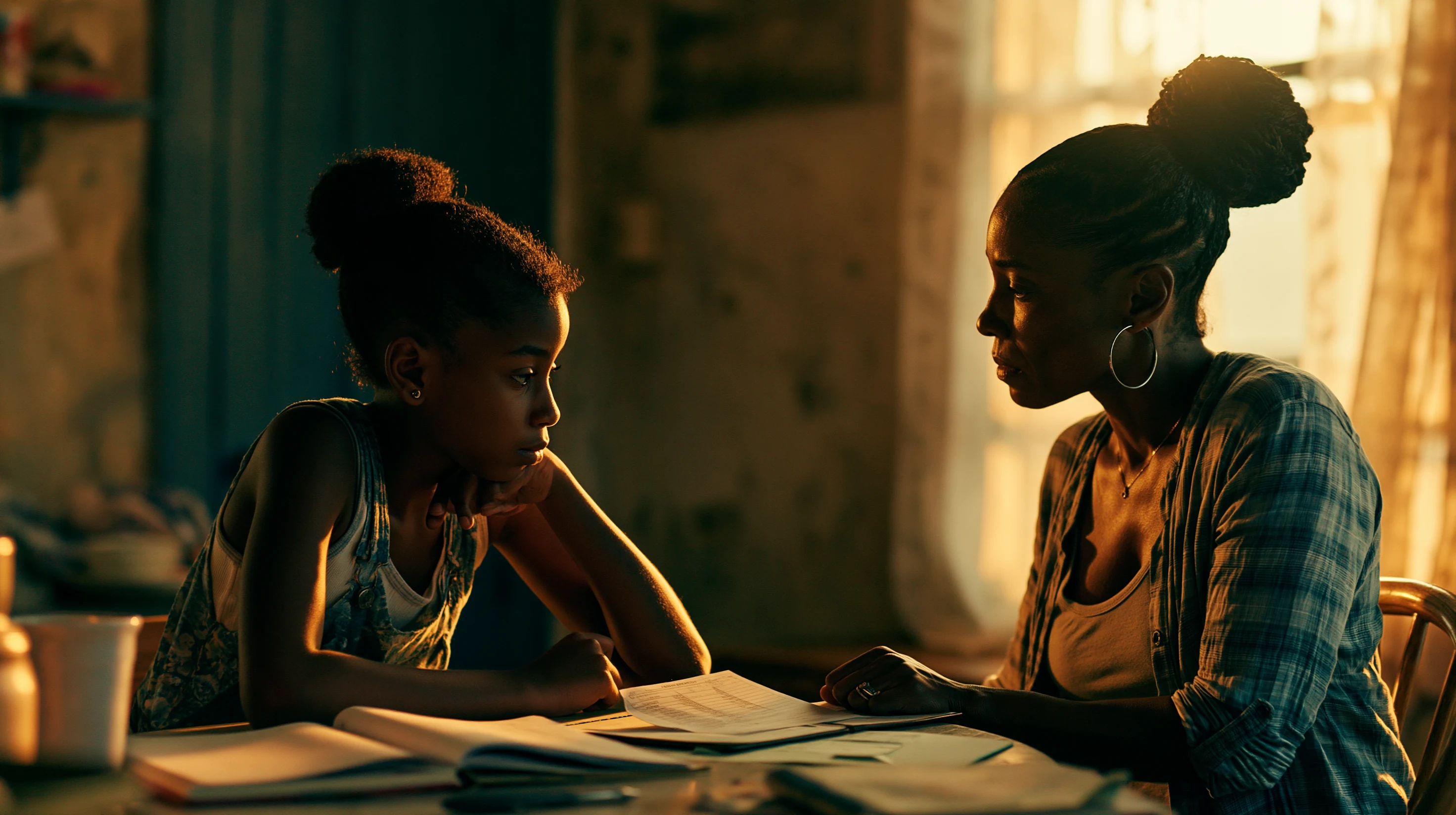
She was always the easy student, no headaches. Then suddenly, this term, the grades fell: she failed two, handed work in late, «I forgot». Your twelve-year-old, the same girl as always, isn't performing like herself.
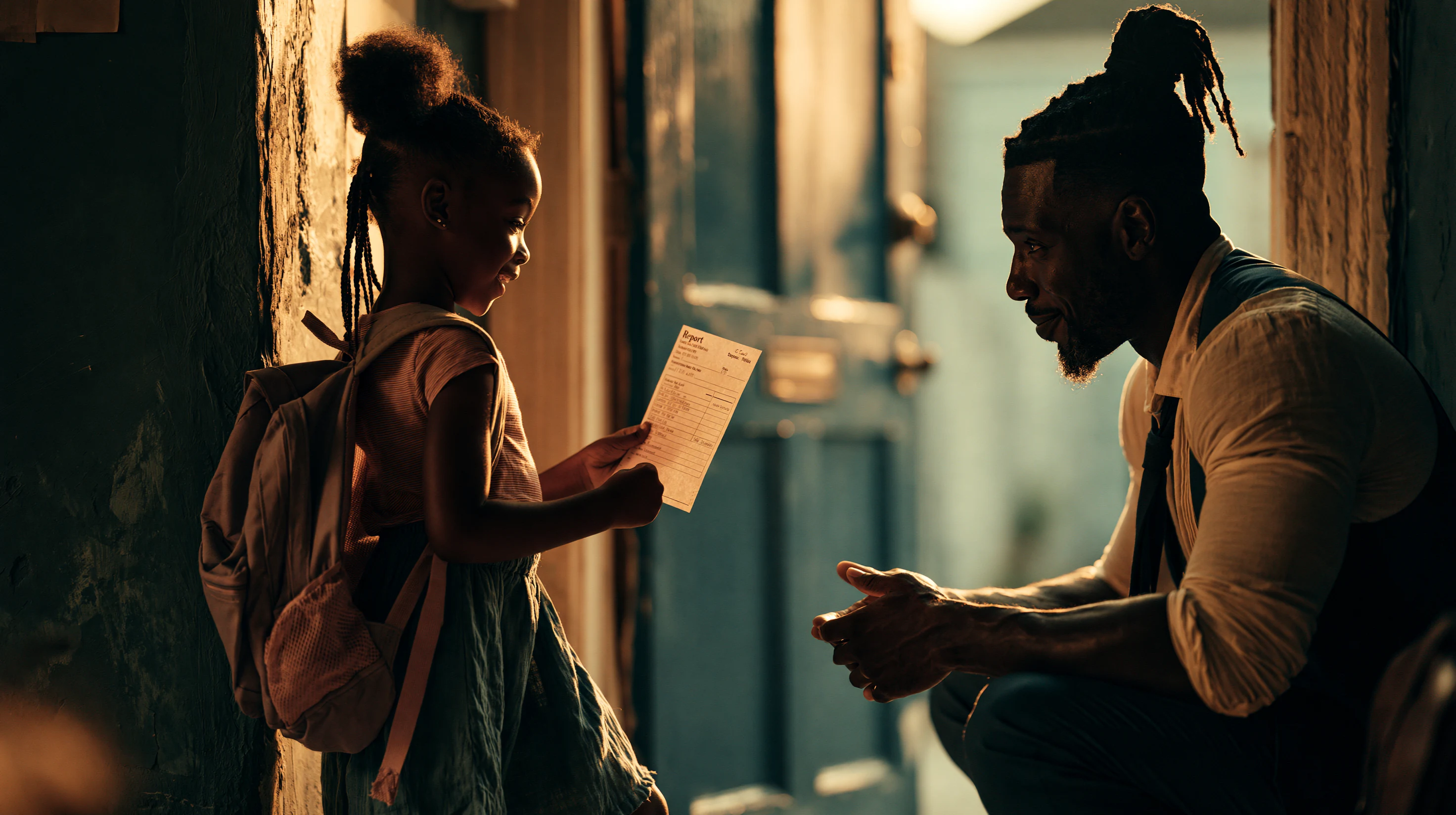
The report card arrives and it's a good one: everything high, the teacher's praise, that proud little face that fills you. Your daughter brings the paper almost running. And you, happy, are about to say the first thing that comes to mind.
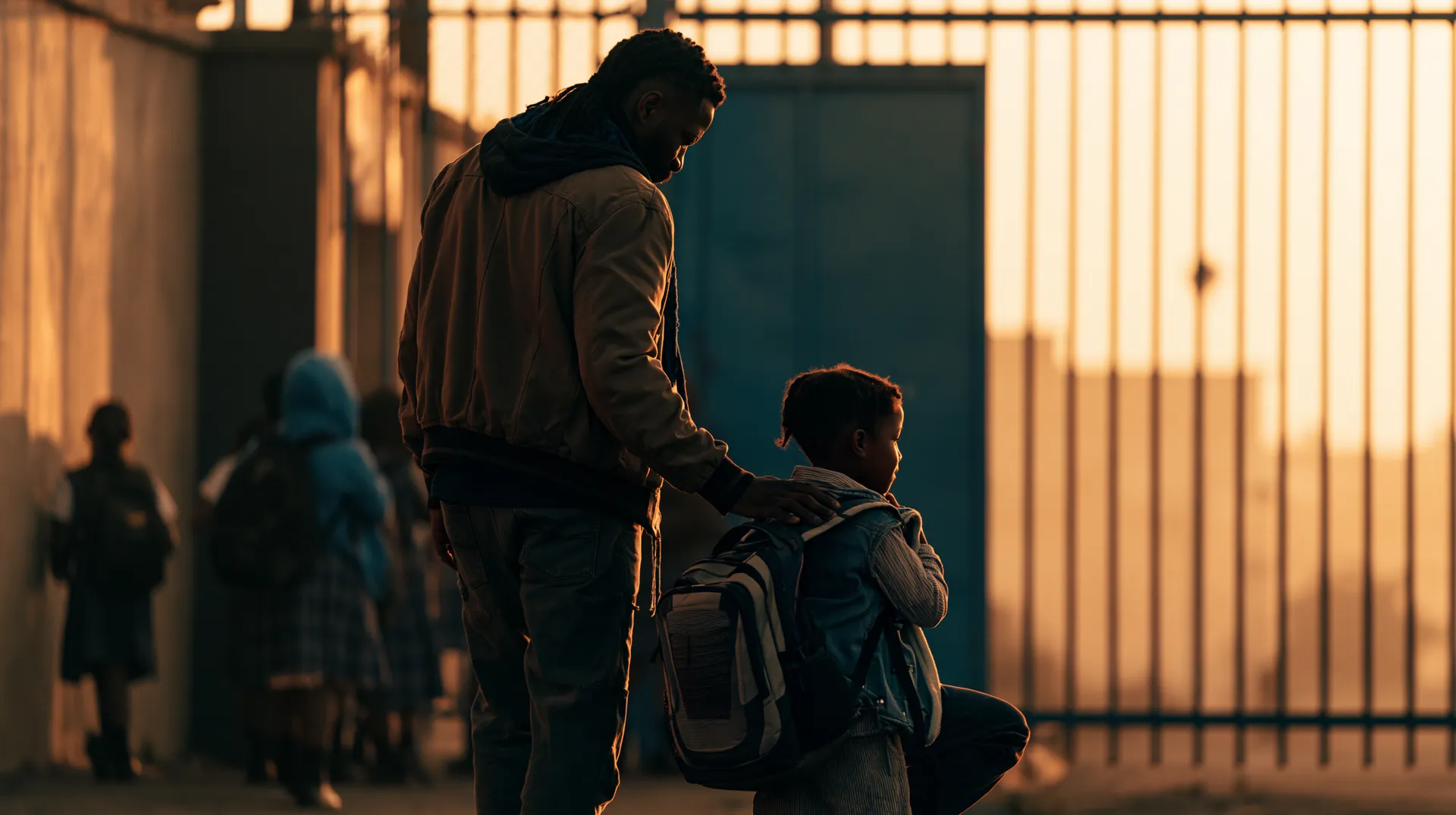
Because of a move, a job change or a hard decision, he enters a new school with the year already started: the groups are formed, the codes already run, and he arrives from outside into a world that got going without him.
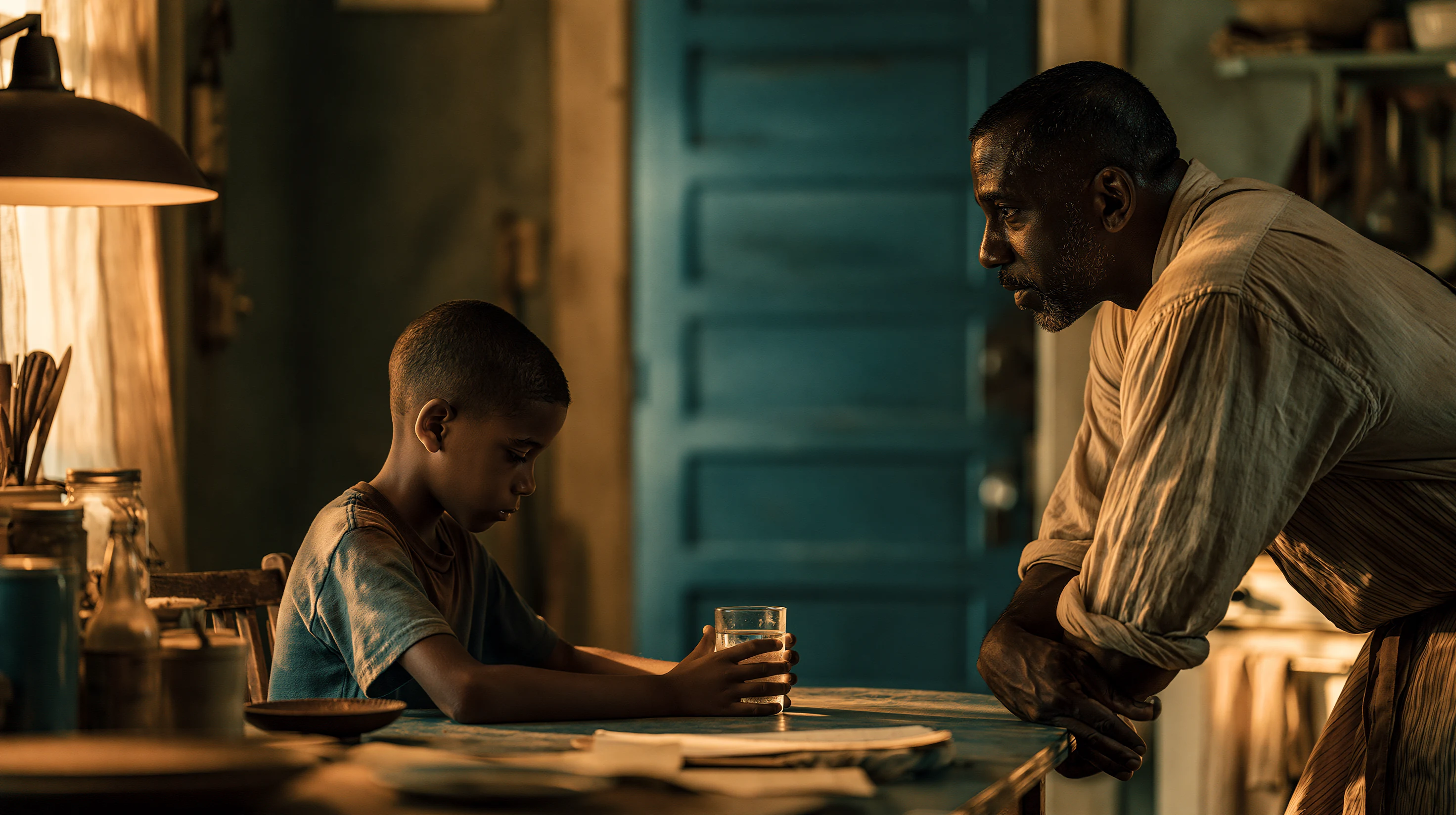
The school lets you know: he copied on a test, passed off work that wasn't his, or did it with an app and turned it in as his own. Your son, the one you keep pushing toward honesty, cheated — and now you feel he also let you down.
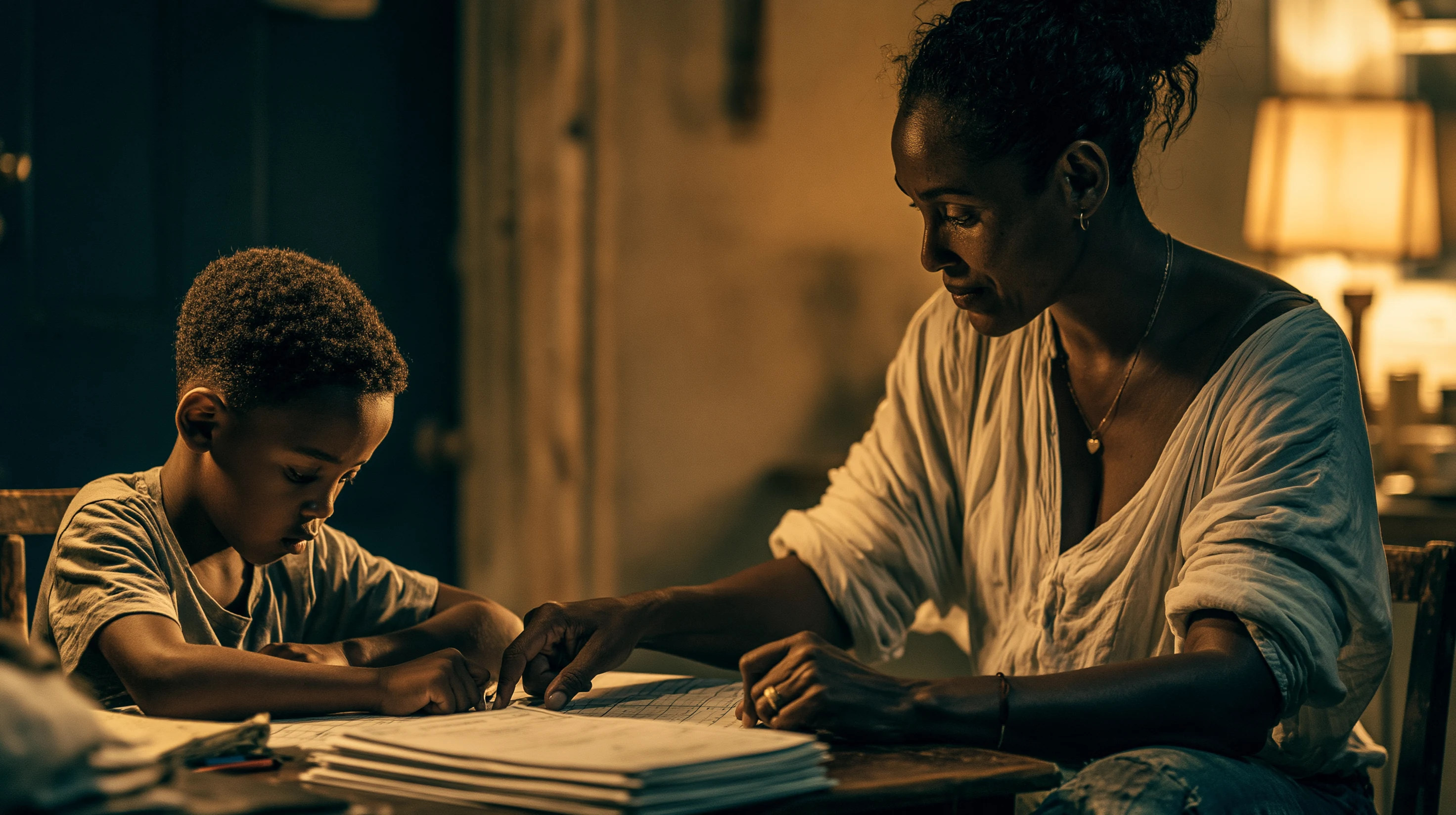
It's not one bad term: it's several. Your son turns things in half-done, forgets assignments, scrapes by or less. You've tried talking, pushing, helping — and the report card comes back the same. You're running out of ideas.

Every afternoon, the same war: he stalls, gets distracted, complains, and a twenty-minute assignment stretches into two hours of tension for you both. You end up doing it yourself or shouting, and tomorrow it starts all over.
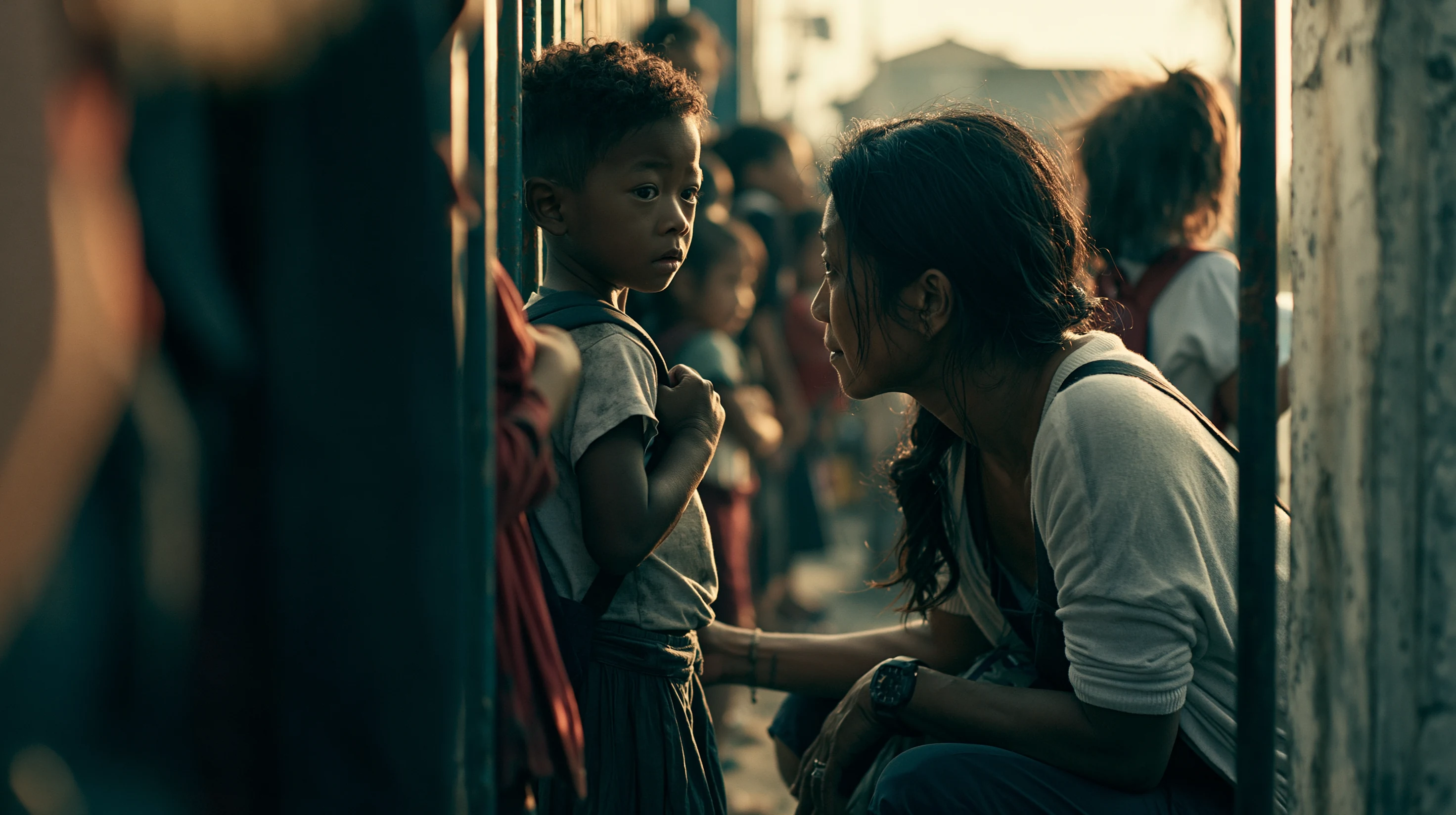
Every morning the same battle: he complains of a stomachache, dawdles on purpose, cries at the door, 'not today, please'. Your son, who used to go without drama, now does anything to avoid going in — and you have two minutes to decide.

The books sleep untouched, reading is 'such a drag', and every reading moment at home ends in resistance or a yawn. You worry that he doesn't read, and at the same time you fear that insisting will make him hate it even more.

He tears up the page if a stroke comes out wrong, won't hand it in unless it's «perfect», cries over a small mistake, avoids what he can't master right away. His demands on himself, far from driving him, hold him back and make him suffer.
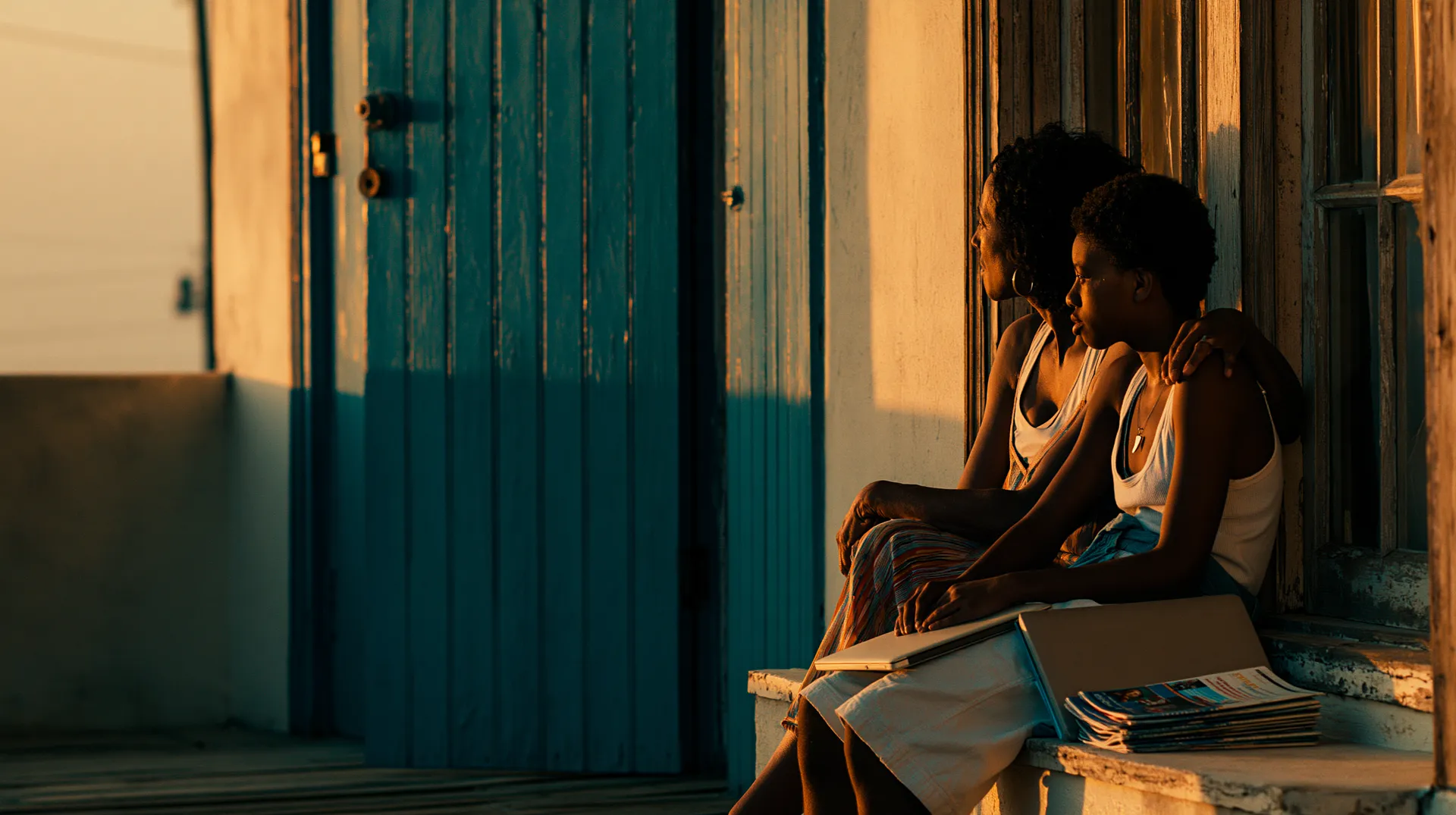
Deciding on studies, a career, what to do with his life is nearing, and you see him overwhelmed: «I don't know what I want», blocked, anxious, or choosing by elimination. And you don't know how much to push without imposing your own dream.
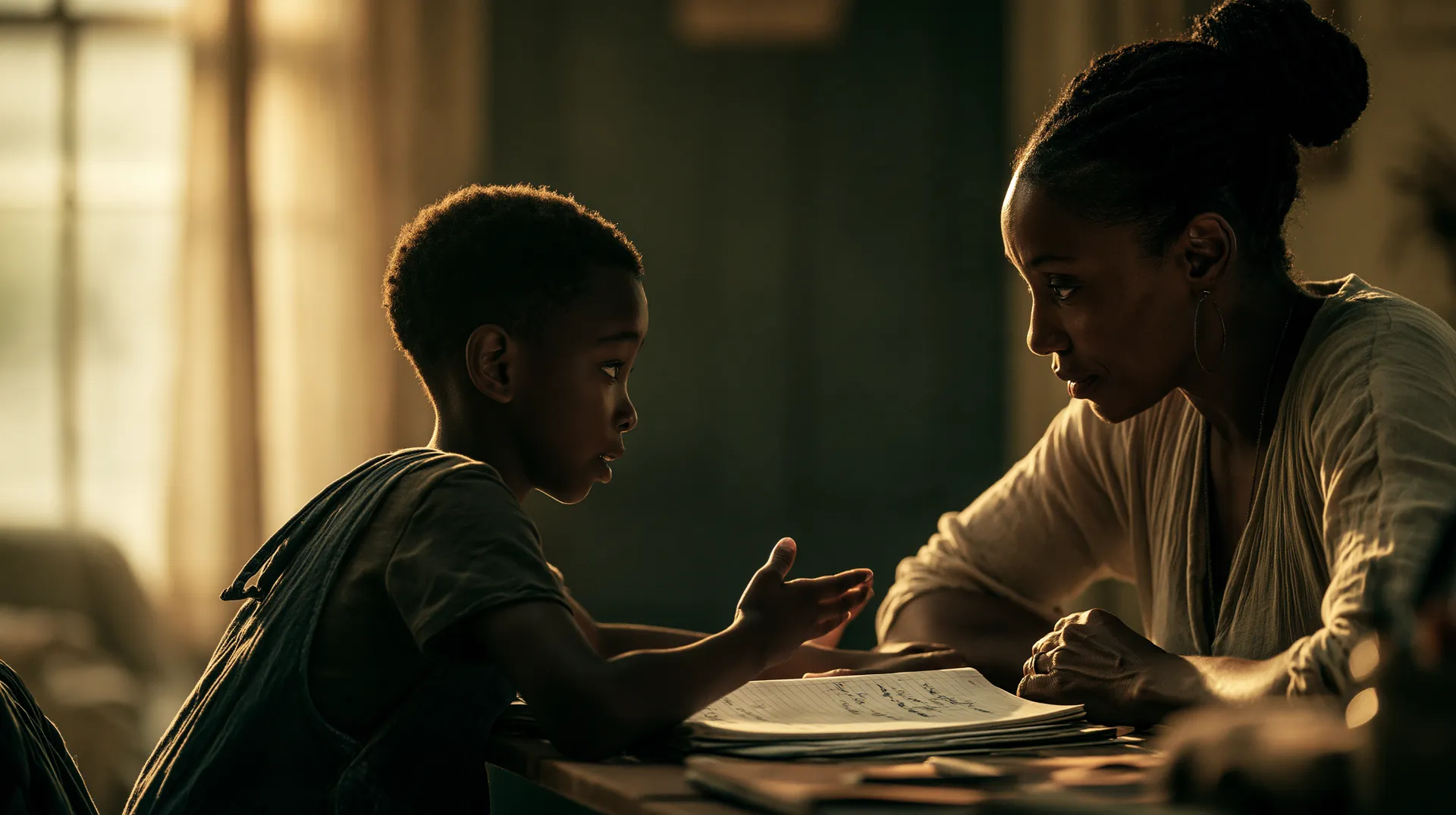
He says school's boring, that he already knows this, that they teach him nothing new. Sometimes he tunes out, acts up, or grades dip — not from inability but disconnection. You can't tell if it's a gripe, laziness, or a real signal.
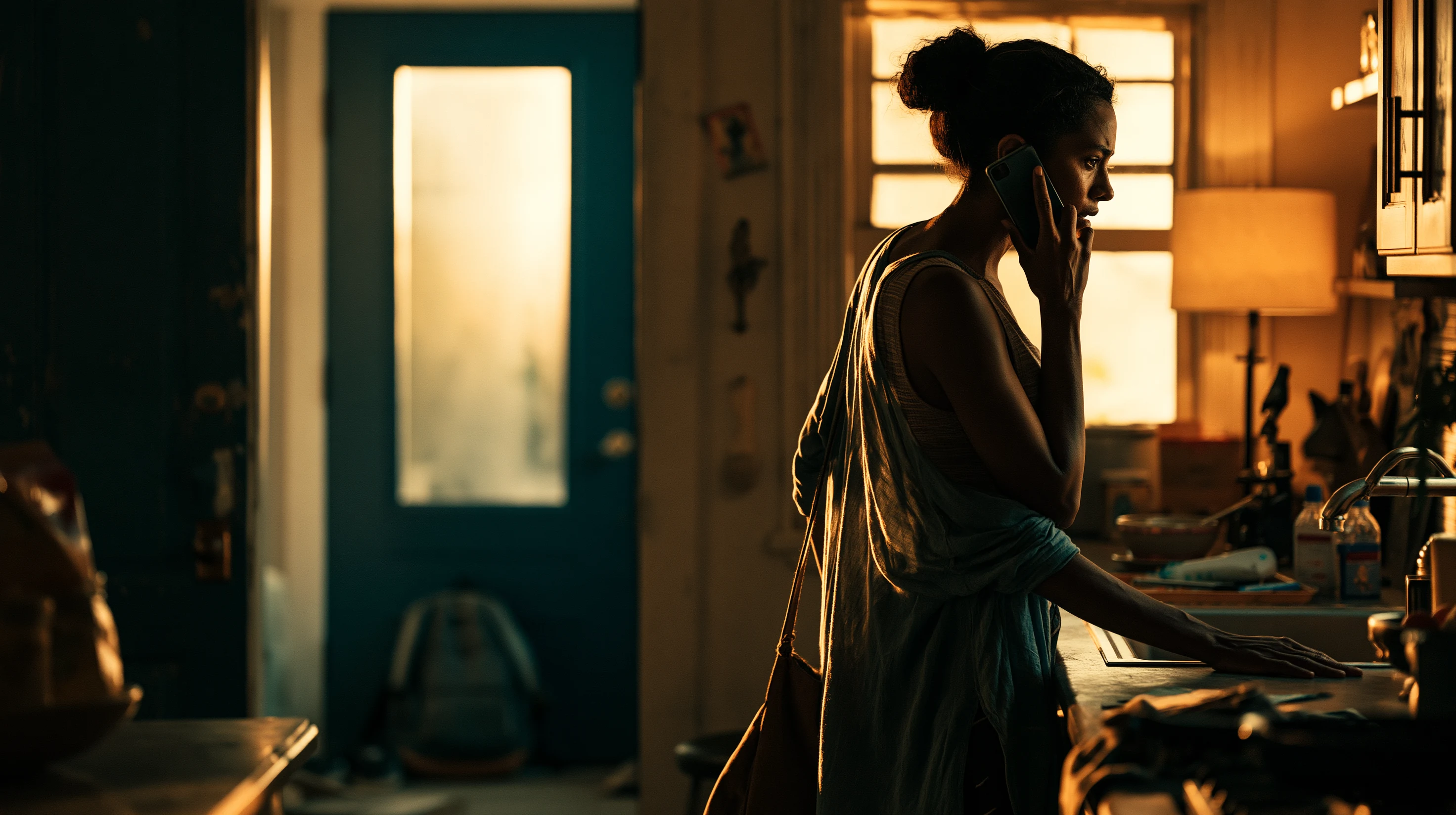
You see the school's number mid-morning and your stomach drops before you answer. The teacher wants to talk about your daughter: something happened in class. You don't yet know what, and you're already deciding which side to take.
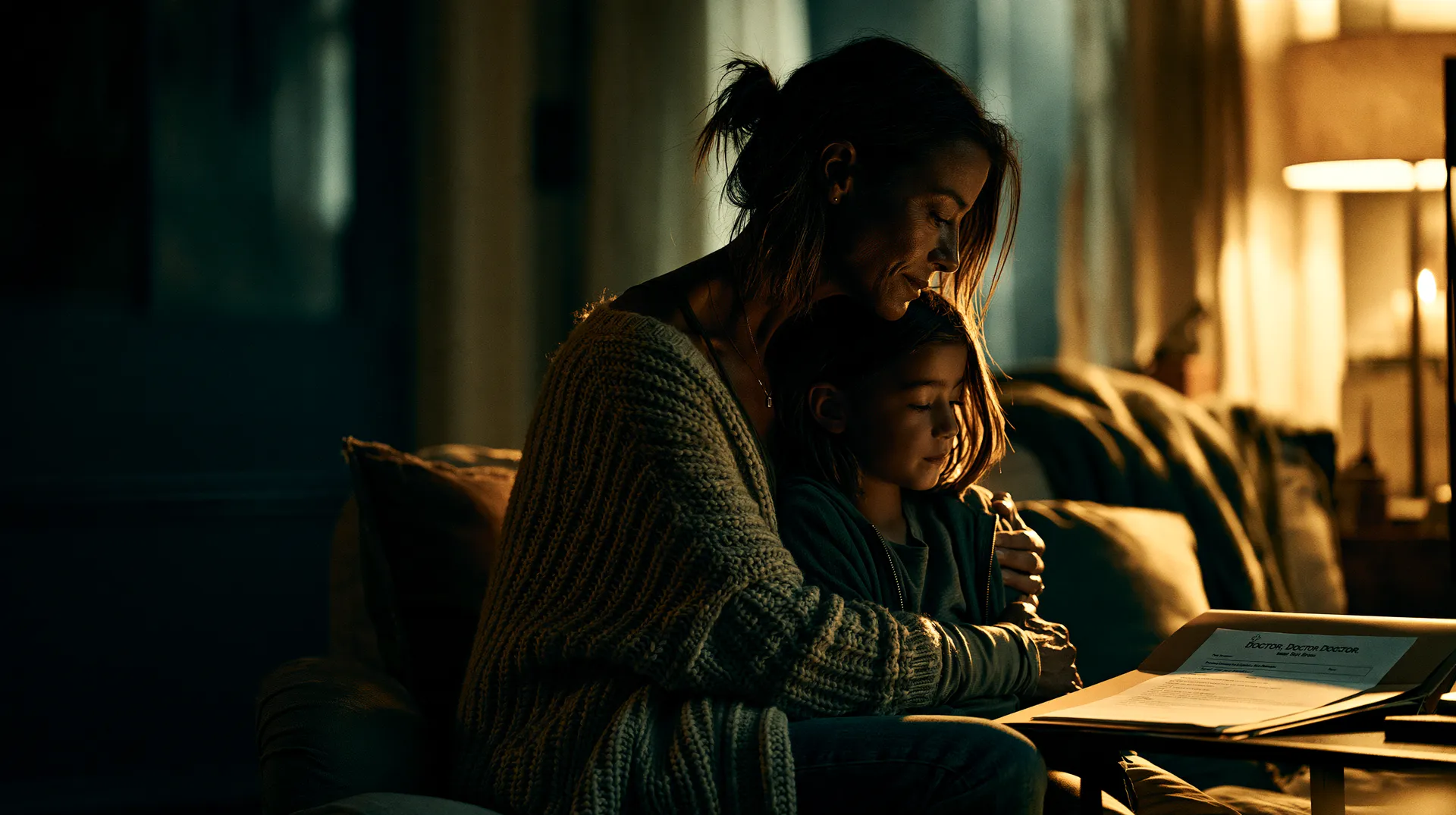
After months of doubts and evaluations, a name arrives: ADHD, dyslexia, something about learning or attention. Between the relief of finally understanding and the fright of the label, you don't know how to look at it or what to tell him.
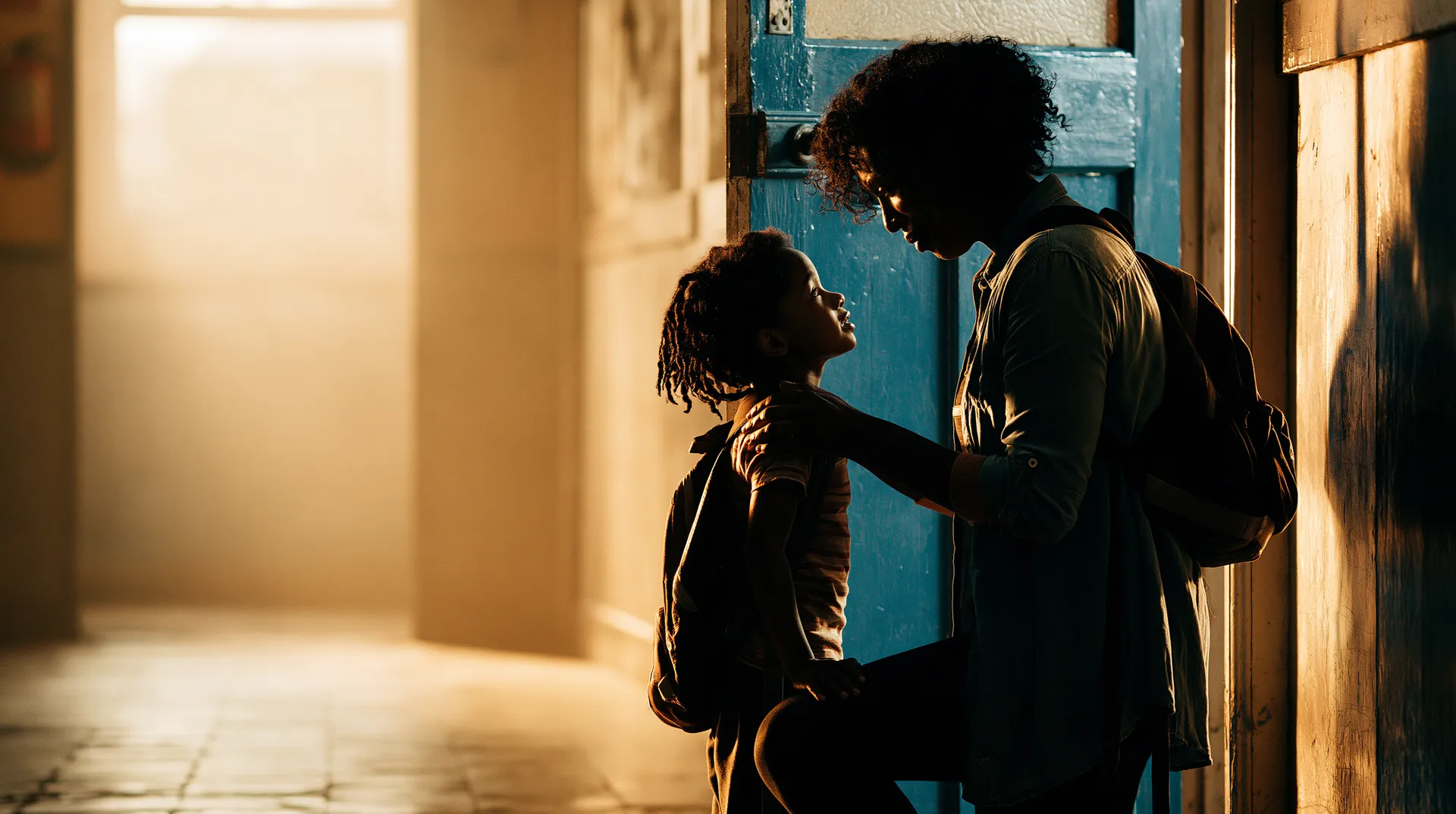
He says a teacher treats him unfairly: scolds him more, doesn't believe him, graded him badly on purpose. Between defending him and doubting he's exaggerating, you don't know whether to storm the school or tell him to bear it.
This school year has a name of its own: the year of the Brevet, of the Bac, of the reválida, of the national exam — the big exam of his system. From the first meeting on, the school speaks in the key of results; the other parents compare tutoring academies; your son says he's fine but you can see the weight on him — or he says he couldn't care less, which is scarier. And you swing between not pressuring and being terrified you're not pressuring enough.
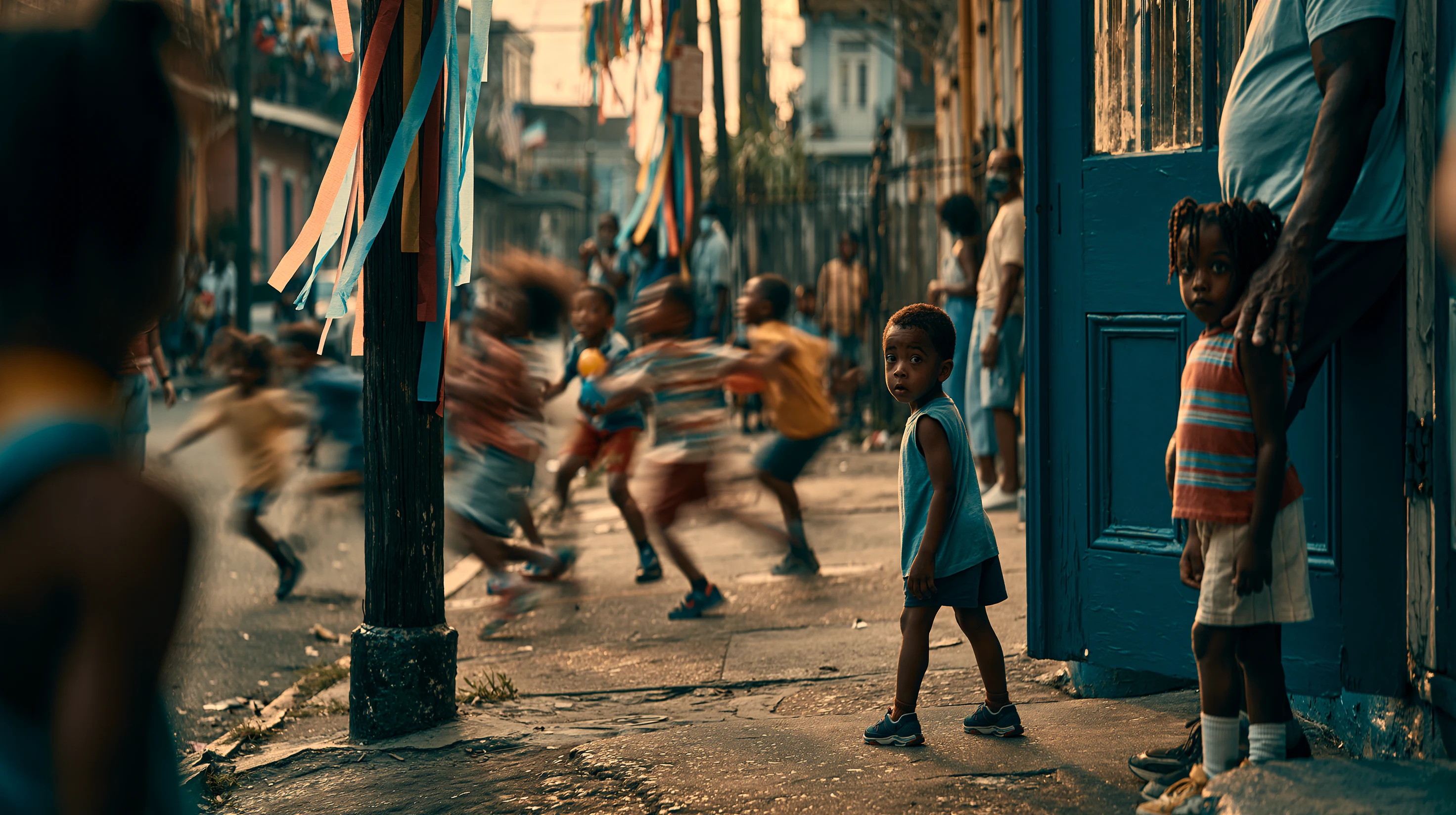
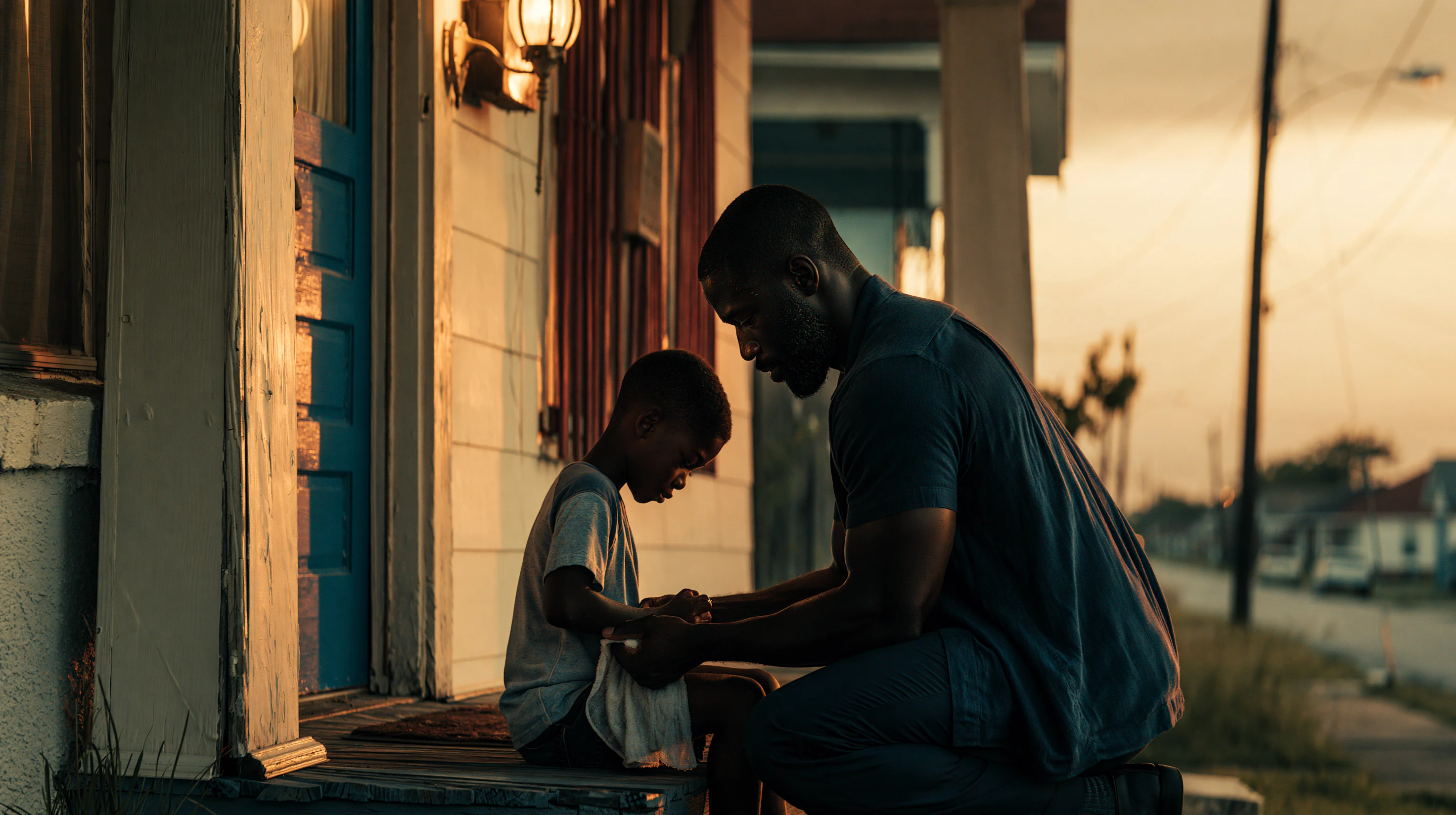
The school calls, or you see him come in with a split lip and scraped knuckles: your son traded punches with another kid. He carries anger, shame, and a version of events in which he started nothing.
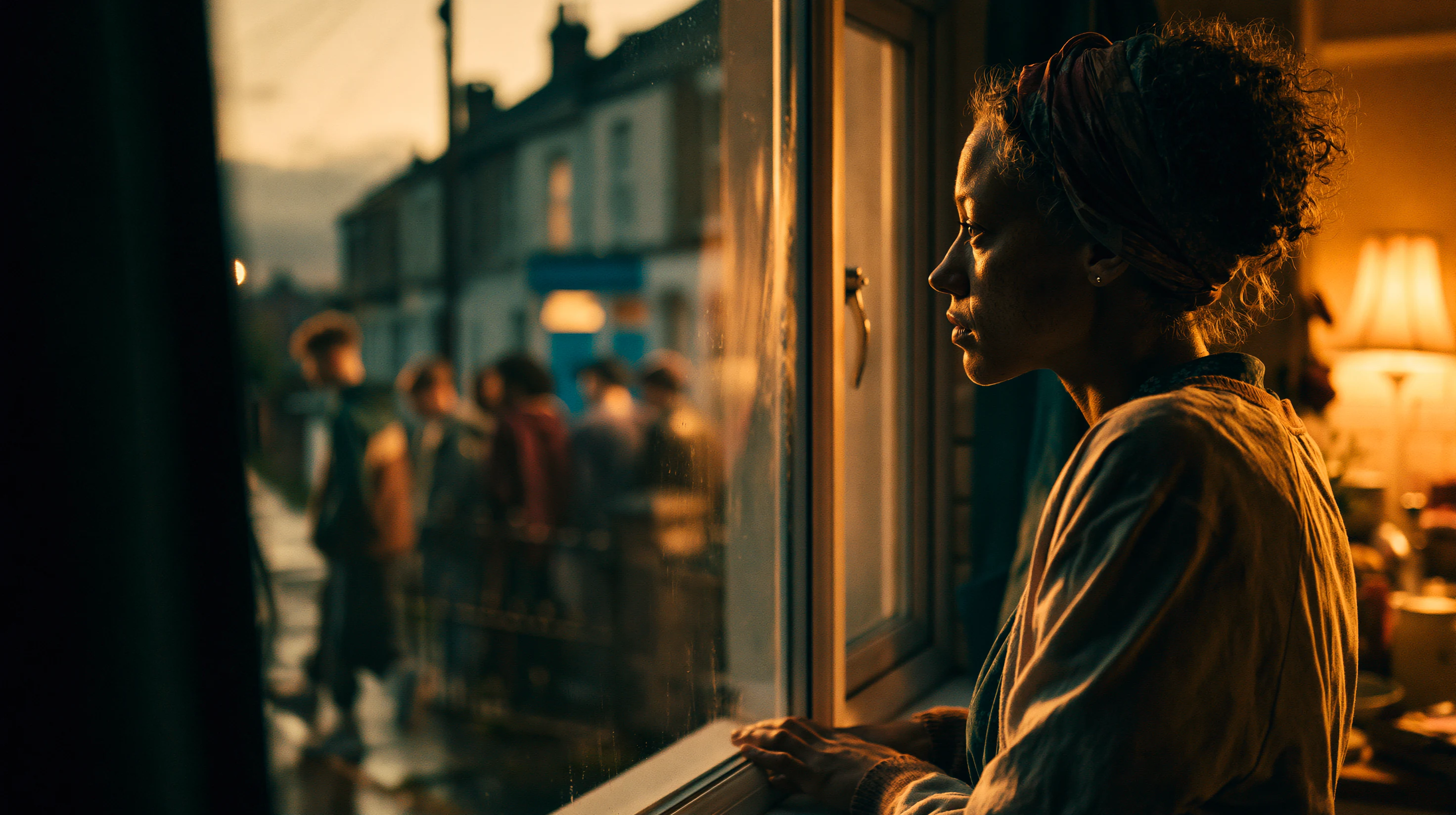
You met your son's new group and something didn't sit right: the tone, the laughter, how they talked about others. He names them with an admiration you don't recognize, and every alarm inside you goes off.
They talk to someone who isn't there, save a place at the table, tell you what their friend «said». Between the tenderness and a pinch of unease, you wonder if it's healthy or if you should worry.
It wasn't a one-time fight. It's sustained: they pick on her daily, exclude her on purpose, write her things, hide her things, and she's begun to dim — she doesn't want to go, sleeps badly, «it's nothing». Your daughter is being bullied.
The school confirms it, or you see it yourself: your son isn't the one who suffers the bullying — he's the one who does it. He bothers, excludes, humiliates. He does to another what you never wanted, and you don't know where to start.
There was a group, they belonged, and suddenly not anymore: dropped from the chat, no longer sat with, they found out about plans they were left out of on purpose. It's not a one-time no-invite; it's an expulsion, and they know it.

They were inseparable — same desk, same game, «my best friend». Then it broke: they're not speaking, there were ugly words, each has her version. Your daughter comes home undone, as if the world were ending. And for her, a bit, it is.
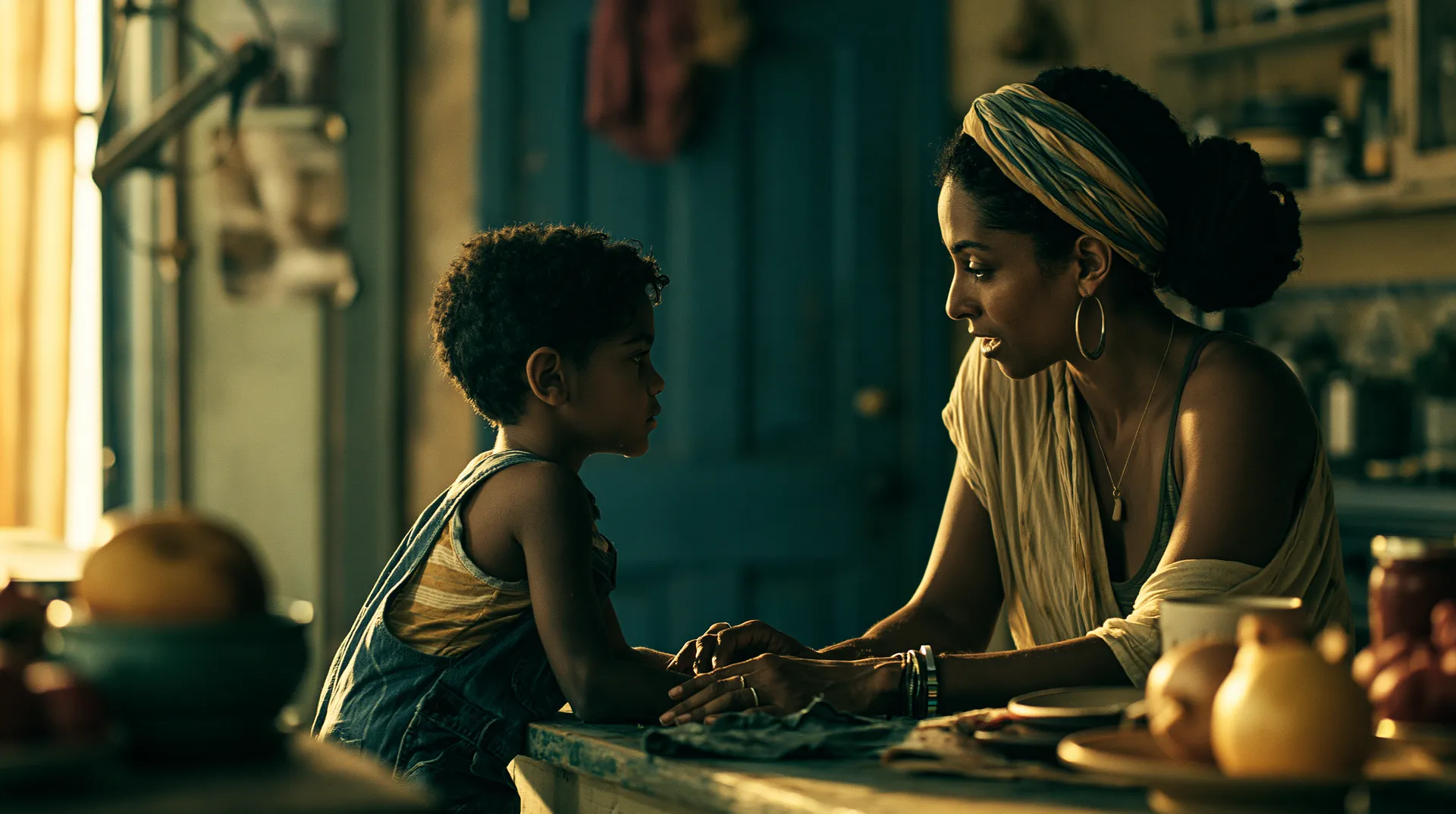
He knows he did something wrong, but he'd sooner die than say «sorry». He shuts down, justifies himself, throws the blame outward, or lets out a half-hearted «sorry» he doesn't feel. And you don't know whether to force it or wait.

A fall, a trip, an embarrassing moment — someone filmed it and the video is going around the class chats amid laughter. Your son is humiliated, doesn't want to go to school, feels «everyone» saw it. The shame has him undone.

The whole class is talking about Saturday's birthday party. Your daughter found out at recess that she's not on the list — and she tells you in the car, looking out the window, in a smaller voice than usual.
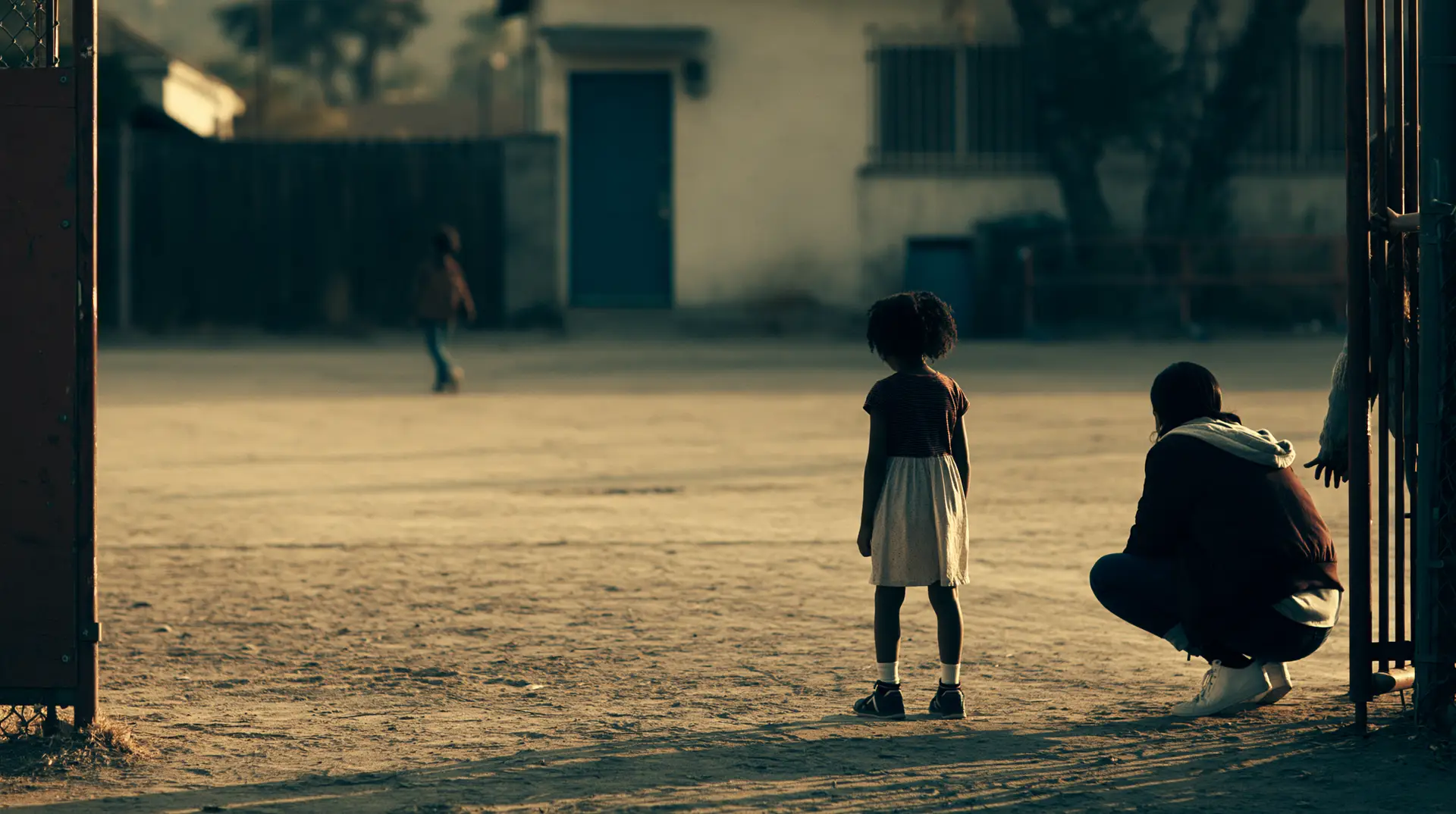
You find out —from him, from the teacher, from a photo— that at recess he's on his own: he wanders, sits apart, no one seeks him out. Something shrinks inside you; recess, which should be the easy part, is his hardest moment.
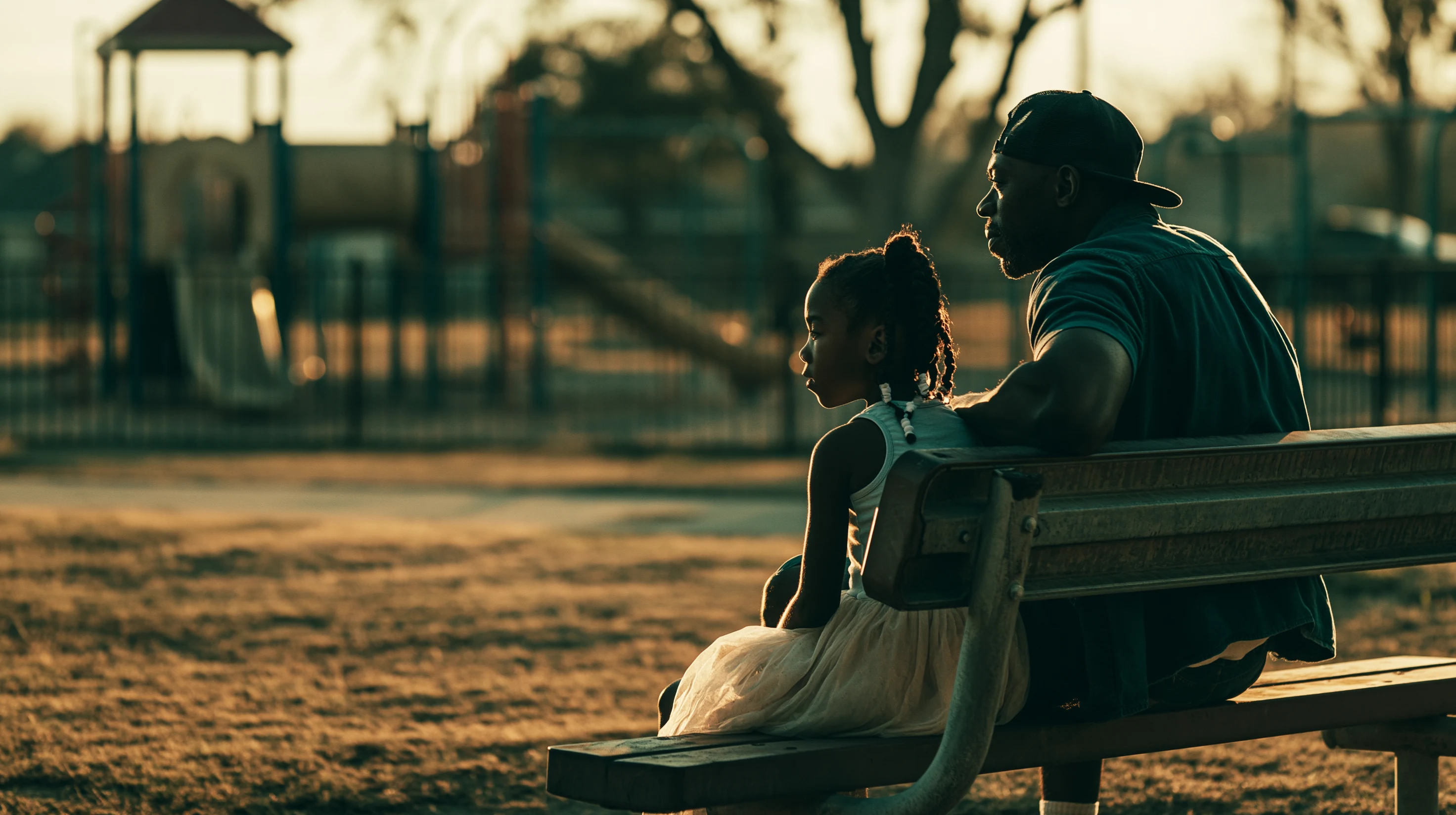
Your daughter did something you don't recognize in her: she mocked a classmate, broke a rule, went along with something she knew was wrong. When you ask why, the answer is a shrug: 'everyone was doing it'.

They change their tastes, clothes, even the way they speak depending on the current group. They say and do things that don't seem theirs to be accepted. You wonder where the one they were went, and whether this is normal or to stop.
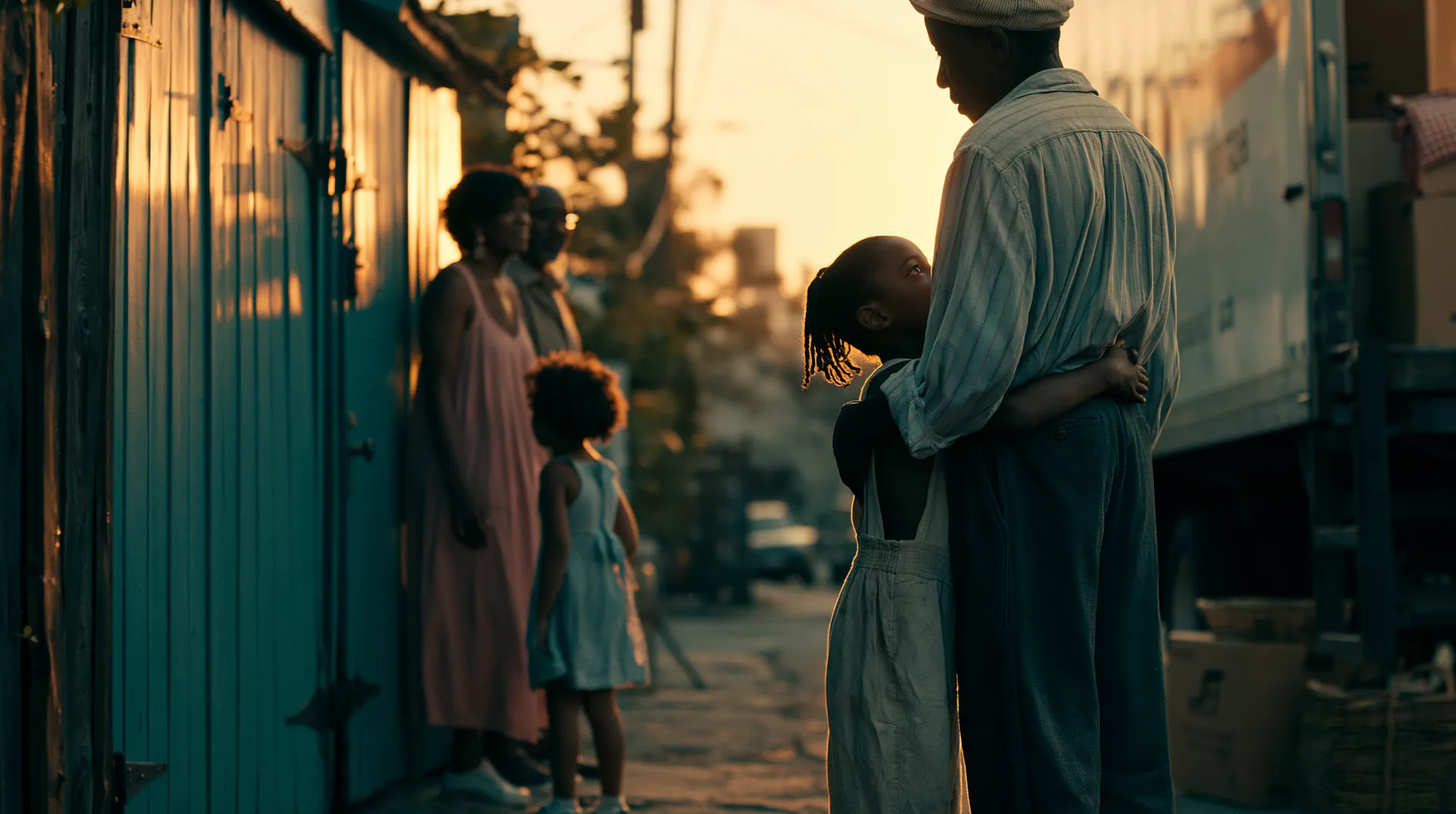
The soul friend —the one he shared everything with— is moving away, changing school or city. Your son is sad, angry, or acts like he doesn't care. For him it's losing his person; for you, seeing him heartbroken and unable to help.
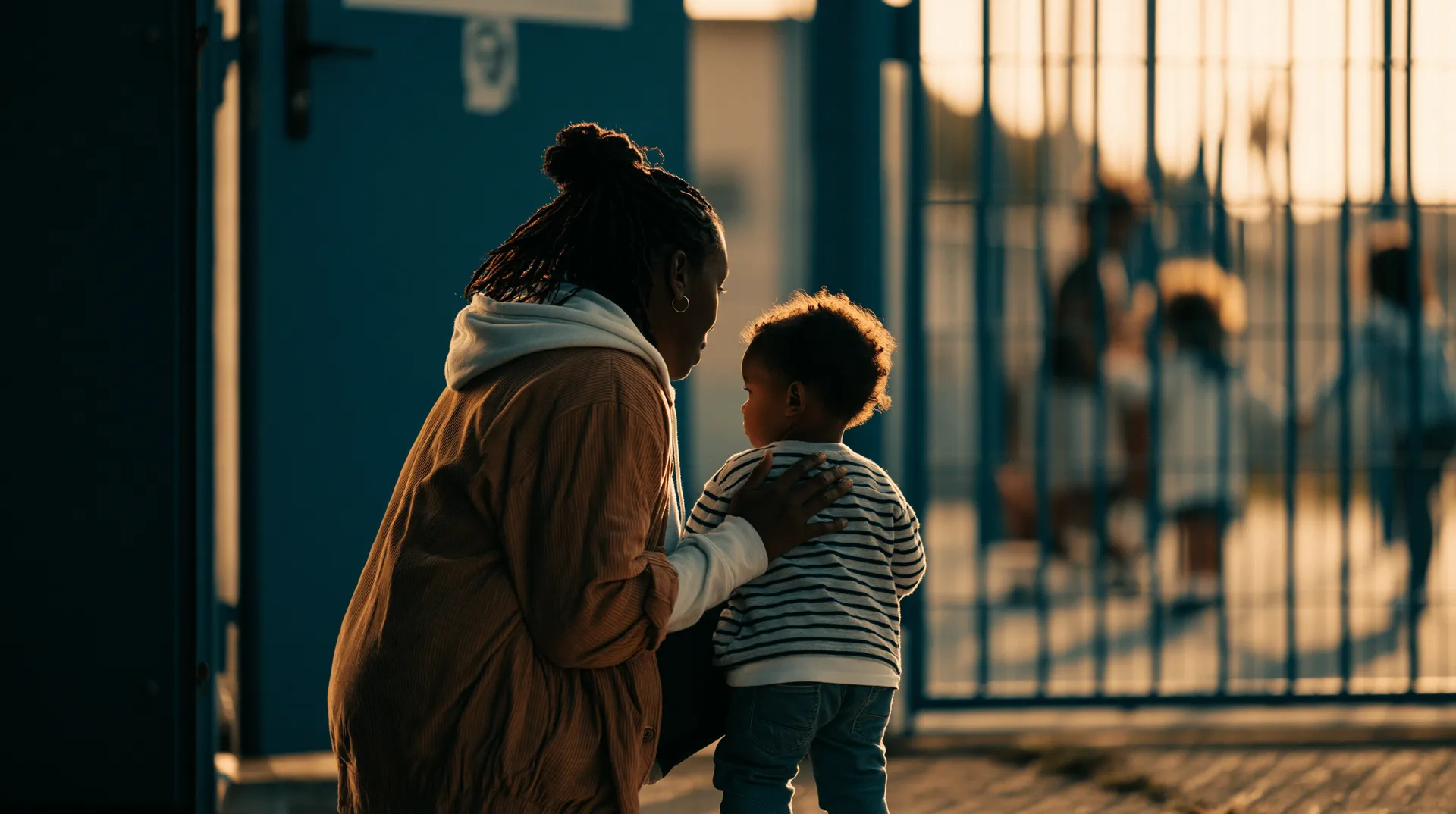
At parties he stays glued to you; at the park he watches the others play from afar; to say hello he needs a push. He isn't unhappy, but approaching other children costs him a world, and you worry he'll be left out.
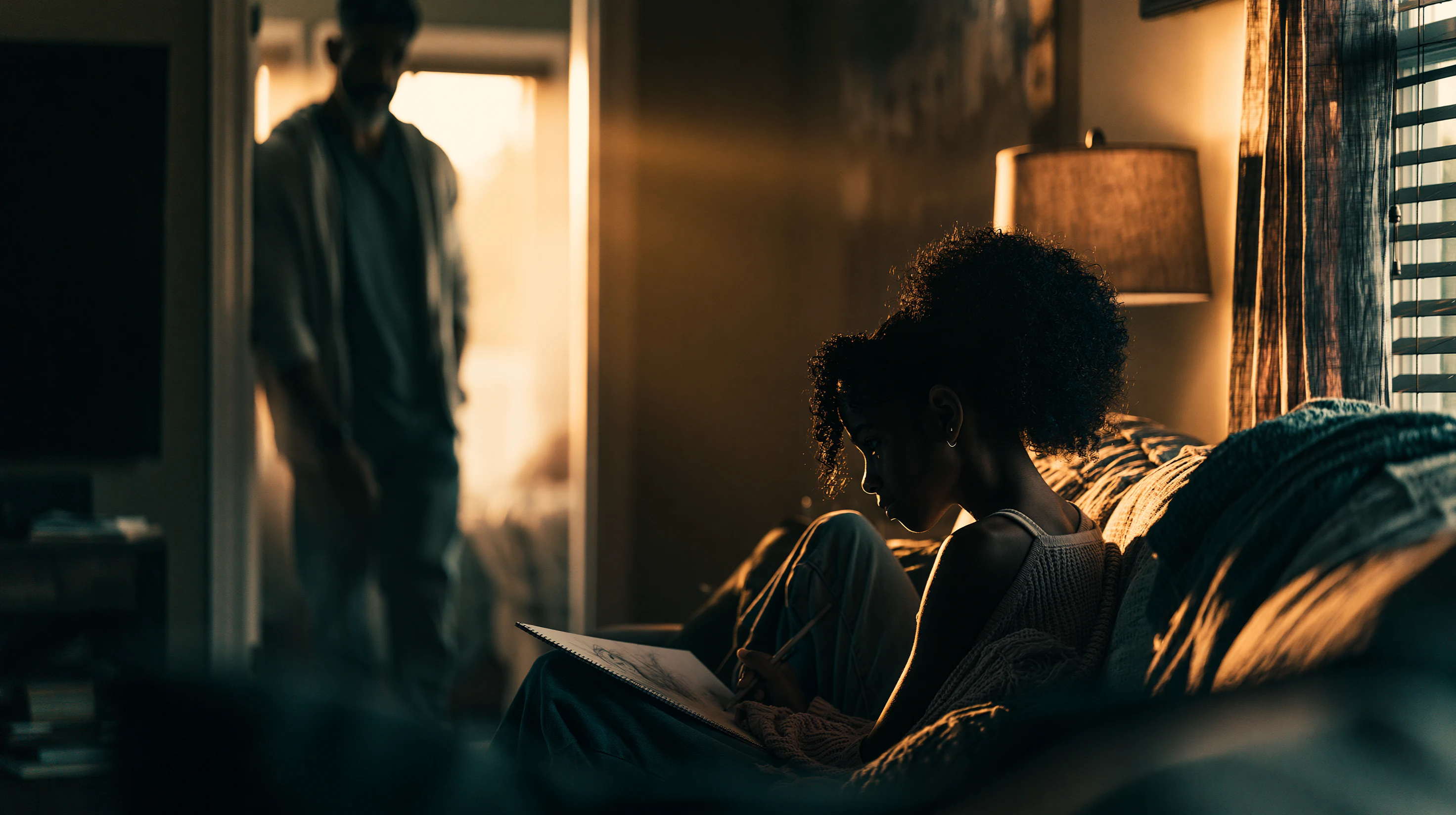
Another Friday at home. Your daughter has no plans, no one calls her, she doesn't seem to look for any. You remember your own full Fridays at her age and something tightens — is she fine this way, or is she lonely and not saying so?
He spent a few weeks at camp, or at his grandparents', or with the older cousins — and came back someone else: words he never used, music he never listened to, gestures that weren't his, brand-new opinions. You look at him and think: and who is this? And a part of you wants to restore him to factory settings.
All last year she had her group, her table, her people. She came back from the summer and something shifted: the inside jokes no longer include her, plans get made without her, her best friend now orbits someone else. Nobody fought with her; the map simply got redrawn without telling her. She comes home saying “everything's fine,” but you can see her dimmed.
First week of school and the classroom is a festival of summers: the beach, the cruise, Disney, the new phone somebody brought back. Your son comes home with the question straight out, or with the little face that doesn't ask it: why not us? And in you — who did what could be done — something tightens between guilt and anger.
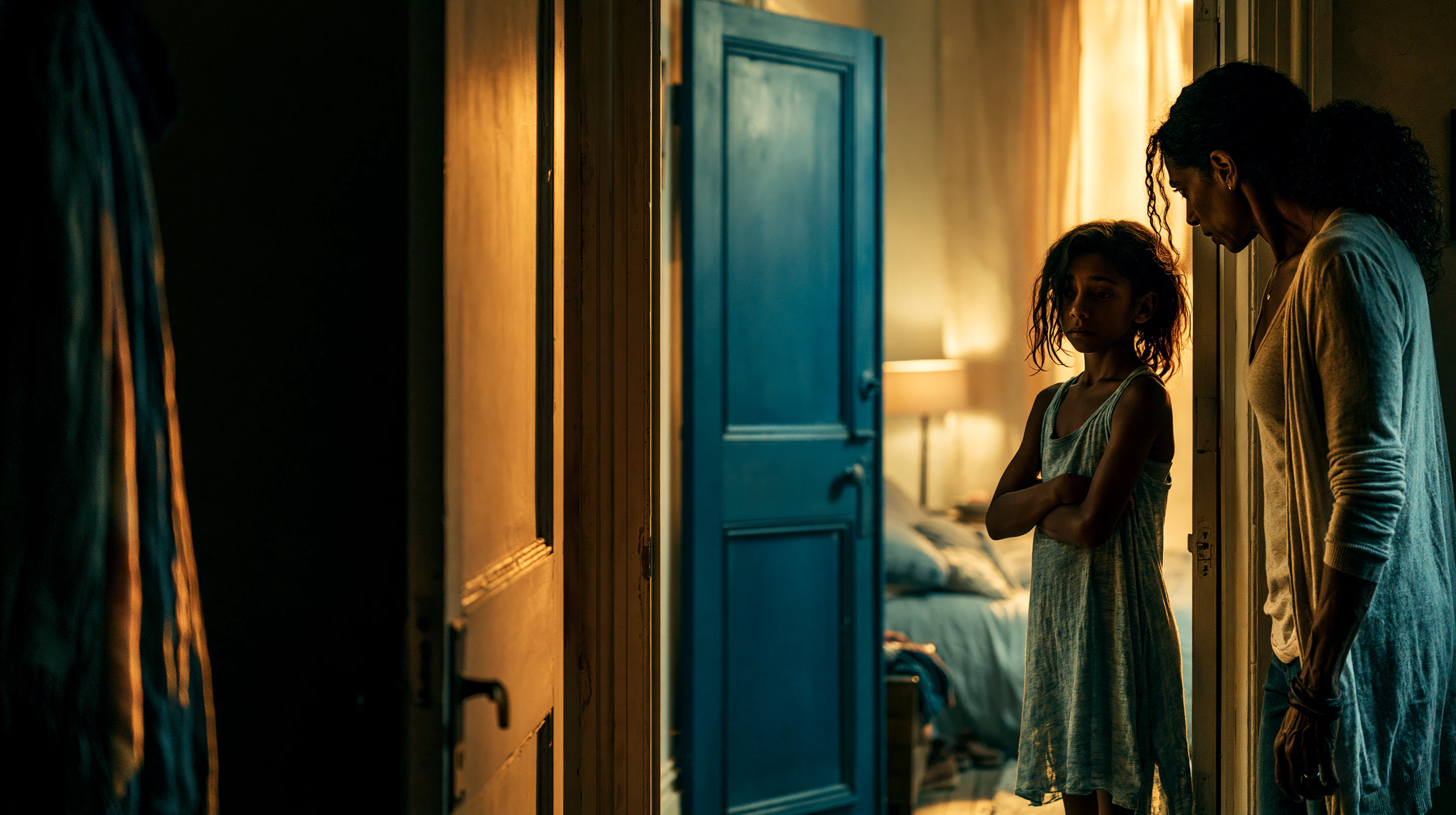
They said it at recess, or you read it in a chat, or she said it herself in the mirror: «you're fat», «what a huge nose», «you're so ugly». She comes home smaller than she left, covering herself without realizing.
You started noticing weeks ago: they eat less and less, cut food into tiny pieces, say they already ate, slip to the bathroom right after, or skip meals with excuses. Something in how they eat changed, and an alert lights up in you.
You notice it when you hug him, walk into his room, pick up his laundry: your son has started to smell of teenage sweat. He doesn't seem to notice, and you fear that at school they will — and will make him feel it the worst way.
From the couch to the chair to the bed. Your son spends his afternoons with the screen and his body still, and when you suggest going out, moving, doing something, the answer is a 'can't be bothered' you already know by heart.
One day it arrives: a stain, a fright, a call from the bathroom, or news she gives you in a low voice. Your daughter got her first period — and how you receive it today will stay with her far more than you imagine.
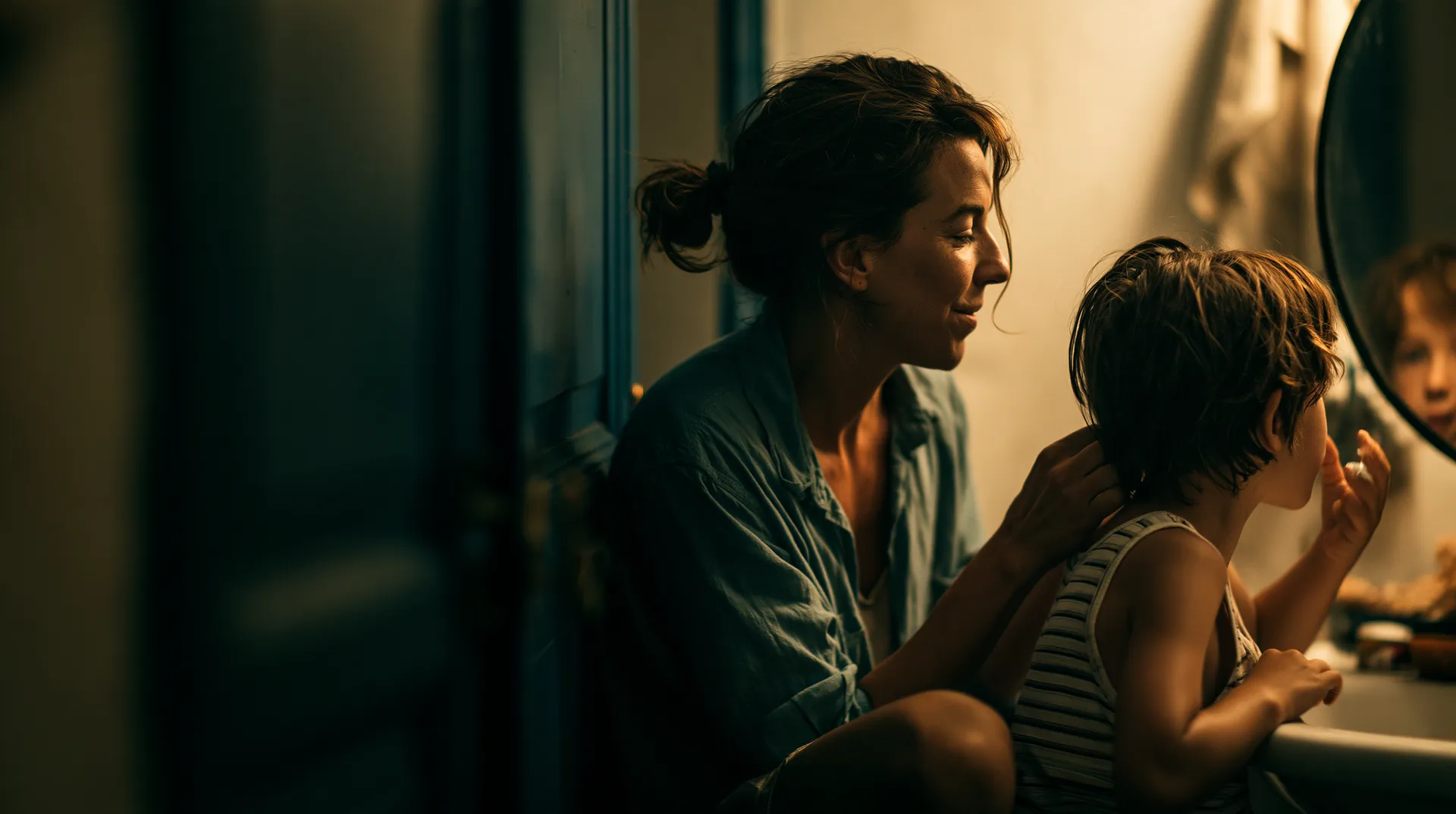
The first little bumps appeared on her forehead or nose, and suddenly she looks in the mirror with dread, doesn't want to be in the photo or blurts out 'I'm hideous.' To you it's skin of the age; to your daughter it's a catastrophe.
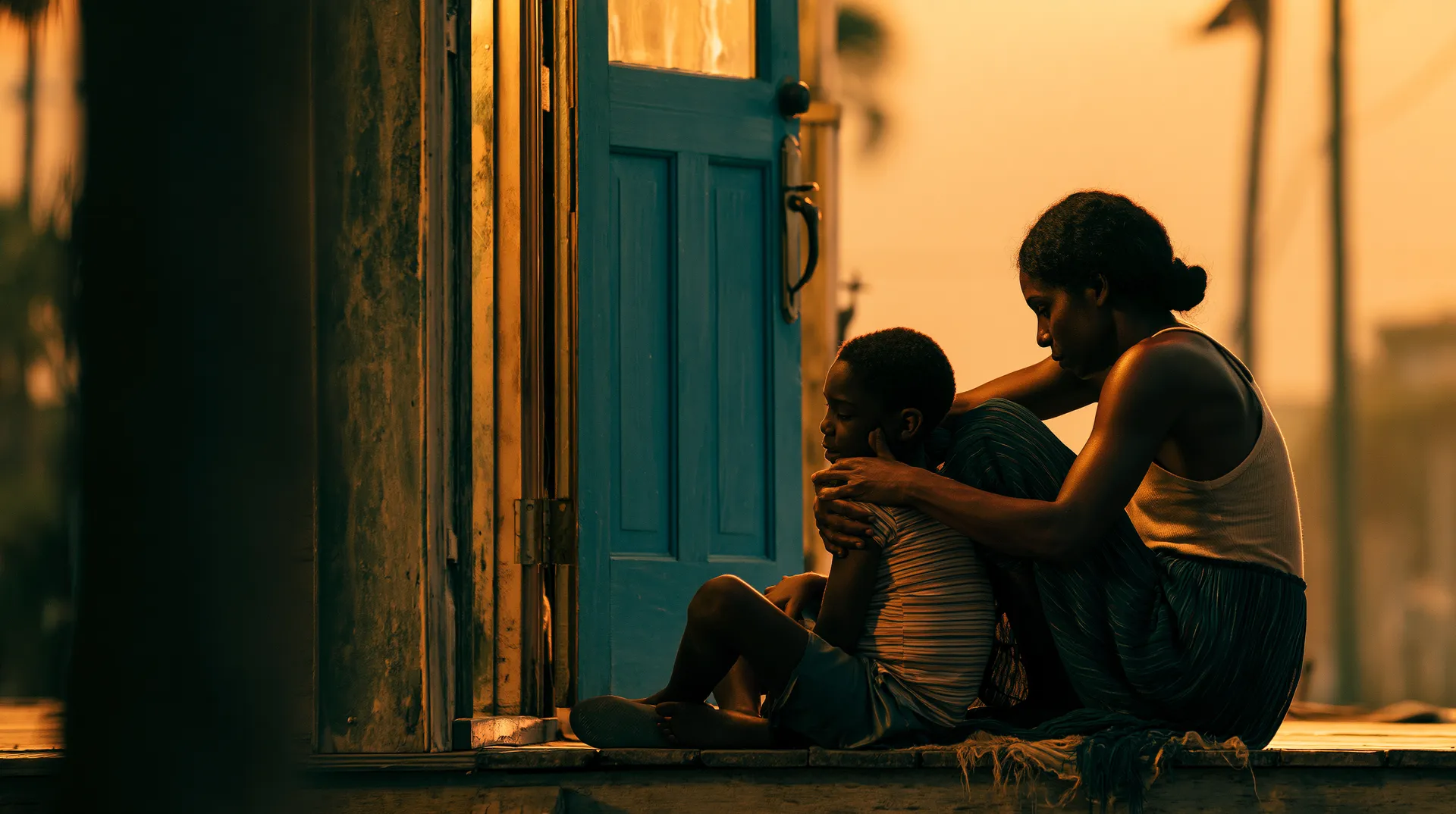
Your nine-year-old daughter already has a teen's body while her friends are still girls; or your fourteen-year-old son is still the smallest while the others' voices have changed. The gap with the group weighs on them, and it worries you.
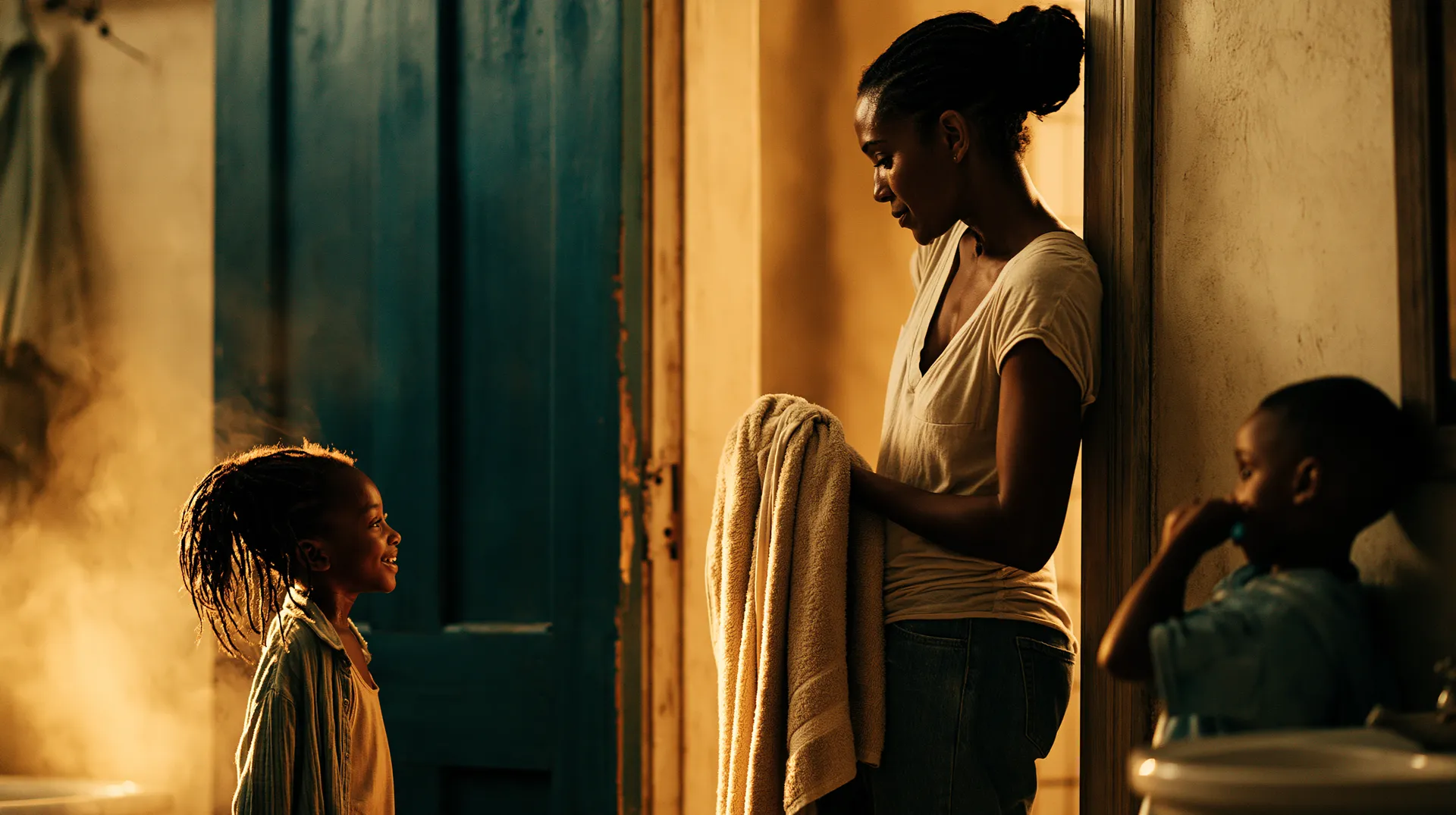
Every bath is a battle, the teeth 'I already brushed them' (no), greasy hair, the same clothes for three days. You insist, you plead, and the answer is a 'later' that never comes or a slammed door. Hygiene has become a daily war zone.
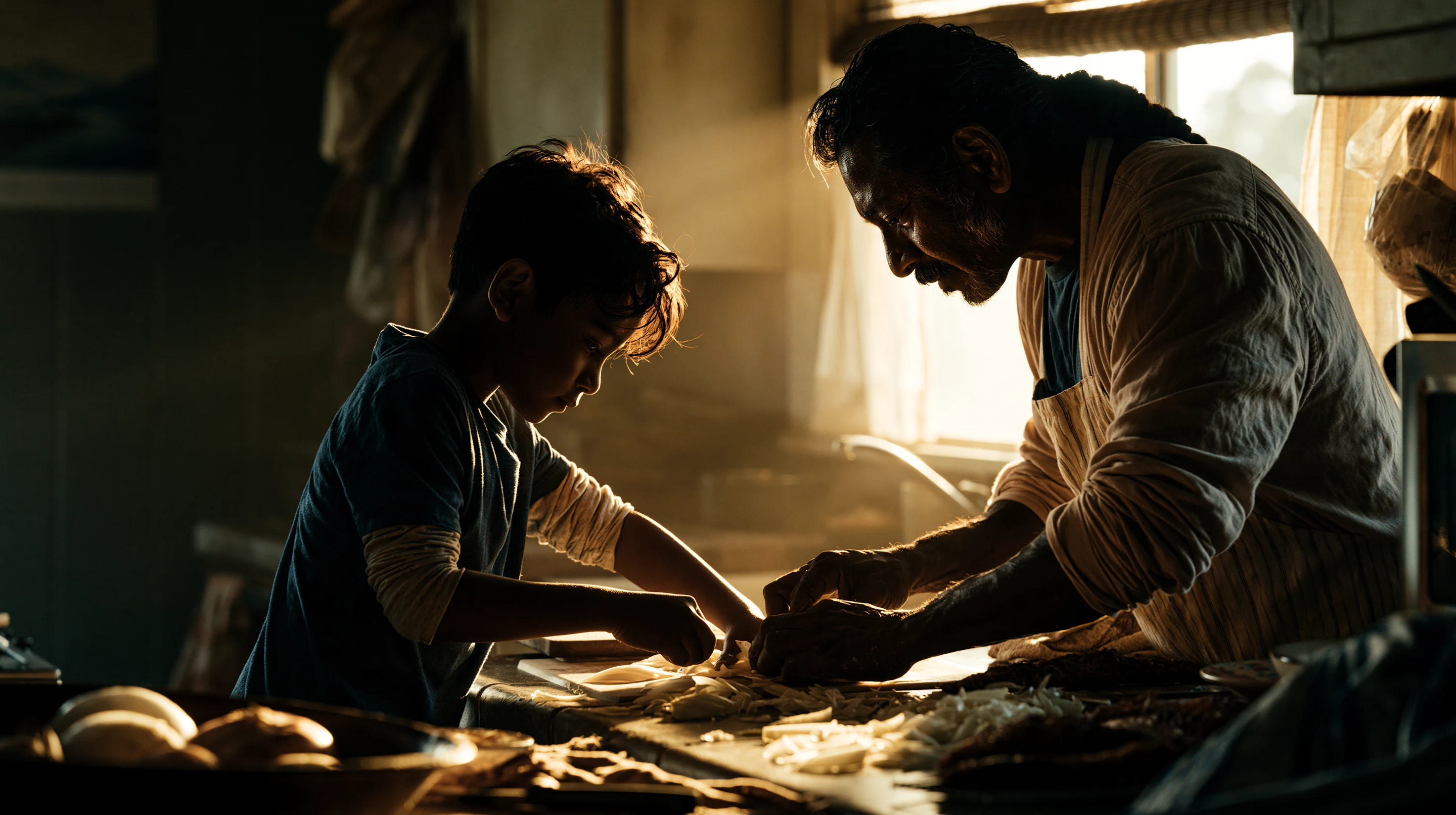
You notice it in the clothes that no longer close, in a photo, a pediatrician's comment. And with the worry about his health comes an intimate fear: that of your own history with the body, the scale, and what they told you.

She's started to hide: loose clothes to cover what's growing, crossing her arms, not wanting to be seen, a 'don't look at me' when you pass by. Her body is changing in plain sight, and she carries it with a shame that breaks you a little.
Over the vacation she hit a growth spurt: her old clothes don't close, last year's uniform runs short, and she knows it before anyone else does. Now she takes an hour to get dressed, changes three times, walks hunched over, and faces the first day of school with a sweater on top even in the heat. At home, on top of it, everyone has an opinion: “look how you've grown!”, “look at this young lady!”
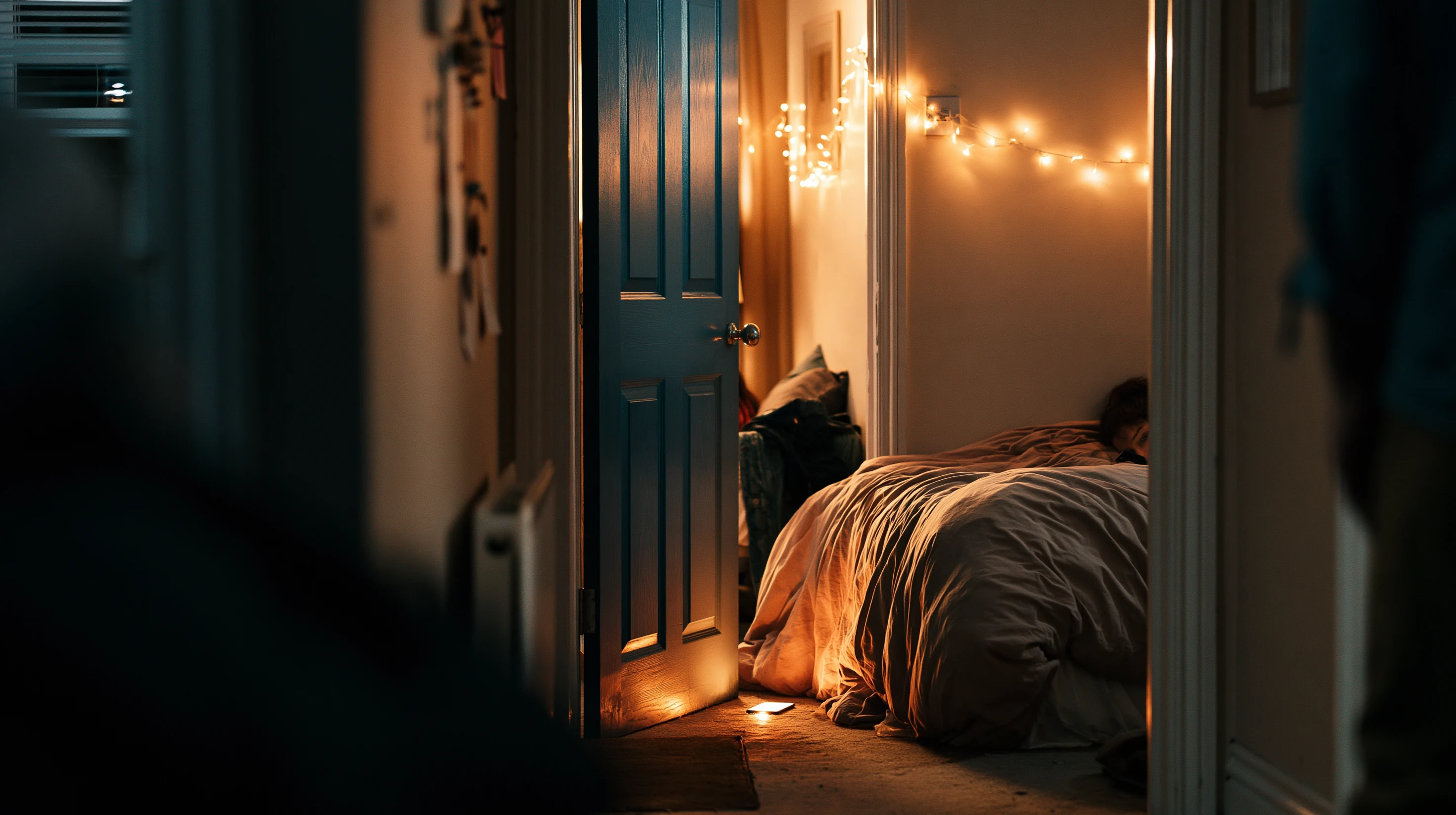

She's pining for someone who doesn't see her that way, or she said it and got a «I like you, but not like that». She's sad, keeps checking her phone, rehearses ways to be liked. It hurts for real, and you want to fix it and can't.
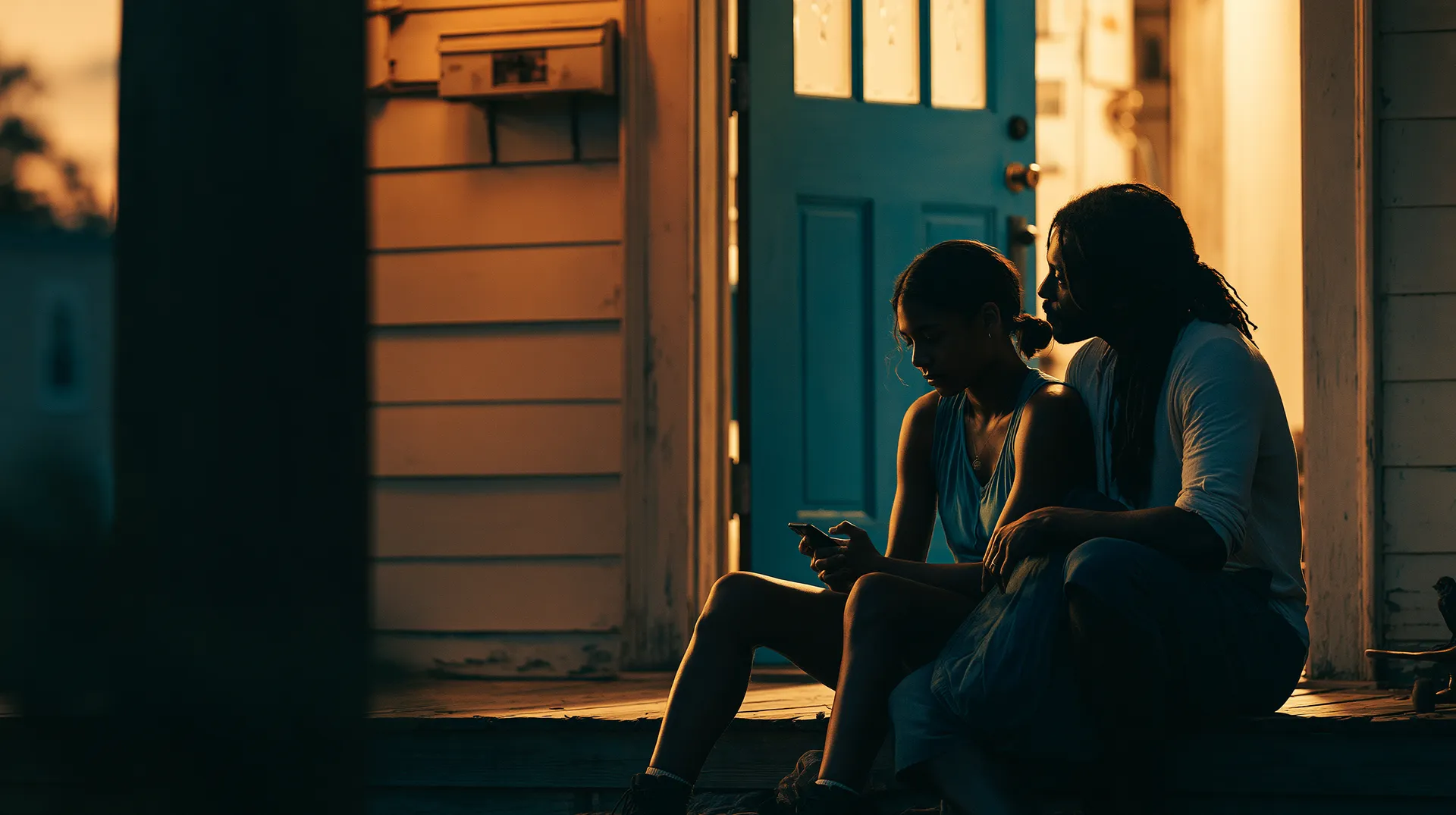
Her lifelong best friend now pairs off with another girl, and your daughter comes home hurt: «she doesn't like me anymore», «she traded me». Jealousy, sadness, sometimes anger. The friendship triangle hurts her like heartbreak.
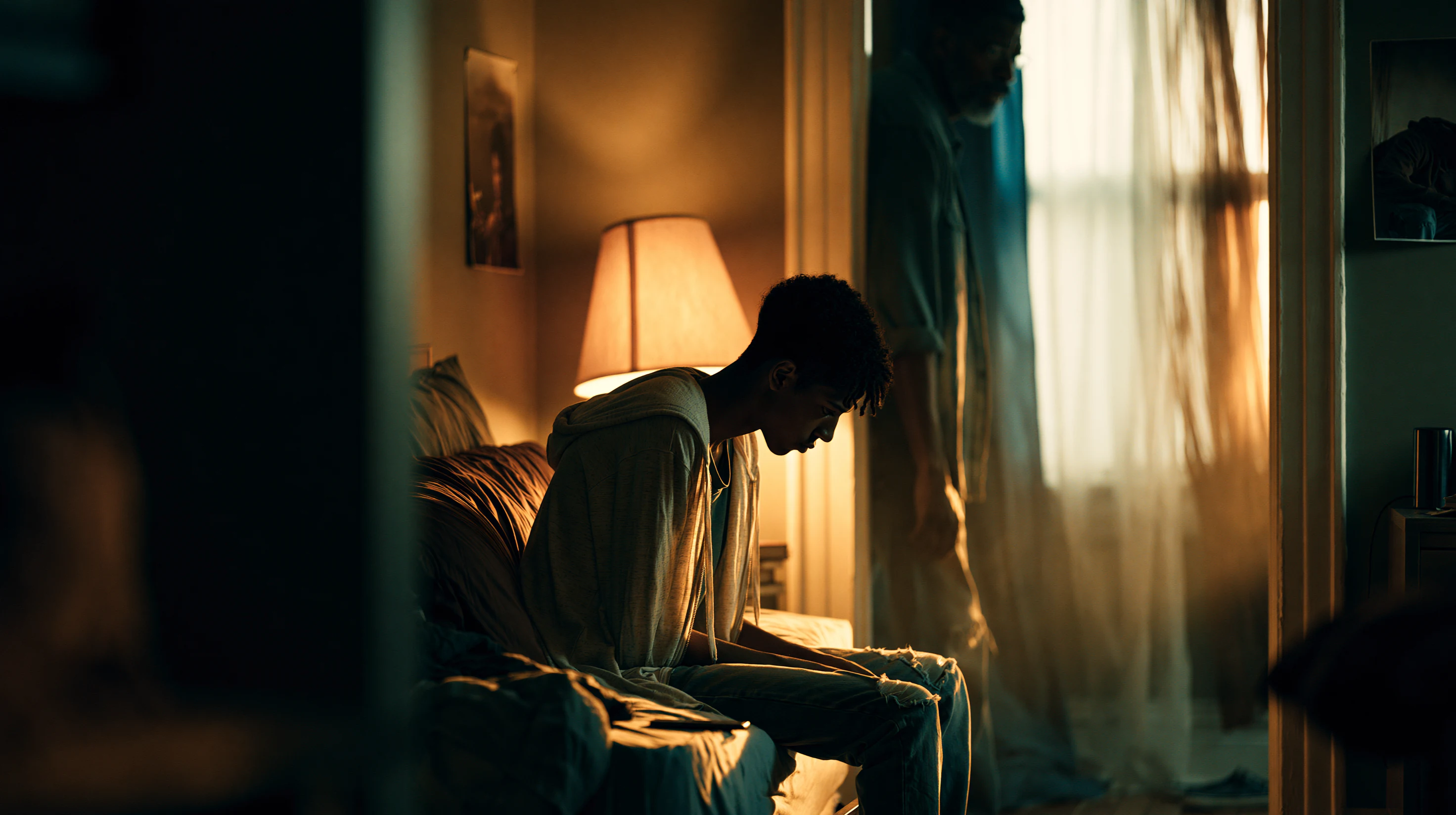
He worked up the courage and confessed — and they said no. Or he never got to say it: the person he likes is with someone else, or doesn't see him that way. Your son carries a love that isn't returned, and a shame he can't place.
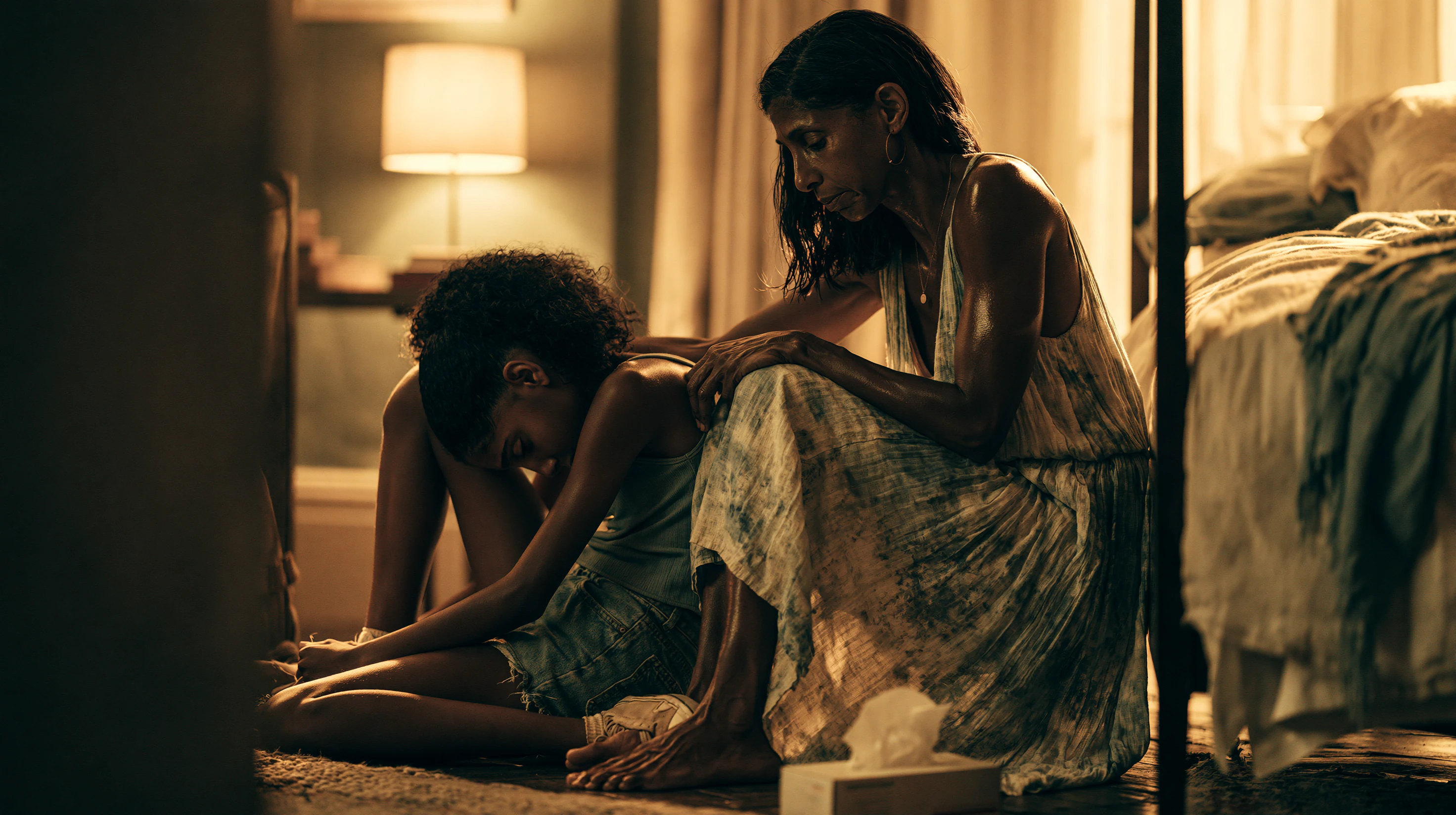
It's over. Her first love ended and your daughter is shattered: she won't eat, won't sleep, cries inconsolably, says nothing makes sense. You want to tell her it's temporary — but for her, right now, it's the end of the world.
You found out by accident: a message you saw without meaning to, a comment from another mother, a photo. Your daughter has had a partner for a while and said nothing — and to the sting of the news adds a deeper one: why didn't she tell me?
You notice before he says it: the phone that lights up his face, a name in every sentence, the new care when going out. Your son is in love for the first time — and how you receive the news teaches him whether love is told here or hidden.

Your fourteen-year-old is dazzled by someone quite a bit older, or your son by someone who sets off every alarm in you. They talk nonstop, she defends him, and you don't know if it's a harmless crush or something you must stop.
It wasn't in secret. You said no and he did it looking you in the eye: «I'm not doing it», «what are you going to do?», or he just crossed the line in front of you, on purpose. Not hidden mischief — it's an open standoff, and he knows it.
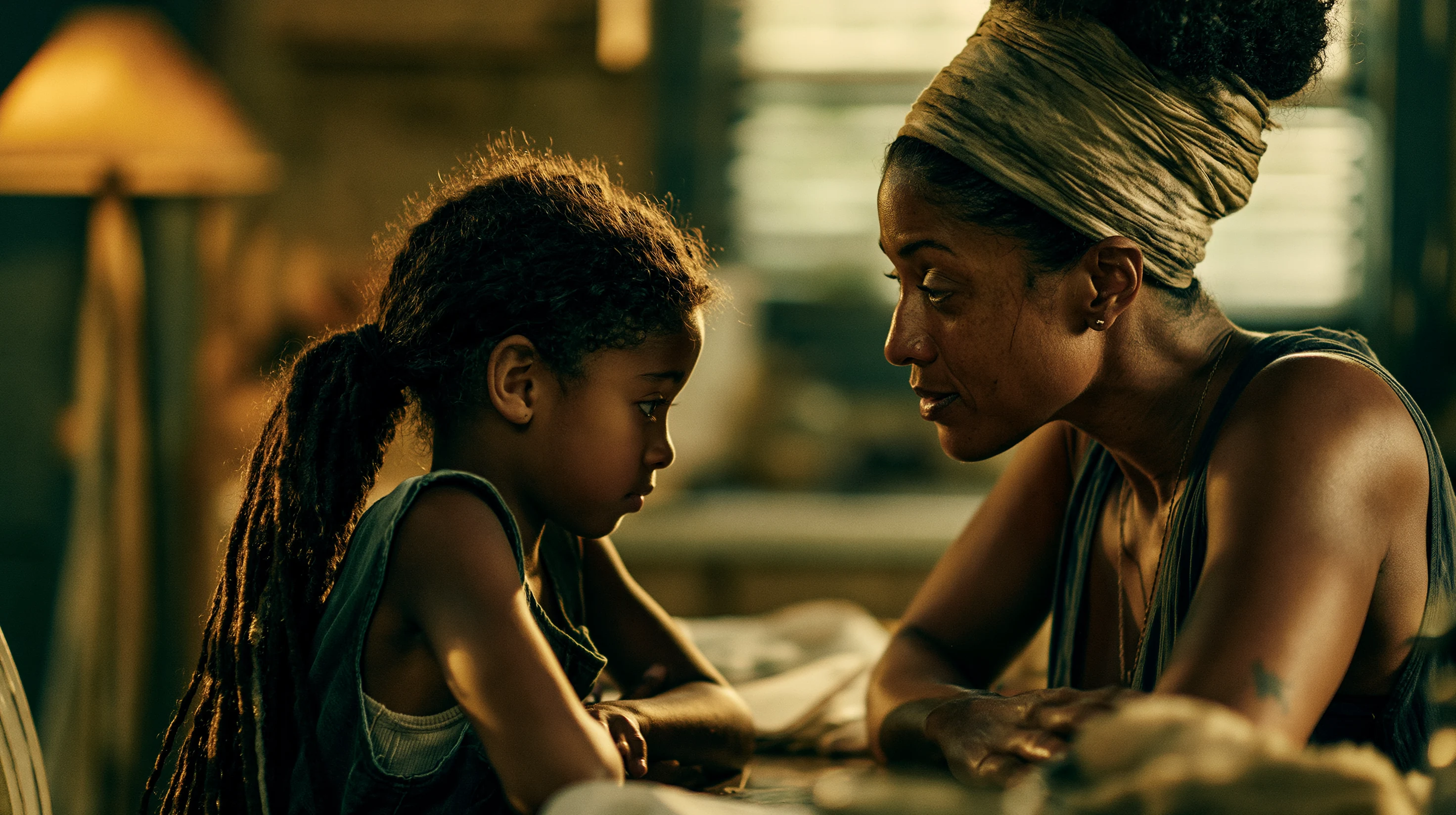
A new word comes out of your daughter's mouth — a round swear word, or something worse: a slur that targets a group of people. She drops it naturally, like trying out something she heard around, and your breath catches a second.
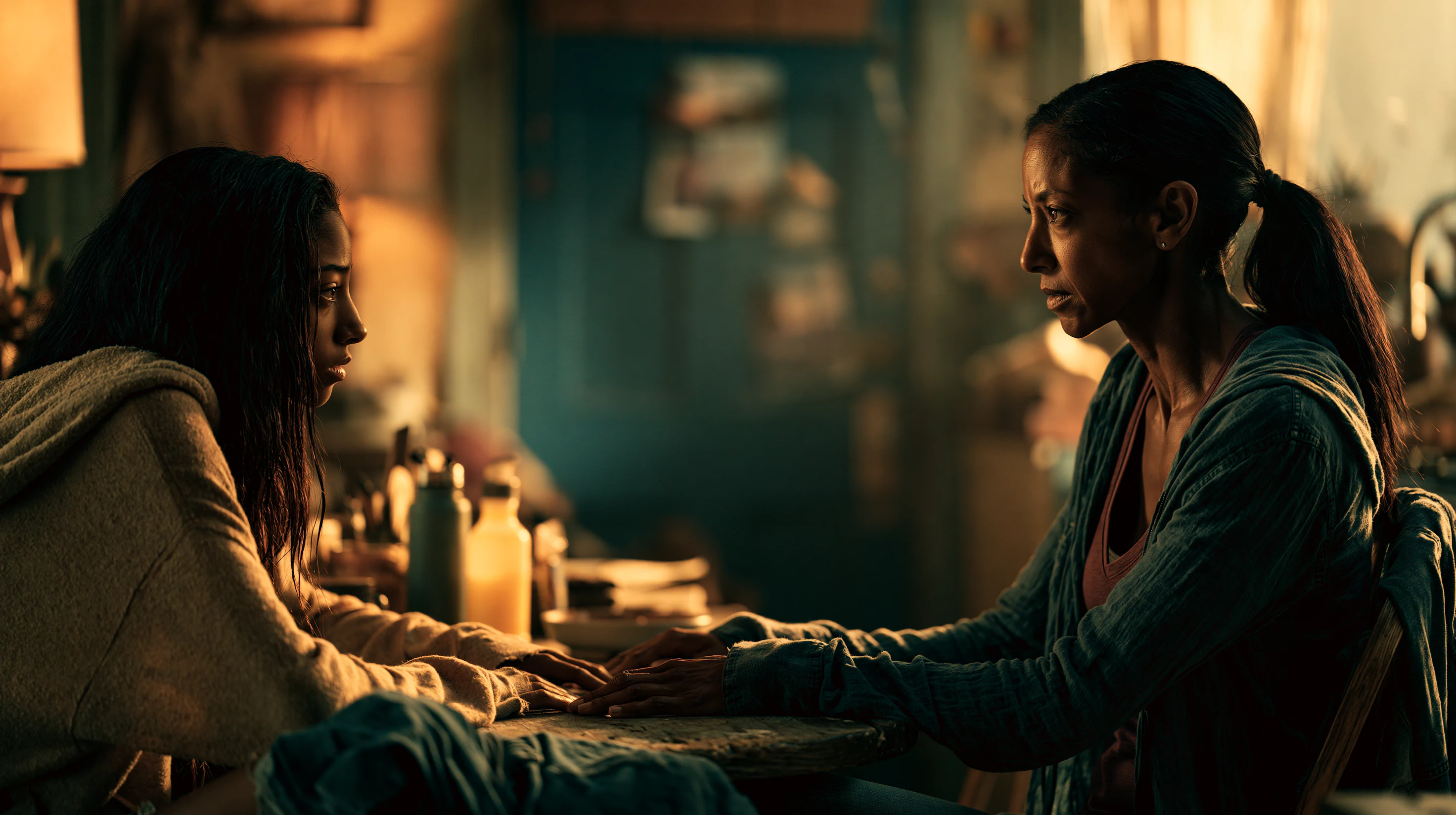
The math doesn't add up: she said she'd done her homework, or that she didn't break the glass, and you have the proof it isn't true. She looks at you and holds the story — and something in you goes cold at once.
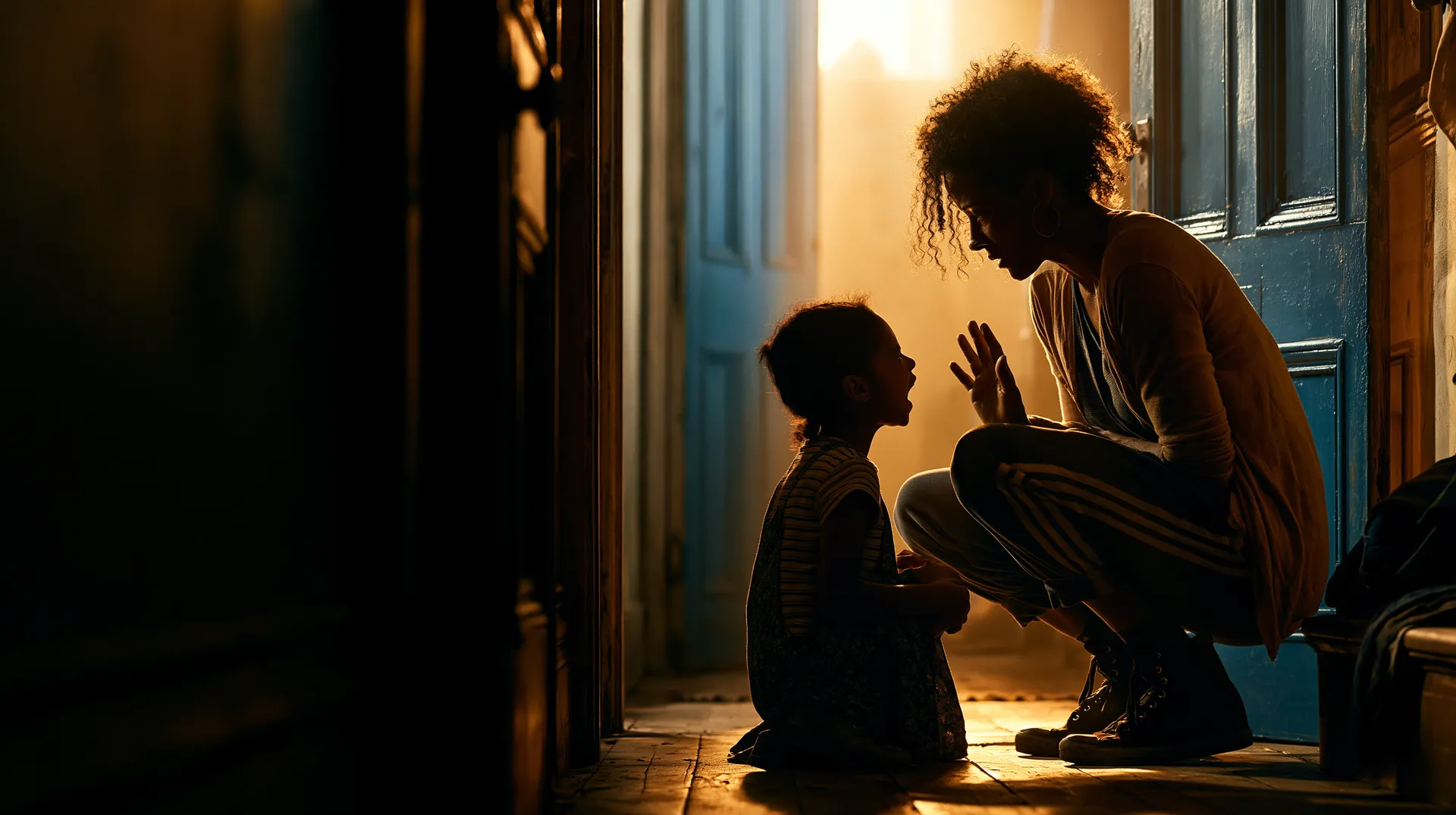
Every request, every rule, every 'no' opens an endless negotiation: 'what if I do this?', 'why?', 'just a little more', 'but yesterday you let me'. It wears you out. You feel nothing at home gets decided without a lawyers' debate.
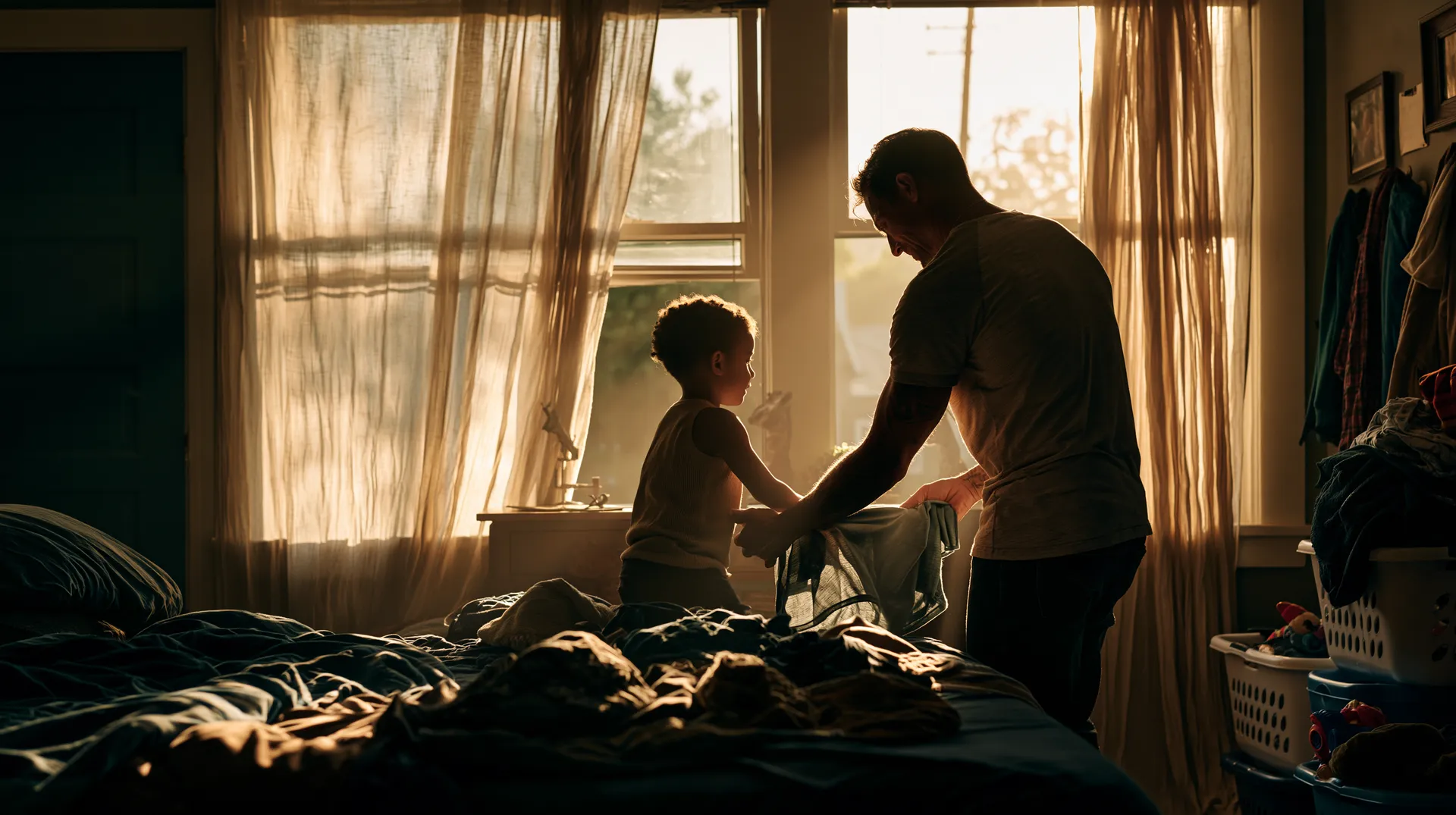
The room is a disaster, the dishes stay where he left them, 'I'm coming' that never comes. You ask him to help and he sighs as if you'd asked the impossible. You end up doing it yourself, between anger and resignation.
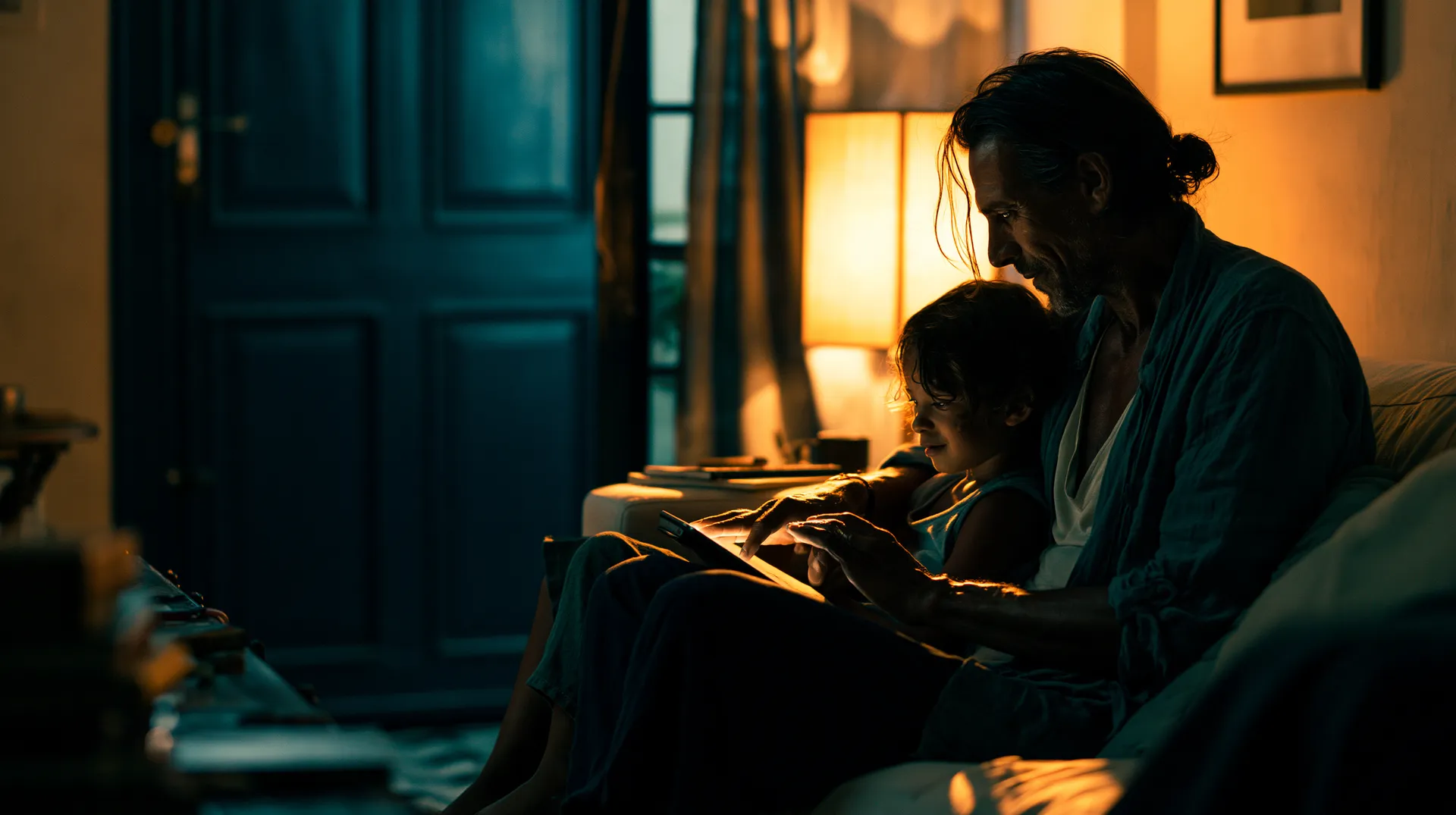
You agreed on one hour and it's two. 'Five more minutes' that never end, the tablet hidden under the sheets, the 'I'm almost done with this game'. Every cutoff is a fight, and you feel the agreement is worth nothing.
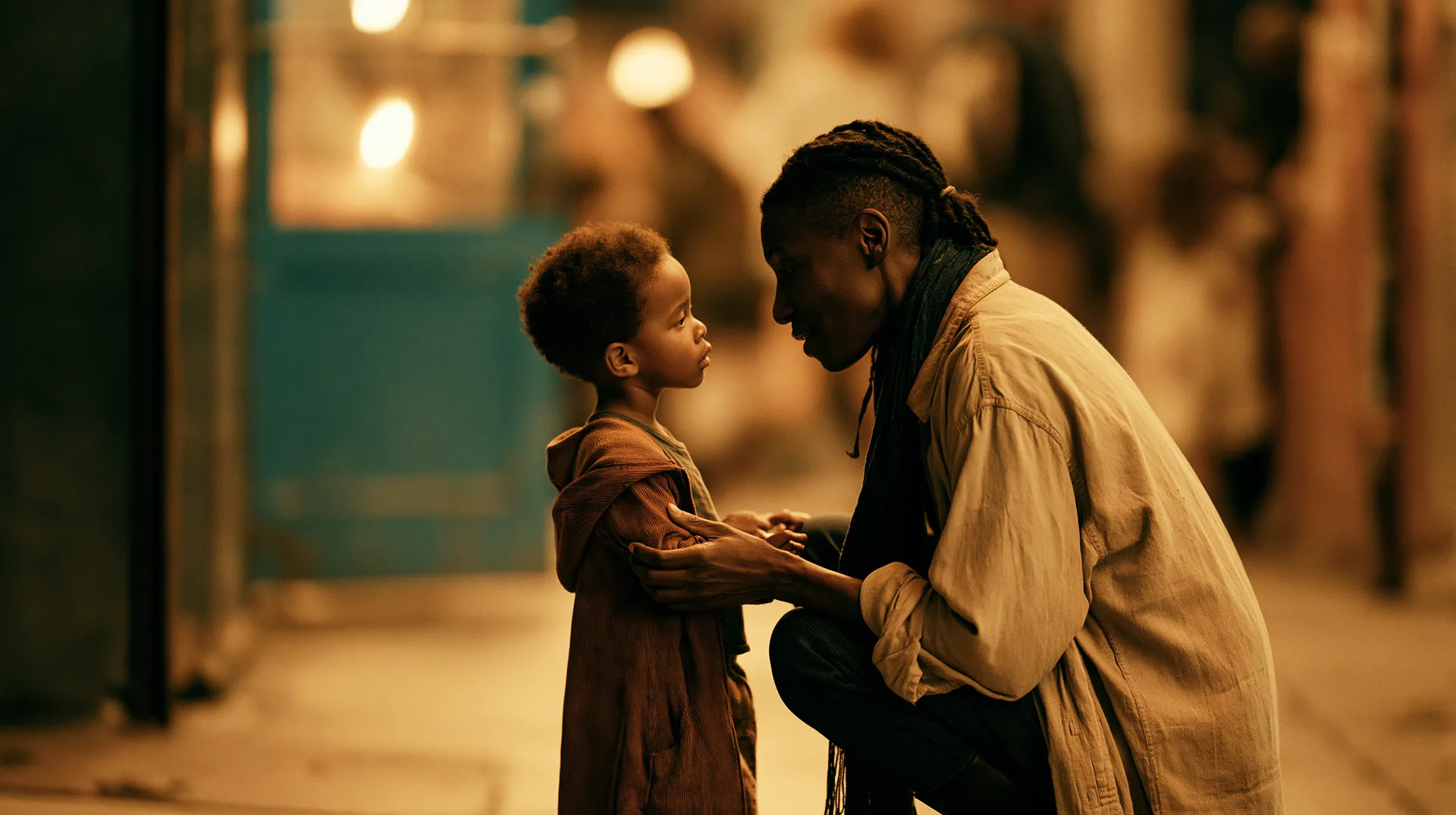
At the supermarket, in line, at someone's house: they throw themselves down, scream, kick because you didn't buy something or things don't go their way. Everyone's looking. Your face burns and you just want it to stop, now, however you can.
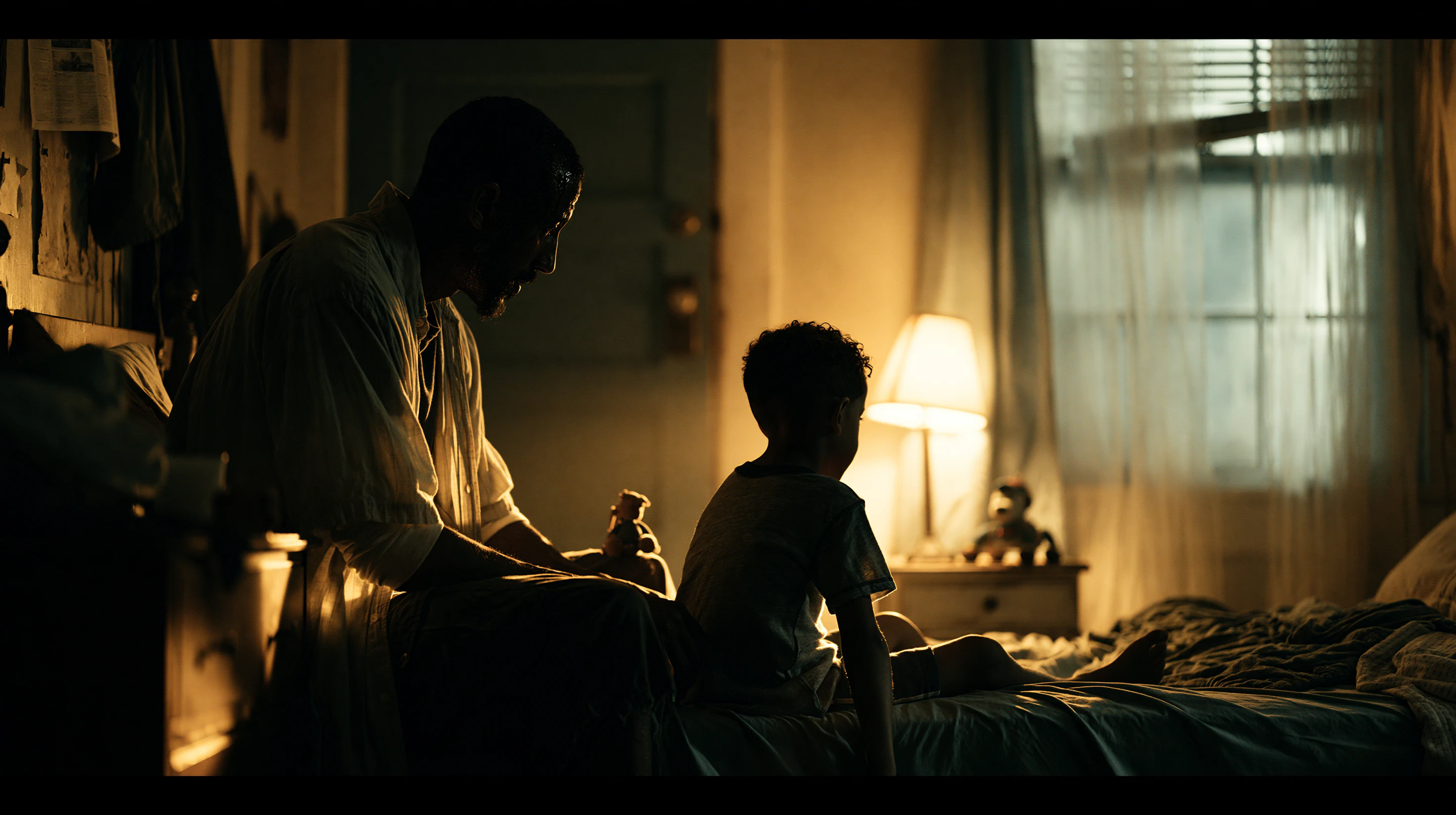
A toy you didn't buy turns up in his backpack, or money is missing from the kitchen drawer. Your son didn't pay for it and didn't ask: he took it. And now you hold the proof, and in your chest an ugly question about who your son is.
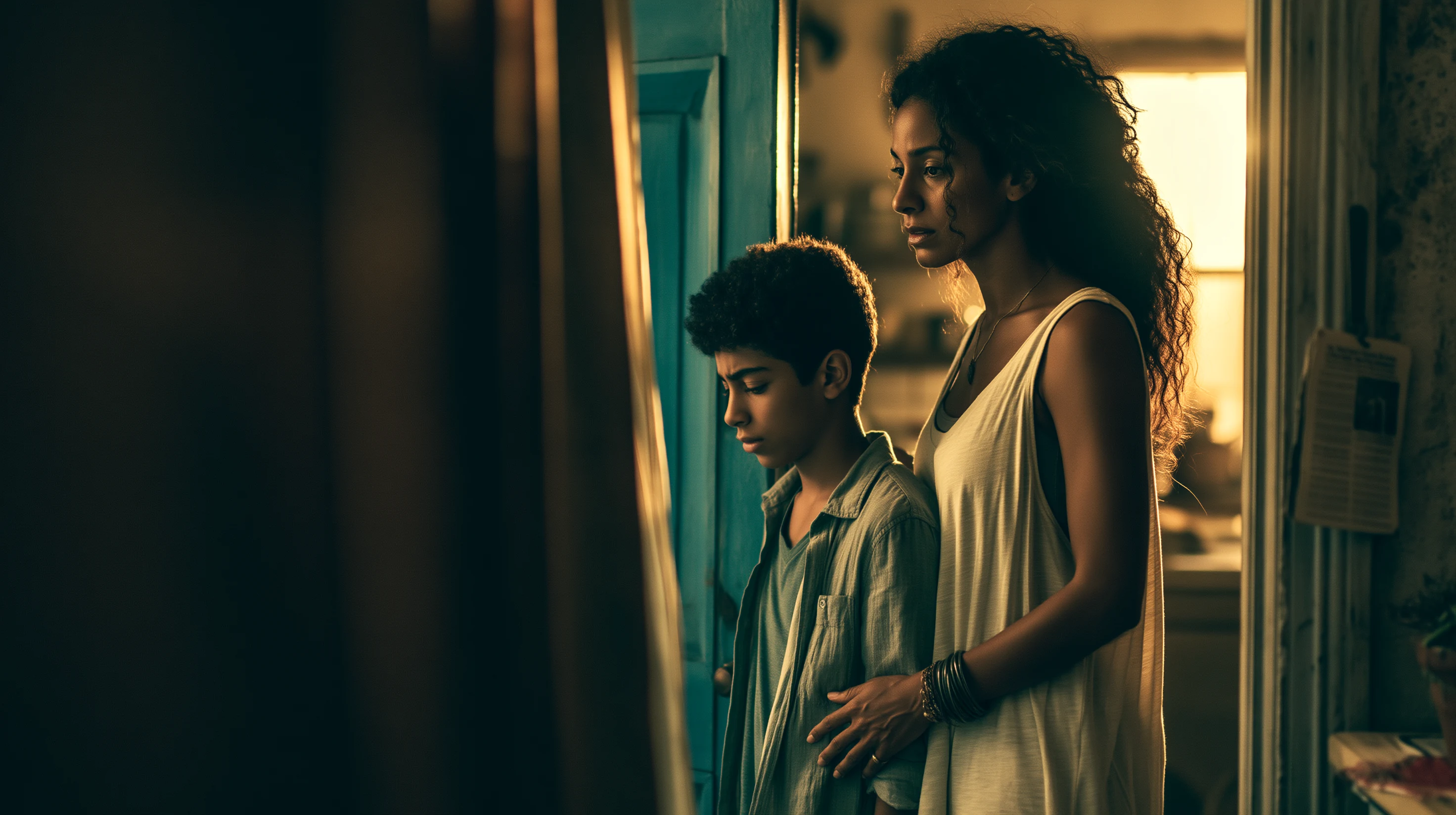
In front of the guests, or in the middle of the supermarket, your son answers you with a contempt you'd never seen in him: a 'leave me alone', a gesture, a mocking imitation. A silence falls — and all eyes, his included, are on you.
It's later than agreed and you hear him come in different: the laugh too loud or the silence too careful, the glassy eyes, the unmistakable breath. Your fifteen-year-old son came home drunk — and he reads your face just as you read his.
He drops a line that freezes you: «I wish I'd never been born», «better if I weren't here», «what's the point». In passing, in a fight, or at night in tears. Your heart stops and you don't know what to do with what you just heard.

She said she was at a friend's house studying, and it wasn't true. You find out through a message, another mother, a detail that doesn't fit. You don't know where your daughter really was — and that's exactly what takes your breath away.
They ask to go to a party where, you suspect, no adults will be supervising. 'Everyone's going,' 'don't treat me like a baby.' You waver between giving them a bit of world and the fear of all that could happen that night.
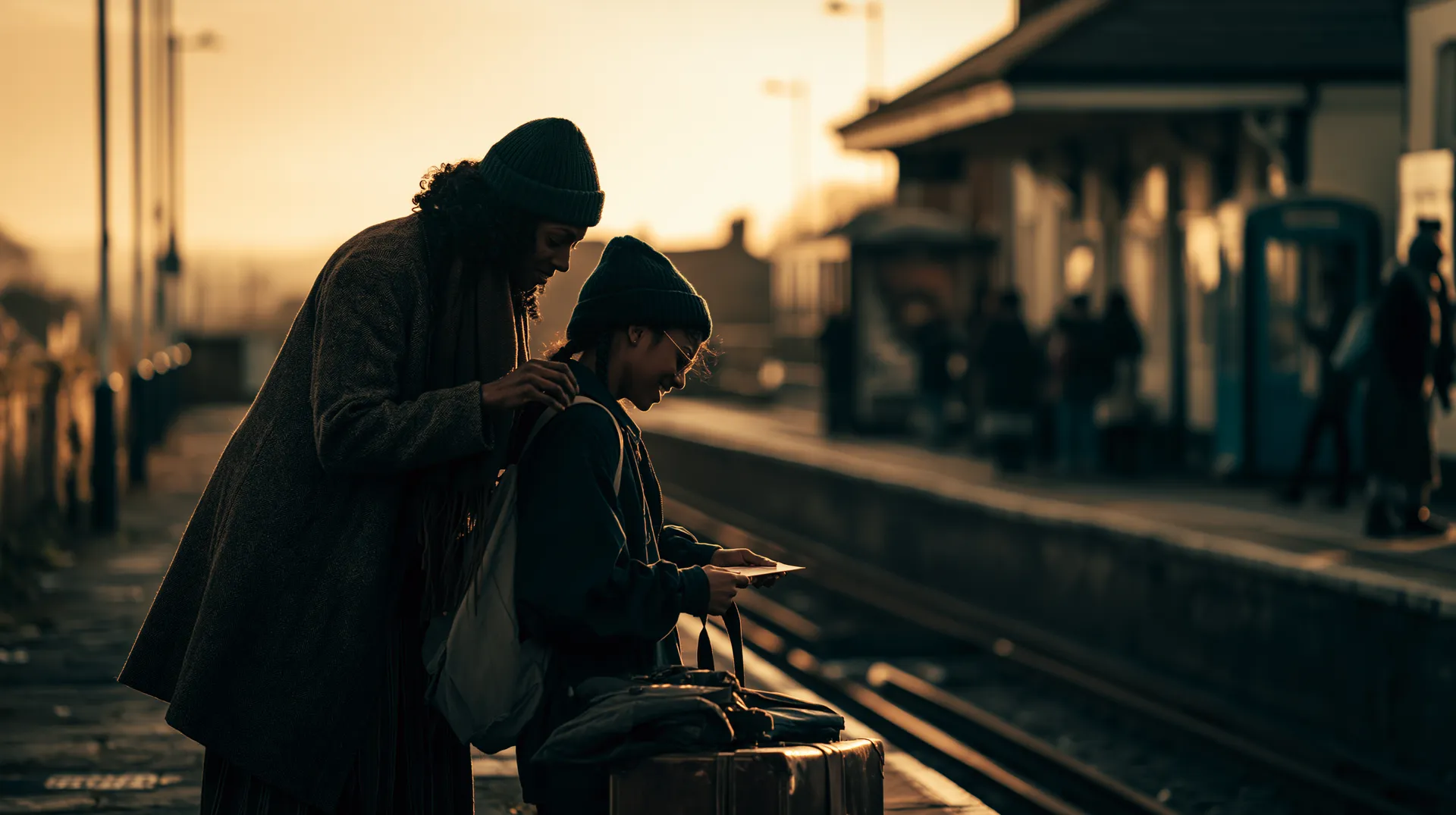
A concert across the city, a day trip, a big outing with just friends and no adult at all. They're beyond excited. You're thrilled to watch them grow and terrified of the crowd, the distance and all you can't control.
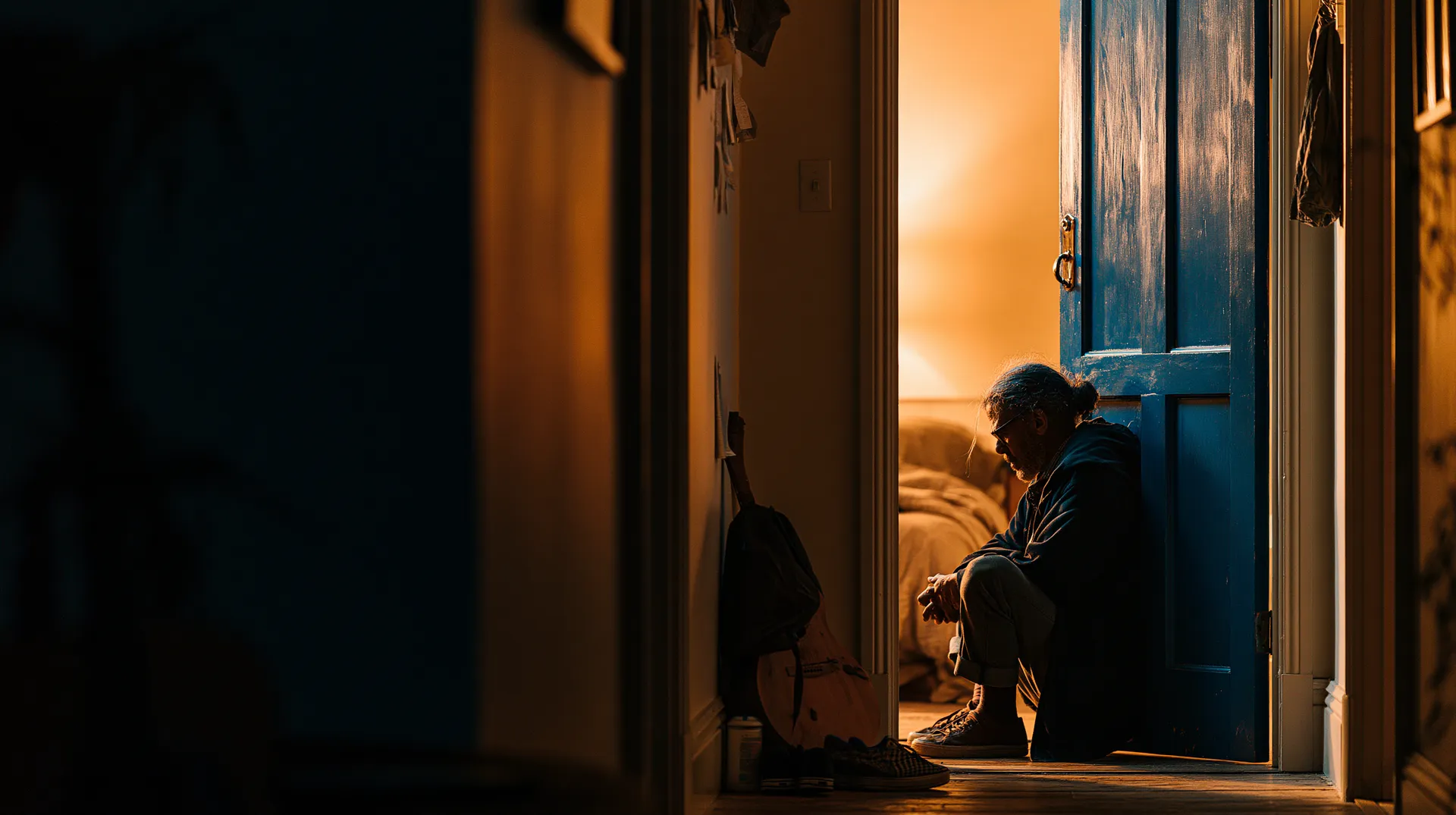
Cuts or marks that don't add up, long sleeves in full heat, locking the bathroom door, strange objects hidden. You suspect —or you've confirmed— that your son is hurting himself on purpose. The ground opens under your feet.

You find out there's an intimate image of your son going around — or that he sent one, or that someone is forwarding it. He may tell you scared to death, or you may find out from outside. The ground shifts: this is no longer just at home.

A strange smell on her clothes, a little gadget you don't recognize, money that doesn't add up, a new, closed-off group. Nothing is proof on its own, but the sum has your stomach in a knot: you think your daughter is vaping, or more.

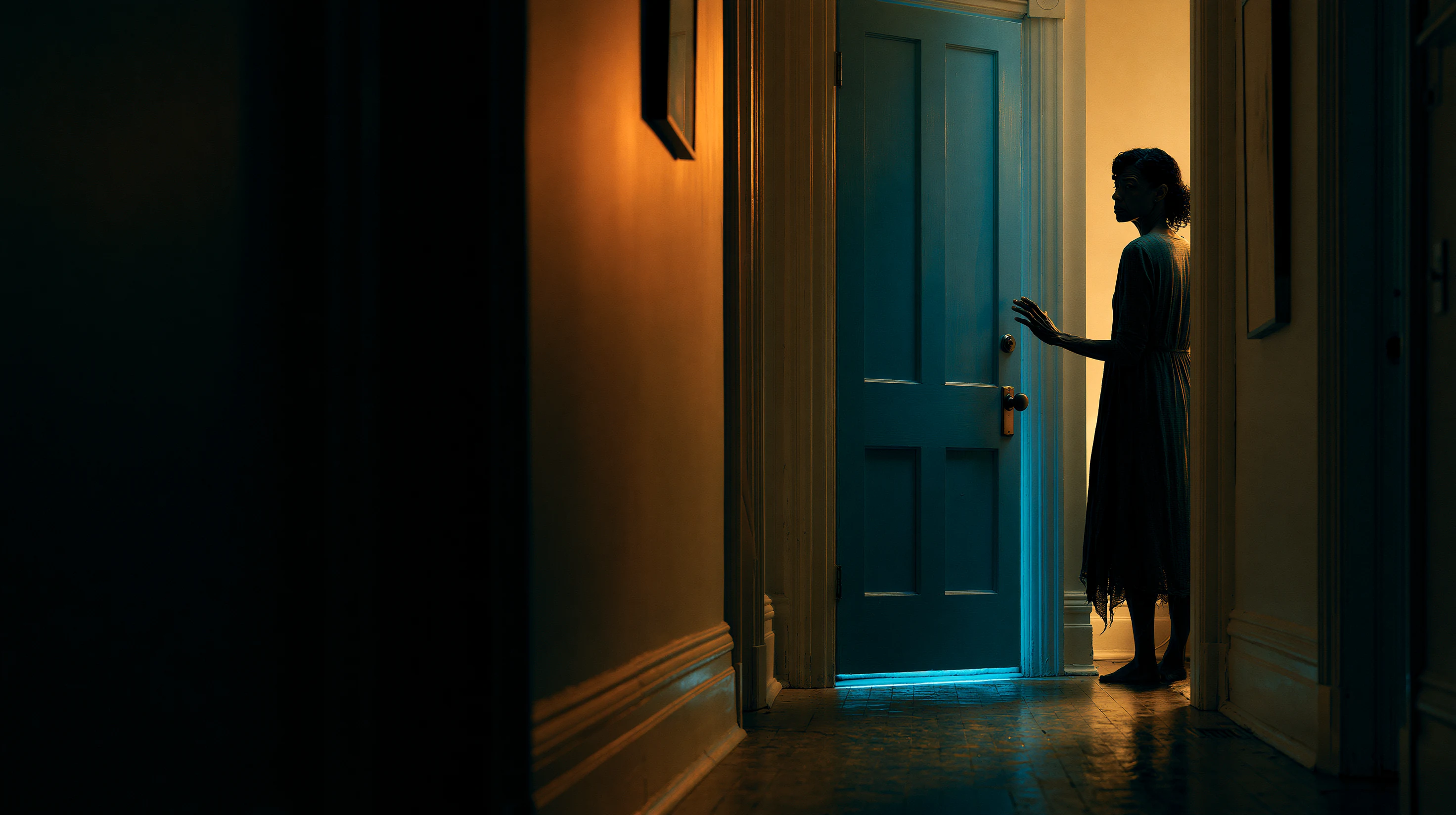
You get up for water and see the line of blue light under the door. Your daughter has been awake for hours on her phone — three in the morning, a school night. In that dark hallway it all hits at once: fear and exhaustion.
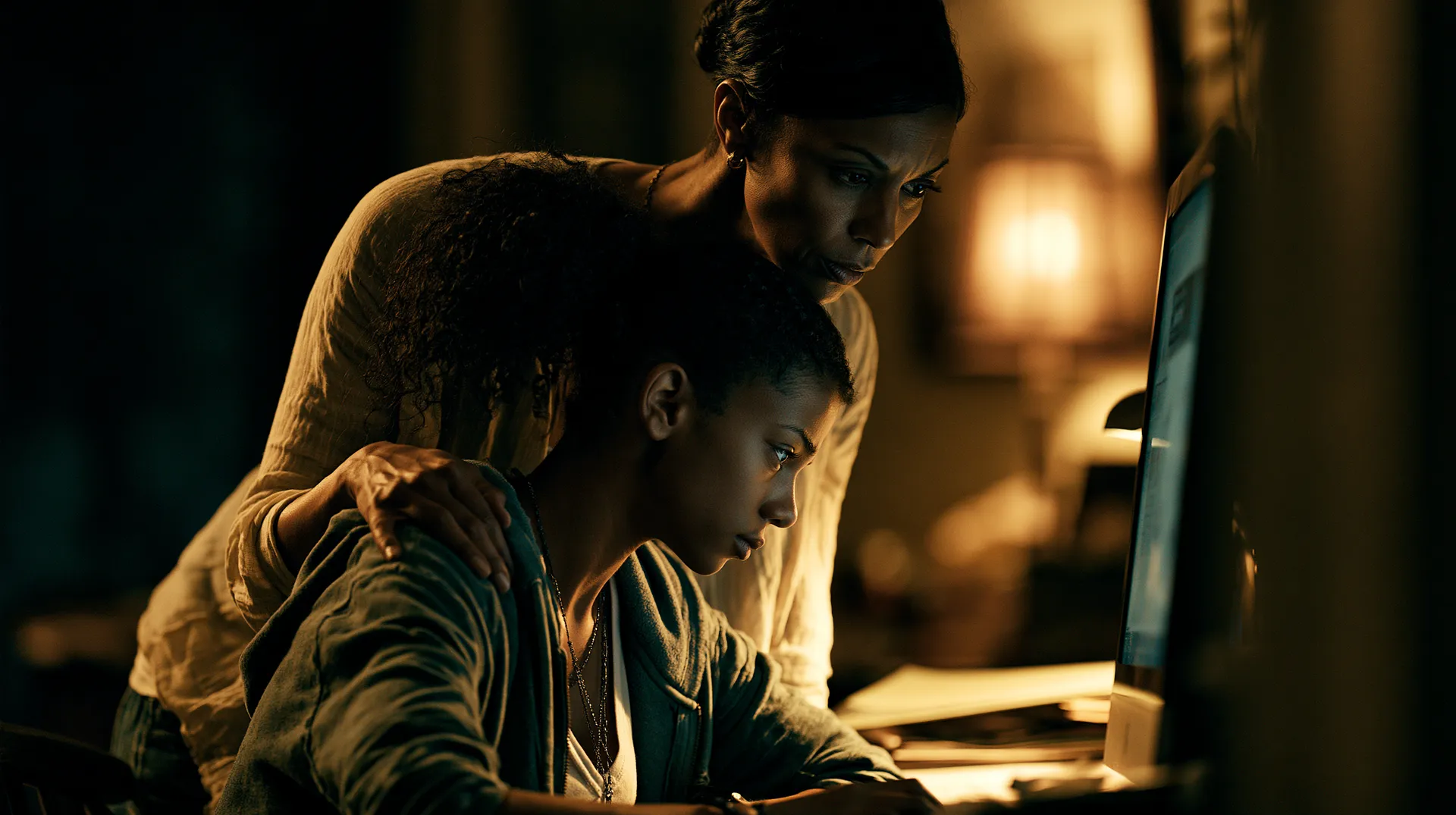
It's not that he plays anymore — it's that nothing else exists. Every «five more minutes» ends in a fight, and when you turn off the console he reacts as if you'd taken away something vital. You're starting not to recognize him.
He posts where he studies, his real-time location, the house routine, photos that give away more than he thinks. He does it naturally, without seeing the risk. Alarm bells go off in you at what a stranger would know about your child.
Your son mentions a «friend» he's never seen in person: someone from a game, a chat, an app. He messages him a lot, defends him, shuts down when you ask. You don't know who's on the other side — and that sets off an alarm in you.
You discover that an adult or a stranger is messaging him: very kind messages, digital gifts, requests for secrecy or for photos, insistence on moving to a private chat. Your blood runs cold and you need to act without breaking trust.

You find that your child has an account you didn't know about —a hidden profile, an app you didn't know he used— apart from the one you see. You feel betrayed and worried: what is he hiding, who does he talk to, what does he post there?
This time she's not the victim: she's the one who hurt. A comment that humiliated someone, a group mocking a classmate, a screenshot to ridicule. You see it with your own eyes and something tightens — the one who harmed is from your house.
You see the charge and it doesn't add up: in-game purchases, one after another, sometimes on your saved card. Between the anger over the money and the fright that he didn't grasp what he was doing, you can't tell if it was mischief or more.
«Five more minutes» that turn into twenty, the tablet that won't be put down, the «coming!» that never comes. The same scene again at the same hour, and tonight you're both tired and short-fused. You feel like you're about to blow.
Your son comes home dimmed, or you find out yourself: a group where they humiliate him, comments that crush him, an image or nickname passed around to mock him. Someone was cruel to him online, before many, and he's living it alone.
He arrives with a sharpened argument: everyone in his class has a phone, he's the only one who doesn't, and being left out of the group chat truly hurts. It isn't pure whim: there's something real about belonging underneath.

They announce, very seriously, that they're going to be a youtuber or content creator; that this is their thing. Between your skepticism and the fear of exposure, you don't know whether to laugh, forbid it or take it seriously.
'Everyone in my class has it.' Your daughter wants to open an account on that network, and the platform's minimum age is still far off. She insists, argues, gets frustrated. And you're between 'I don't want her left out' and 'not yet'.
A link, a window that popped up, a video someone sent him. You find out he saw sexual images he wasn't looking for and had no way to process. He looks confused, maybe ashamed, and you don't know where to begin.
The school year started and with it, the class group chat: two hundred messages an afternoon, memes, voice notes, and by day three the first fire — screenshots making the rounds, a cruel nickname, two camps, someone leaving the group with a digital door-slam. Your son is inside — or worse: you discover there's a separate group and he's not in it.
The essay is impeccable — too impeccable. Vocabulary that isn't his, zero crossings-out, turned in in twenty minutes. You ask him and he shrugs: “everybody does it.” You don't know if you've just discovered cheating, a tool, or the future — and out comes the lecture you swore you'd never give.
The baby arrived and the older one changed: he regresses, begs to be held, acts «up» right when you're nursing, or says to give the little sibling back. Between the exhaustion and the guilt, you don't know how to hold them both.
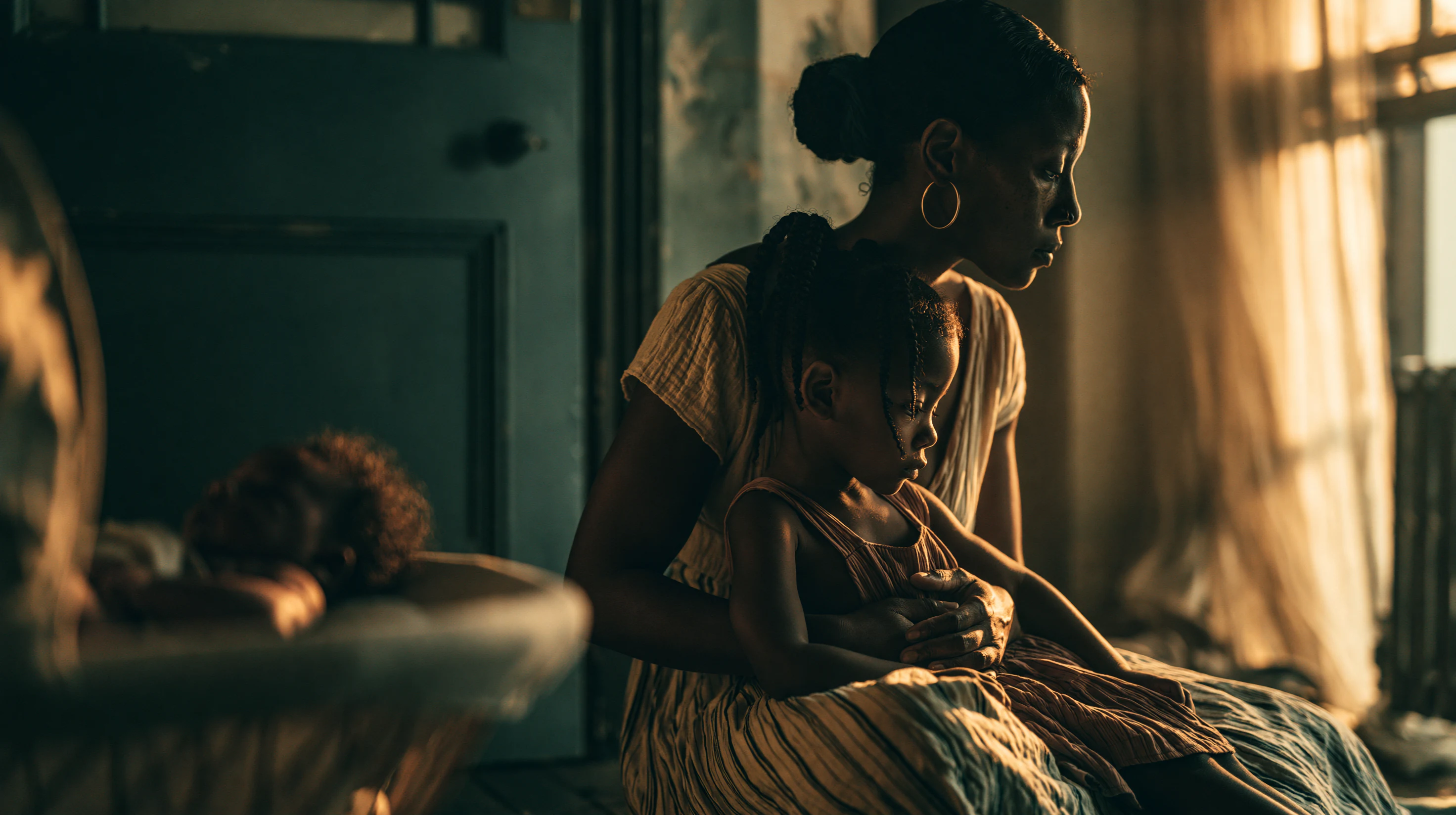
Since the baby arrived — or forever — the older one changed: he talks like a little kid again, demands to be held, gets angry over nothing, or drops a «why don't we give him back?» that chills you. Jealousy has entered the house.
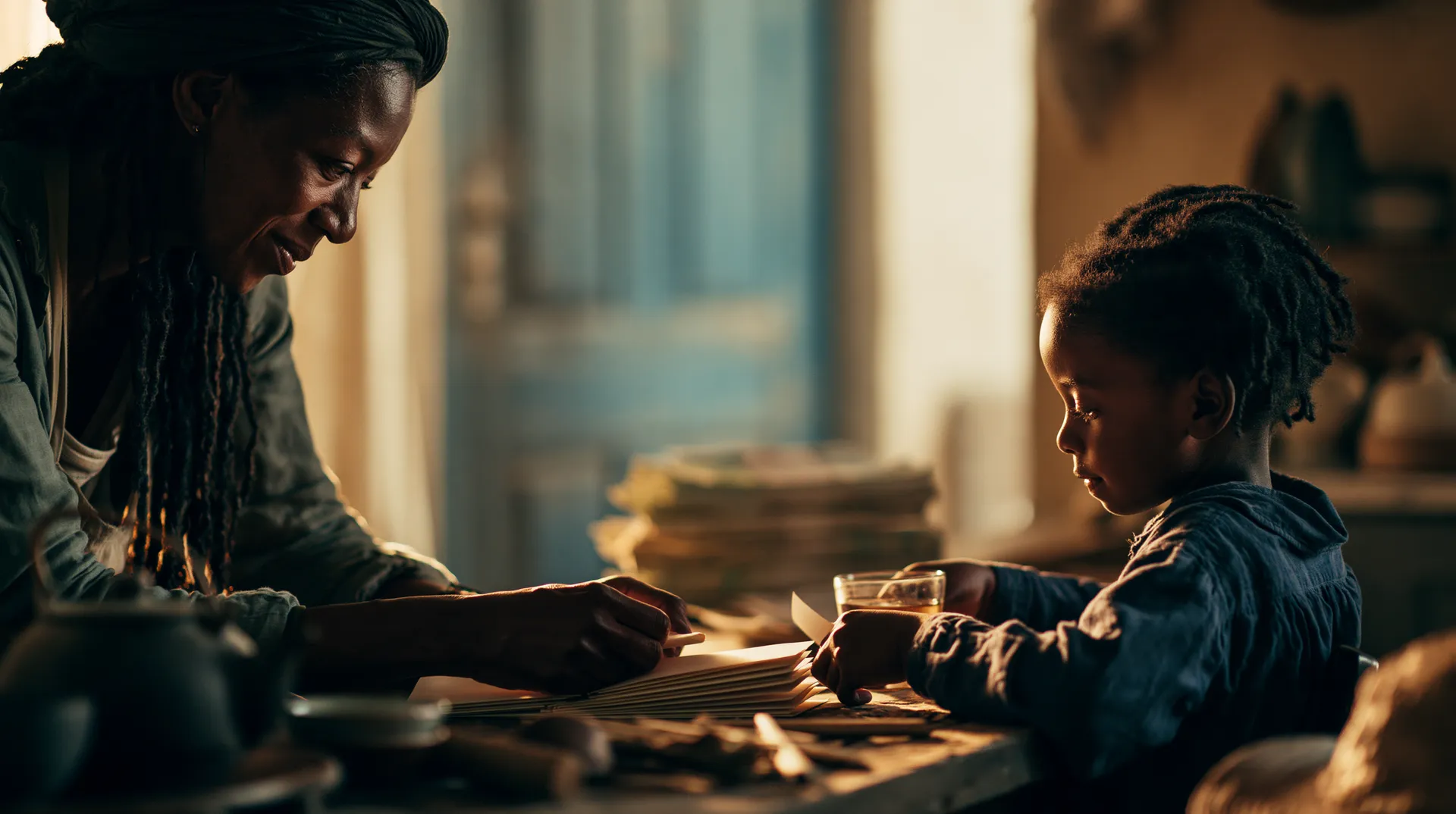
Tight times are coming —a lost job, debts, cutbacks— and your child notices: the tense talks, a «no» where there used to be a «yes», asking if you're okay. You want to spare them the dread without lying or scaring them.
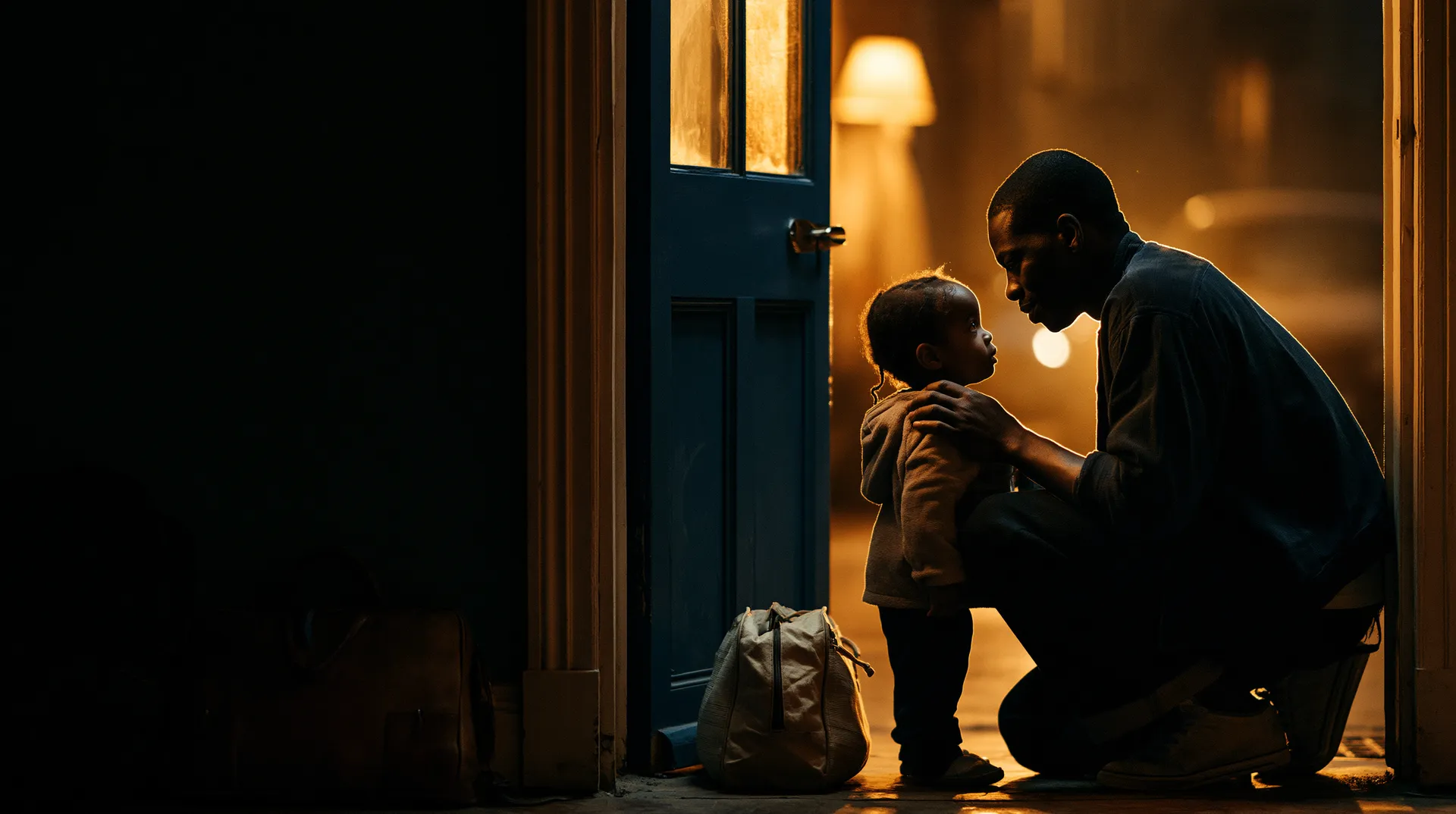
One home has schedules and limits; the other, anything goes. The child comes back unsettled, compares, plays the differences («over there they let me»). Between frustration and fear of confusing them, you're unsure how much to fight.
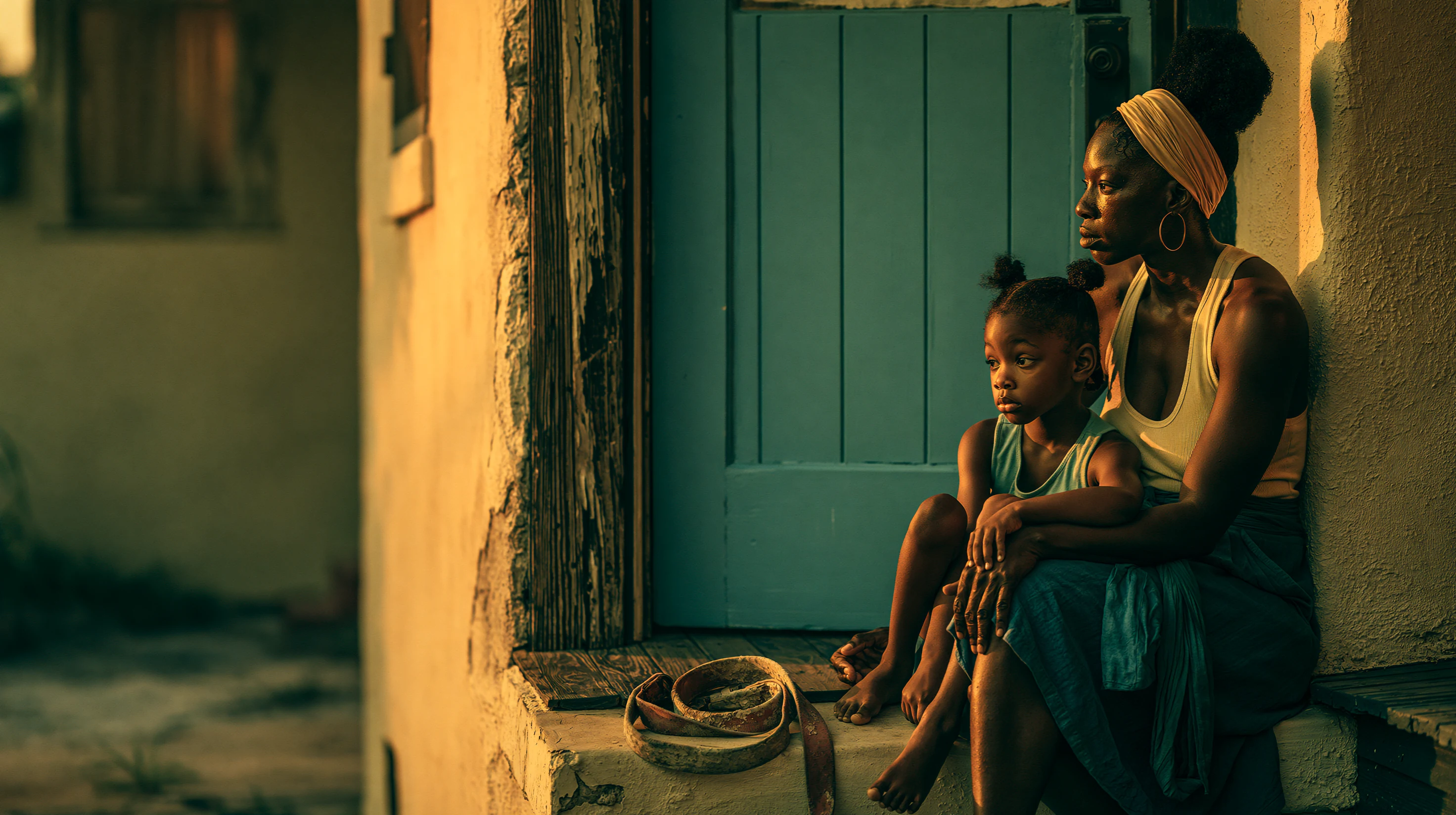
Grandpa died, or the dog that was with her all her life. Your daughter looks at you with a huge question on her face — or, worse, with an odd calm — and you have to tell her something true about death without having the words yourself.
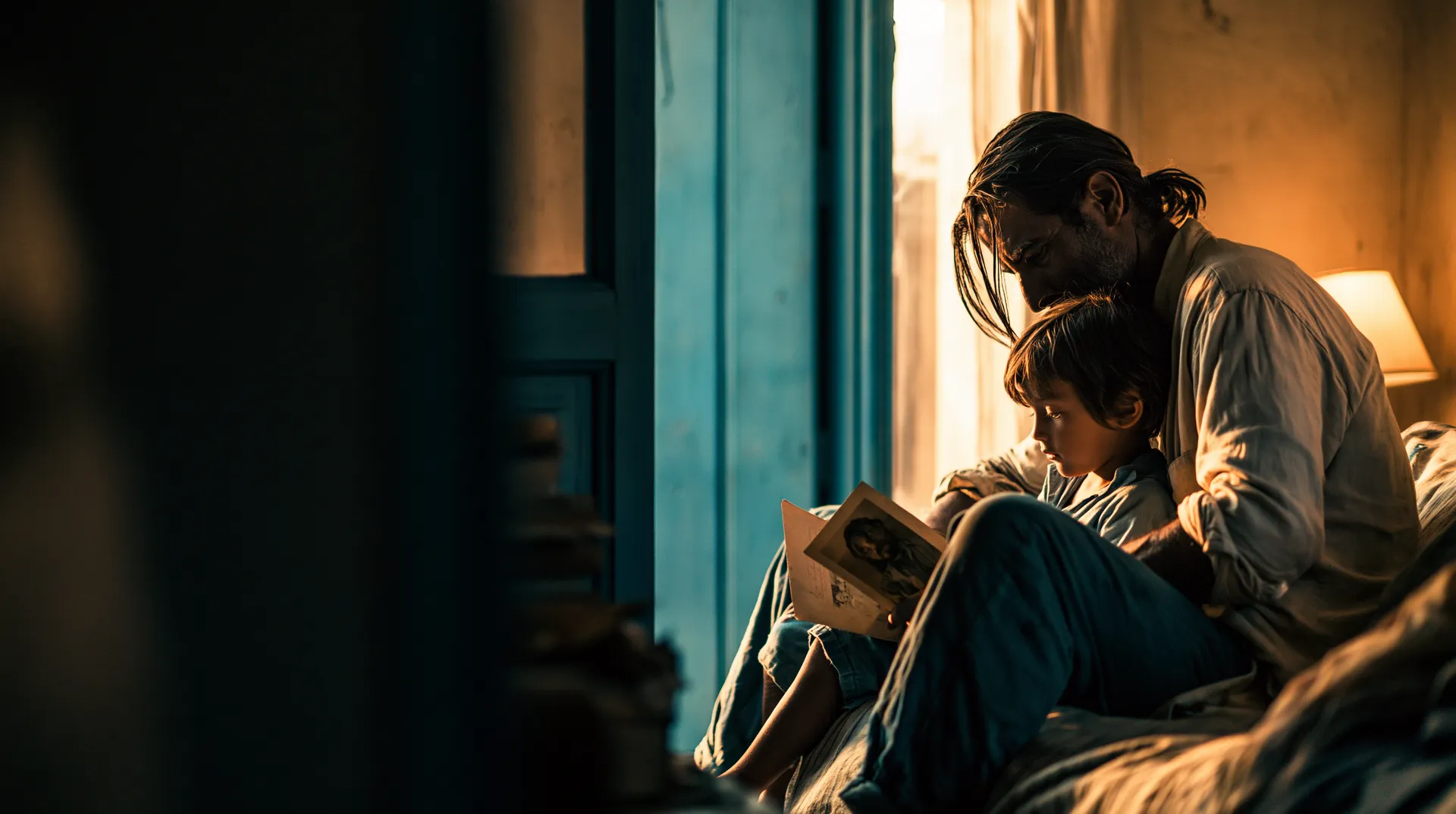
They ask about the parent who isn't there —who left, who they rarely see, who broke a promise—, they cry, or say they want to be with them. Between your own pain or anger and the wish to protect your child, you don't know what to say.
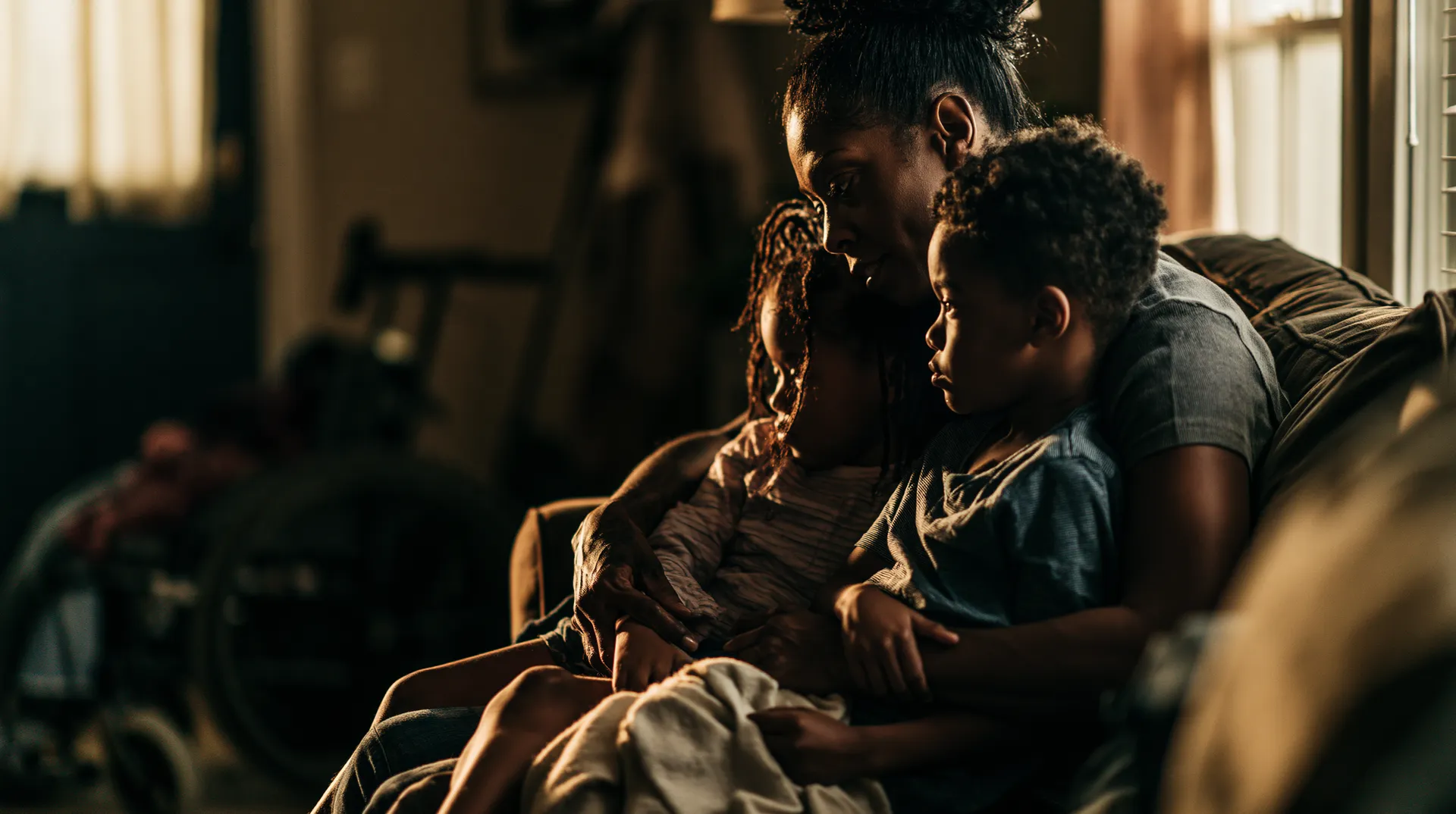
One of your children needs far more —a condition, intense care— and the other feels it: he demands attention, behaves «too well» so as not to cause trouble, or carries something he didn't choose. You love them both and time runs short.
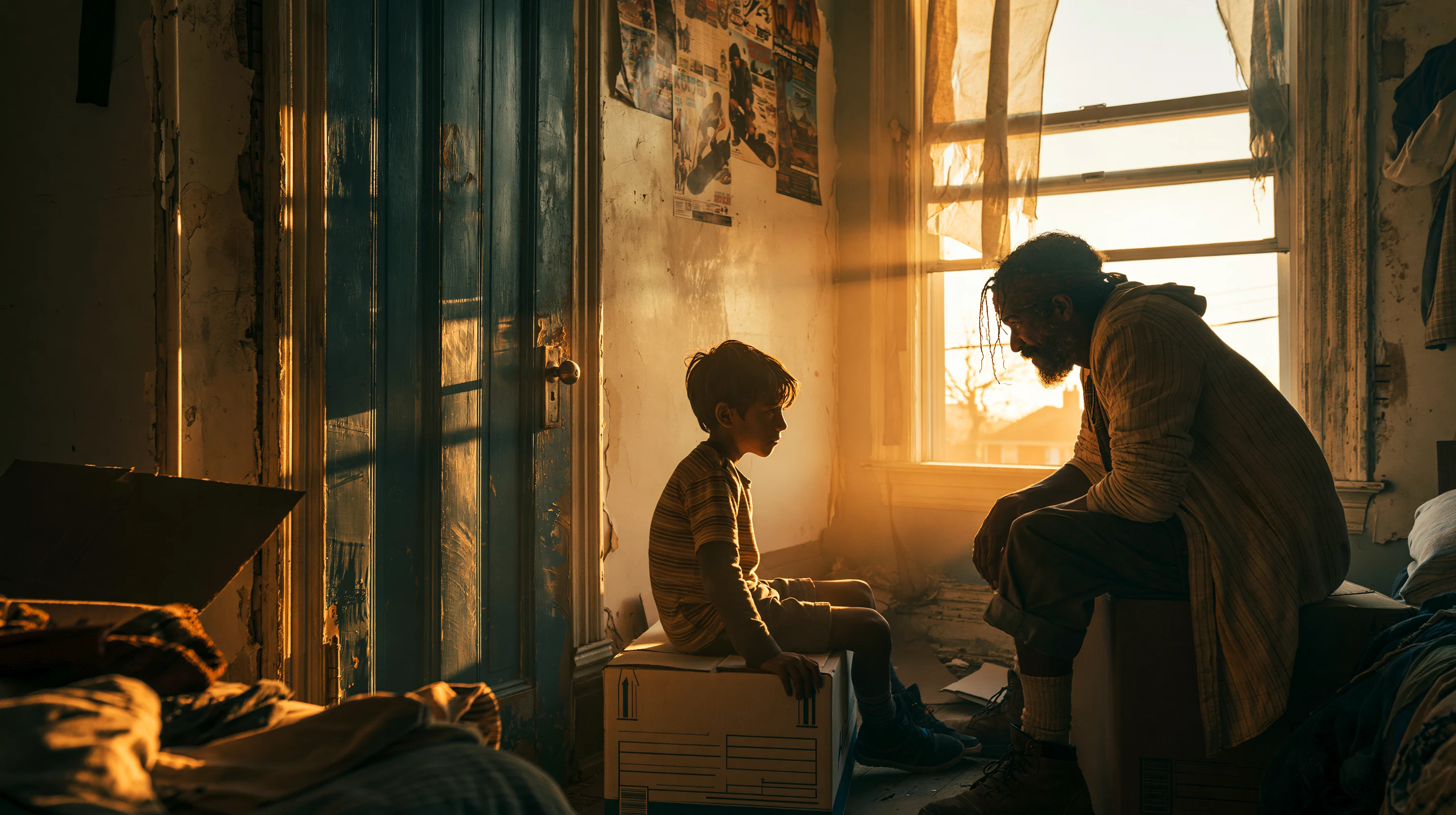
You're moving: new house, new neighborhood, maybe a new school. For you it's a decision with reasons; for your son it can be leaving his whole world —his room, his tree, the friends on the corner— and he still doesn't know how to say it.
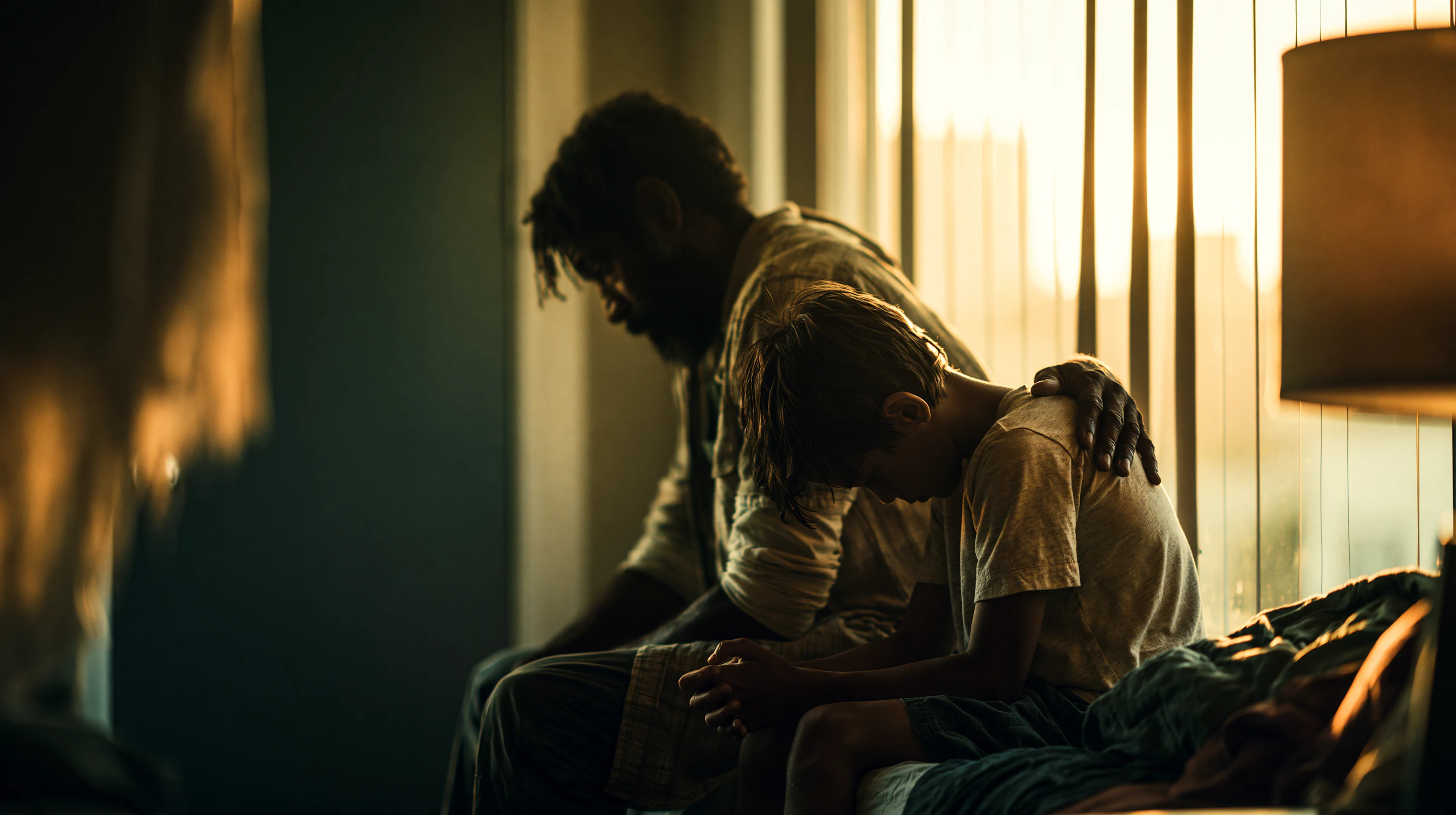
He failed a test, lost the game, or it's simply Tuesday — and suddenly he says it almost to himself: 'I'm good for nothing'. And something tightens in your chest, because that phrase, in his voice, shouldn't exist.
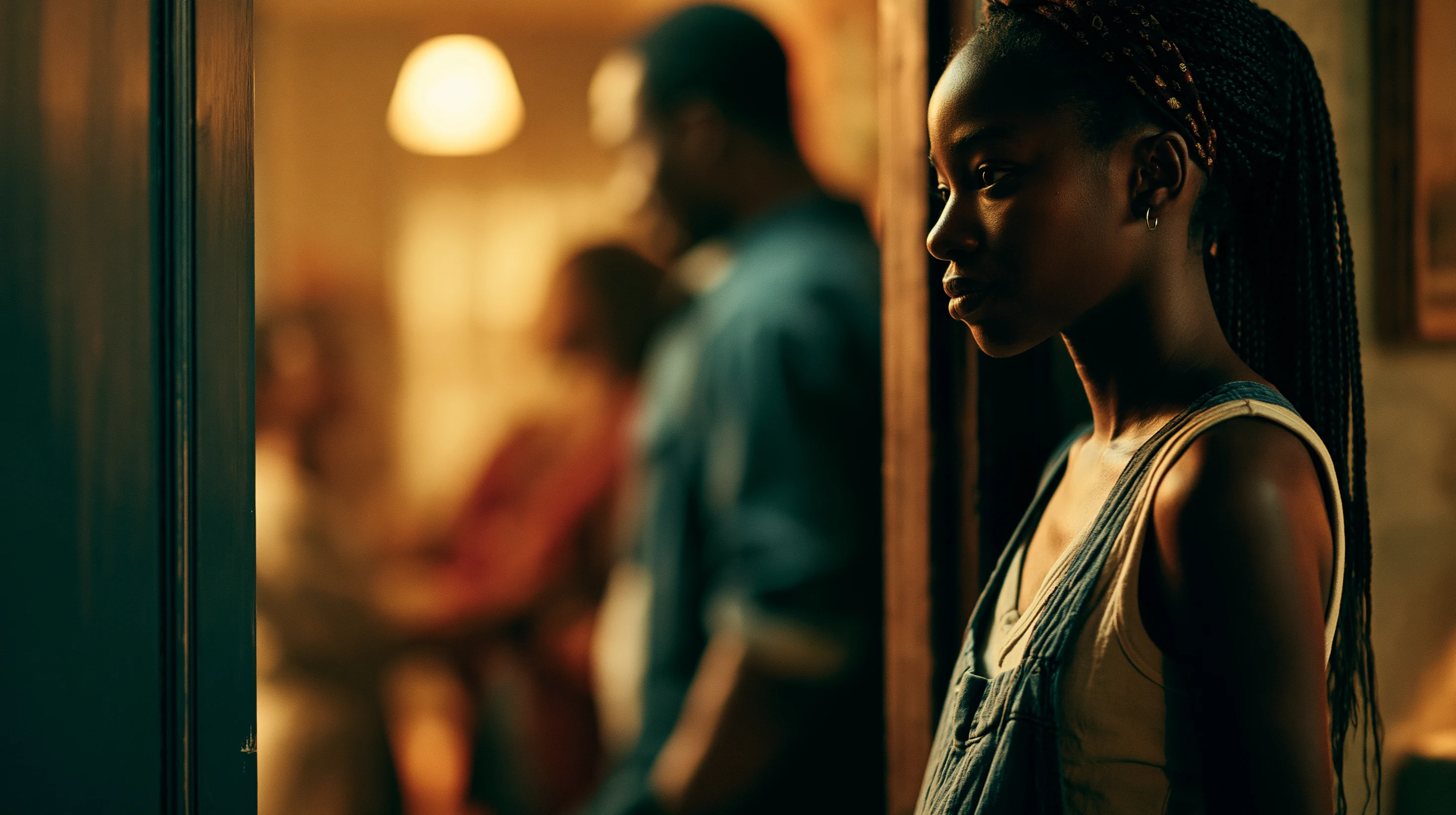
The time has come for your daughter to meet your new partner —or it's the other household debuting one, and she comes back talking about that new person—. On her face there's curiosity, wariness, and a loyalty pulled tight.
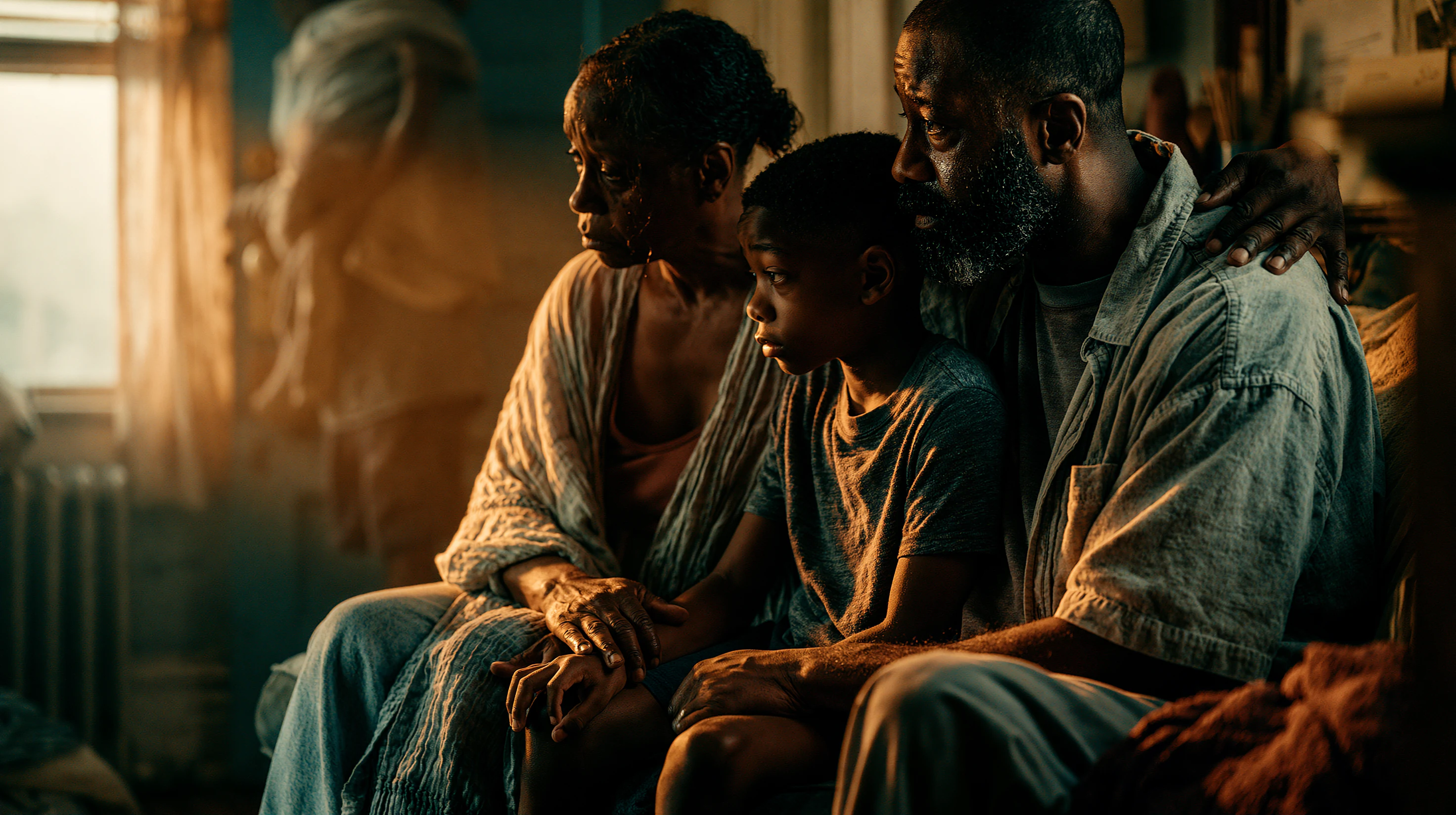
It's been said: mom and dad are separating. On your son's face everything crosses at once —the question, the fear, maybe the guilt, maybe the anger—. He's just learned that his world, as he knew it, is going to change shape.

It's not a tantrum or a bad day: for weeks you've seen her dimmed. Less laughter, less drive, the light a little low in everything. Nothing blows up — and maybe that's why it's harder to see: the sadness that stays makes no noise.
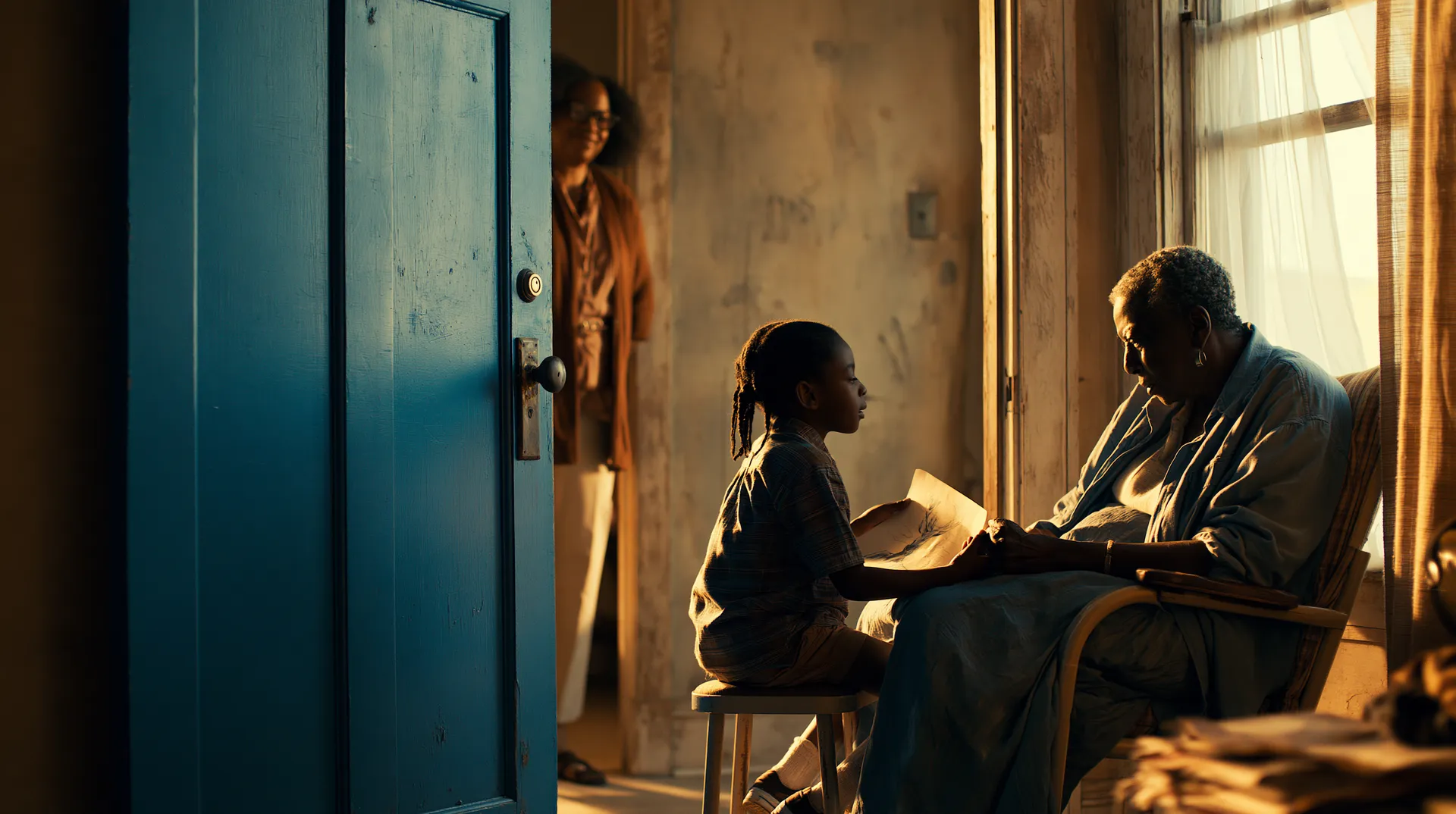
A grandparent with a serious illness or who needs a lot of care lives with you. The house has changed: less energy, hard scenes. Your child sees it all, asks, or goes quiet. And you, between caring and parenting, can't get to everything.
The teacher describes him as exemplary: attentive, cooperative, sweet. But at four-thirty he crosses the front door and explodes — crying over nothing, screaming over the wrong snack, a tantrum of the kind you thought was behind you. The first weeks of the school year are the worst. You wonder what you're doing wrong, if he behaves so well with everyone else.
Puberty, sex education, growing autonomy — those aren't situations: they're processes, and they live in the stages, each at the age it belongs to. Here we handle the events: the specific day something happens.