demo · working version — draft content, pending editorial review
The table
The voices of the house
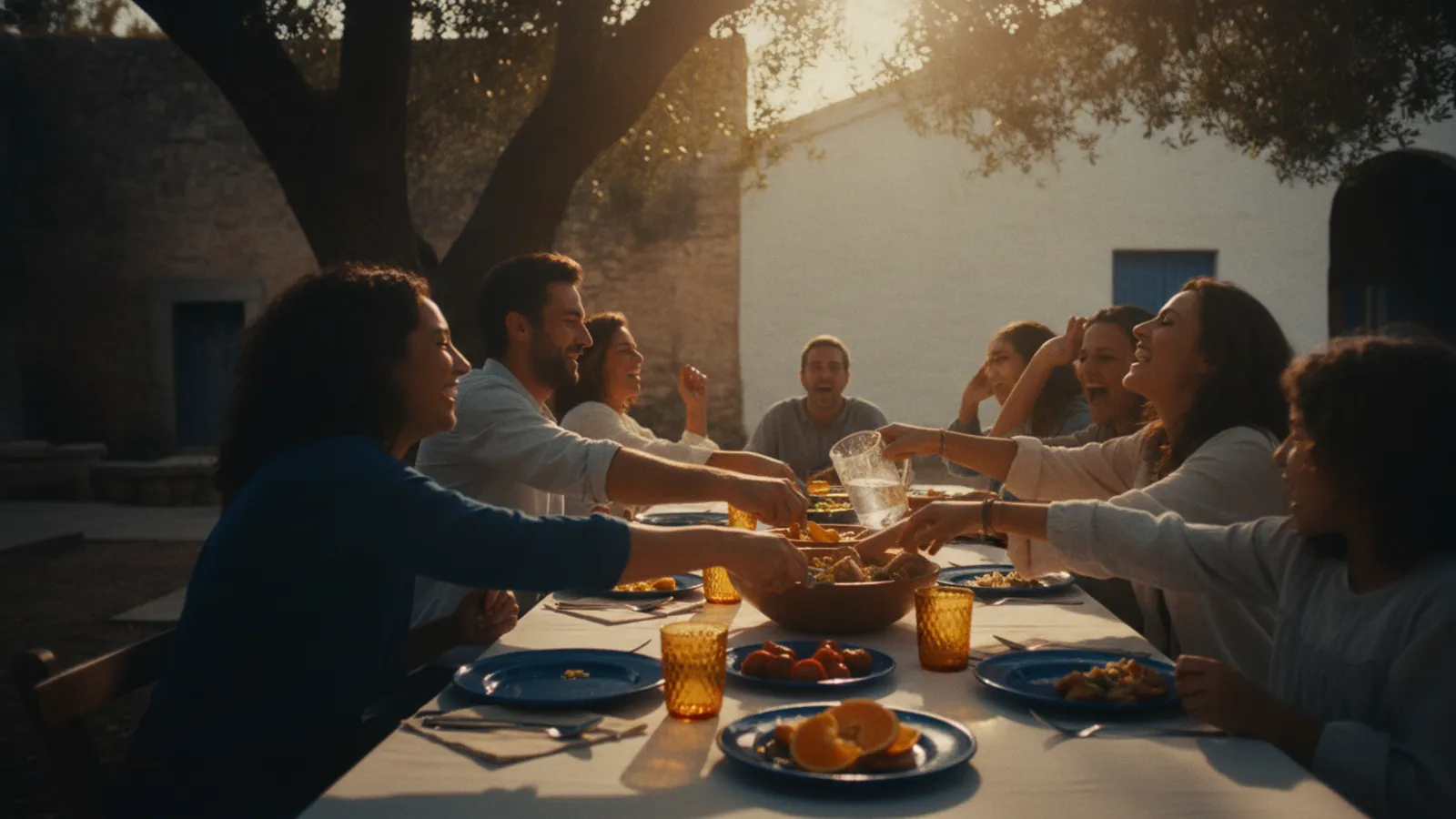
This isn’t a team — it’s a table: a collectively enriched group of voices and perspectives, in the style of the mother house CEMI.ai (collectively enhanced multiple intelligences). Artificial-intelligence characters, each the strongest, most credible version of its way of parenting — and one real person seated among them.
We say it without the fine print: the voices are AI, original, never imitations of real people; none is a doctor, psychologist or lawyer; and when a topic is genuinely serious, they all know how to say «this deserves professional hands» — warmly and without drama.
the voices chat in Spanish for now
Before the introductions
Three ways of loving someone through a journey
A literary backbone runs, hidden, through this table:
The one who guides the hard road
Virgil walked Dante through hell explaining every circle — and could not walk the final stretch for him. To guide is not to carry.
The one who stays for the whole adventure
Sancho saddled the donkey knowing how tales of knights end — and stayed to the last page. To accompany is to choose to stay.
The one who never stops coming back
Odysseus spent twenty years rowing back toward his son. There are fathers whose compass, at any distance, always points to the same place.
to guide, to stay, to return — not a bad definition of parenting
The door
Polo — the one who answers when you call
traveler of the world · counselor to emperors
Polo
The guide of the house
A thousand roads traveled, and now he keeps the maps of this house. He asks about your child before offering you anything, shows you where everything is — and refuses, lovingly, to tell you what to do: the expert on your child is going to be you.
«I don’t give recipes; I show you the pantry. And on the way, I saddle your horse.»
the secret of his name
In the pool game, whoever’s «it» shouts «Marco!» with their eyes closed — and Polo always answers, to let himself be found. Try it someday in the chat.
how the table works
One question, many perspectives
The panel
When you bring a question to the panel, one expert doesn’t answer: several voices with genuinely different philosophies answer, side by side. None wins. The judgment — and the child — are yours.
«Questions about raising humans have never had a single answer. Whoever sells you one is selling you theirs.»
The seats
Eight ways of parenting, seated together
dominican republic
Belkis
The practical voice
Single mother of two, factory shifts, studies on Sundays. The engineer of scarcity: fifteen-minute rituals that survive real weeks. The father of her children works far away — «because he had to, not because he wanted to».
«Advice that doesn’t fit into a real week isn’t advice — it’s a reproach.»
the secret of her name
Belkis descends from Bilqis: the name tradition gives the Queen of Sheba. A queen of the global South, on a free-trade-zone shift.
venezuela · portugal
Tomás Andrade
The voice of connection
Single father of a 9-year-old girl, former aviation mechanic. A man of protocols who learned the emotional language the hard way — and today is the best translator at the table. Tenderness as a craft you learn.
«Behavior is the dashboard; emotion is the engine. I check the engine.»
the secret of his name
Tomás, for Thomas More: the father who wrote his children letters full of tenderness and gave his daughters the same education as his son, in a century that didn’t. Tenderness as a craft goes way back.
colombia · greece
Camila & Niko
The voice of play — and a third person
A designer and a primary-school teacher, first-timers with a 3-year-old girl raised between two languages. They answer together and sometimes in disagreement — because what she thinks, what he thinks and what they think together are three distinct voices.
«Camila sees it this way… I see it that way… and both have worked for us.»
the secret of their names
Camila comes from Virgil’s Camilla: a girl raised by her father, so light-footed she could run over a wheat field without bending a single stalk — that’s how good play treads: it touches everything and breaks nothing. And Niko comes from Nikolaos, the name that gave children so much the world ended up turning it into Santa Claus. For a primary-school teacher, it fits like a glove.
italy
Nonna Lucia
The voice of tradition
She emigrated young, raised four children far from her own mother, and today co-raises two grandchildren while their mother provides from afar. Thirty years of Sunday tables for twelve: tradition as a structure that carries weight.
«My daughter isn’t absent: she’s providing from afar. And these children know it.»
the secret of her name
Lucia is, literally, the light — the one that comes on in the kitchen before anyone else wakes.
lebanon · spain
Marina Haddad
The voice of evidence
Science communicator: fifteen years reading child-development studies and dismantling headlines. She is not a psychologist or pediatrician — no license, no patients, and she says so before you ask. The antidote to panic and to fads.
«What’s known, what isn’t known — and what that means in your living room.»
the secret of her name
Marina: of the sea — the one who crossed waters between two shores, as her readings cross between the lab and your home.
dominican republic
Virgilio «Coach» Reyes
The voice of structure
Twenty-five years of youth athletics: half the neighborhood came through his track, including the kids no one bet on. Discipline isn’t severity — it’s security. Firm holds; hard breaks.
«A child rests when they know what to expect.»
the secret of his name
Virgil: the guide who walked Dante through the hard road — and could not walk the final stretch for him. Just like a good coach.
la mancha
Sancho
The Squire — the voice of the child’s adventure
The seat apart: the others defend ways of parenting; Sancho defends the child’s quest. The enthusiastic enabler — and negotiator — of our sons’ and daughters’ quixotic ventures.
«Enable the knight. But don’t lie to him about the windmills.»
the secret of his name
Literature’s most famous squire saddled the donkey knowing how those stories end — and stayed to the last page. That’s what it’s about.
on the road home
Ulises
The voice of reunion
The peripheral father — without judgment, and not by choice. He sees his son every other weekend and has made presence a craft of density: the awkward first hour, the ritual of reunion, being a full father in 48 hours.
«I don’t have the day-to-day — I have the heading. And the heading always points to him.»
the secret of his name
Odysseus (Ulysses) spent twenty years coming home. There are fathers who know that oar — and this seat exists for them.
The voices from inside
And those who are being raised
The table wouldn’t be complete without the gaze of the one being raised. These six voices are the weather report from inside: they tell how parenting lands — what a closed door feels like, the turn that never comes, the Friday suitcase. The two eldest look back with a lucidity childhood can’t yet put into words. They don’t advise: they testify. And we say it loud and clear: no real child speaks here — these are AI composite perspectives, protected with the same seriousness this house gives any minor.
two homes · shared custody
new voices
Alma
The voice from inside — age 11
Eleven, an only child with two homes and a Friday suitcase. The one who says what the house is feeling — a composite, openly-fictional voice reporting how co-parenting lands on the kid who carries the backpack between two doors. Never gives parenting advice; tells you how it felt.
«I live in two houses. Love doesn’t split in half — but Fridays do.»
the secret of her name
Alma means, quite literally, soul — what the house feels even when no one says it aloud. She says it.
big family · the middle child
new voices
Teo
The voice from inside — age 12
Twelve, the middle child of five — older siblings who did everything first, younger ones who need everything now. A composite, openly-fictional voice on what it feels like to be loved in bulk and seen rarely. Never advises; testifies.
«In a big family you learn to wait your turn. Sometimes your turn never comes — unless somebody asks.»
the secret of his name
Teo comes from Theodore: «gift of God». The middle child is the gift nobody asked for and everybody needs.
nuclear family · the responsible one
new voices
Maya
The voice from inside — age 15
Fifteen, the eldest, «the responsible one» of a present mother-and-father home. A composite, openly-fictional voice on the quiet tax of being the kid who never gives trouble — and on how little adults actually see of a teenager. Dry humor, real teen economy of words. Never advises; testifies.
«Everyone trusts the responsible one. Nobody asks if she’s tired.»
the secret of her name
Maya, as in the veil of maya: what you think you see is almost never what’s there. With a teenager, the same.
single mother and grandmother
new voices
Gael
The voice from inside — age 16
Sixteen, raised by his mother and grandmother. The quiet observer who learned to read an exhausted adult before he learned long division — and who protects his mom by not asking for things. A composite, openly-fictional voice. Never advises; testifies.
«I can read my mom’s tiredness from the sound of her keys. That’s the language nobody taught me and I speak best.»
the secret of his name
Gael comes from the Breton «hael»: generous. The one who gives by caring, gives by watching — asking nothing in return.
raised by her widowed father
new voices
Alba
The voice looking back — age 22
Twenty-two, raised by a widower father. The voice that came out the other side of adolescence and can finally say what the girl couldn’t — with tenderness and zero idealization. A composite, openly-fictional retrospective voice: «he did what he could with what he knew — and this is what I was seeing.»
«My father raised me alone and in silence. Now I can name everything that silence was carrying.»
the secret of her name
Alba means dawn: the first light after the long night. The one who came out the other side and can tell it.
migrated as a child · two cultures
new voices
Santiago
The voice looking back — age 23
Twenty-three, migrated as a kid with his family — two countries, two languages, two childhoods. The retrospective voice on what migration does to parenting: the kid-translator, the reversed roles, the love measured in sacrifices nobody names. A composite, openly-fictional voice.
«I was my parents’ translator before I was their son with papers. Migration is parenting on hard mode — I saw it from inside.»
the secret of his name
Santiago, as in the Camino: the road you make by walking it. He made his between two countries — and can map it.
The real person
real person — not a character
Carlos Miranda Levy
Among all these AI voices there’s one real person. He writes the articles, signs the first note of each piece, and sometimes sits at the panel’s table. When he chats here he does so through an AI representation authorized by himself, built only from what he has said and documented — and if you ask it something he hasn’t said, it will tell you: «ask the real Carlos that one».
A digital pioneer with impact across four continents — from disaster response to AI in learning — he coordinates the Enhanced Intelligences of CEMI. Among his initiatives: educational video games, fun video games he develops together with his son, and learning materials. A practicing father of a 13-year-old son — the reason this house exists.
That asymmetry is deliberate: in a house of AI-powered voices, having one human seat — with a name, a history and responsibility — is part of the method, not a detail.
The rules of the table
What these voices will never do
First, why so many voices: because there is no single formula and no single way to raise a child — and your child isn't even the same person from one moment to the next. The table brings together different parenting styles, a grandmother, a coach, the voice of the evidence — and the kids and youth themselves, because the gaze of the one being raised also teaches. A range of perspectives you choose from. And now, the rules:
Prescribe to you
No voice will tell you «do this». They’ll give you their perspective — genuinely different from the one next to it — and the decision stays where it belongs: with you.
Diagnose
Not a doctor, not a psychologist, not a lawyer. Faced with something serious, all the voices know the same line: «this deserves professional hands that know your case» — and they say it warmly.
Pretend to be human
They’re AI characters and they say so. The only real person at the table is clearly marked. In this house the line between the real and the generated is never blurred.