What if December didn’t need more shopping or a fuller calendar, just one small gesture borrowed from another table that invites everyone to slow down?
These weeks are often overflowing with noise and short on intention. Between shopping lists, year-end wrap-ups at work or school, drives between visits, and unplanned hours in front of screens, plenty of families reach January with the uneasy feeling of having raced nonstop and remembered very little. It happens under northern snow, when cold pushes everyone indoors and screens fill the afternoon, just as easily as under southern heat, when summer break begins and long days blur together without a quiet anchor at home.
In our experience, one modest practice that works across very different households is borrowing a single meaningful ritual from somewhere else in the world — not to copy it as empty décor or turn the living room into a stage, but to open a calm, hands-on, screen-free pocket around your own table.
What keeps a borrowed ritual alive
Adopting a custom born in another culture asks for two simple kinds of care. First, learn where it comes from and name it respectfully with your children, so they know real families have carried that gesture across generations. Second, pick something that doesn’t depend on overspending or turning the evening into a photo shoot. A ritual belongs in a home when it keeps hands busy, leaves phones in another room, and loosens conversation.
It also helps to notice the ages sitting around your table. At four, a child needs something concrete to touch, fold, shake, or paint even if the edges come out crooked. At twelve or fourteen, a teen usually joins far more willingly when the plan isn’t handed down from above, and they get to choose the format, the music, or who receives what you make. And in families splitting December between two homes, a light ritual — made of paper, voice, or ink — fits effortlessly into a backpack and travels wherever the child goes.
Small handmade gestures, far from screens
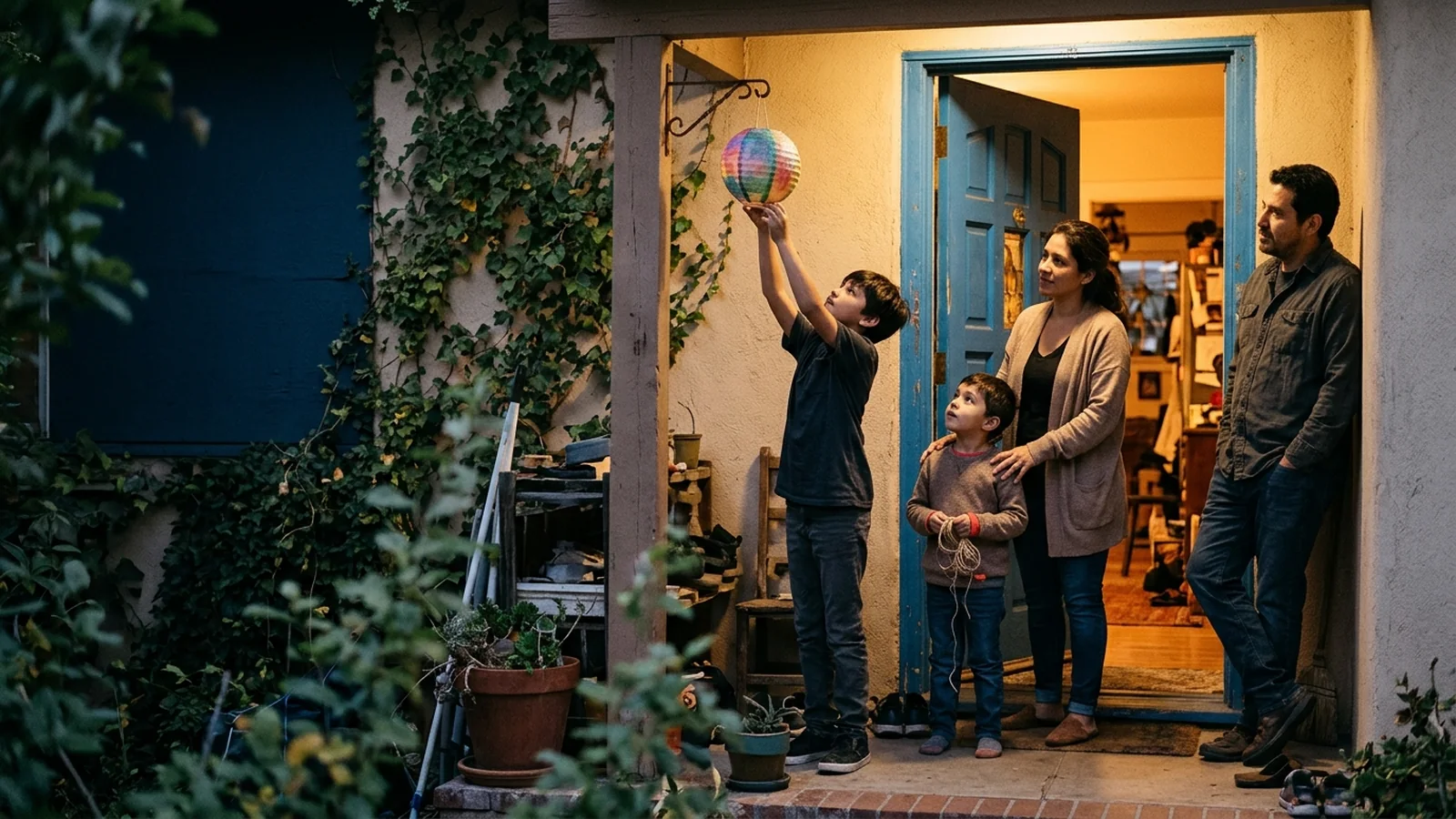
One natural starting point is making a light together at home. In very different corners of the world, December gathers people around a small glow at dusk: candles along a sidewalk, paper lanterns, or the star-shaped paroles shining in windows across the Philippines. Sitting down for a lantern and December light workshop with scrap paper, wooden sticks, and battery-powered LED lights turns the dining table into a quiet studio. At twilight — early in a northern winter afternoon, or out in the yard once southern summer heat softens — switching off the overhead lights for a few minutes and hanging each star in a window gives children the steady joy of making something that greets the whole street.
Another path just as deep runs straight against the rush of instant messages: sitting down unhurriedly to draw and write a handmade holiday postcard. A text message disappears in seconds among dozens of alerts; a folded piece of cardstock showing December right outside your door — snowbanks or palm trees — paired with one honest line about a bright moment from the year stays taped to a grandmother’s or cousin’s fridge for months. Making something for someone who cannot sit at your table gently shifts the center of the holiday: the child stops being only someone waiting for parcels and discovers the pleasure of sending company across distance.
When a house needs movement more than quiet, homemade music opens the door at once. Across the Caribbean and much of Latin America, December music isn’t listened to sitting still or streamed from a screen: it walks through the home together like a parranda or aguinaldo. Putting together a living-room parranda with wooden spoons, tightly taped bottles filled with dry rice for toddlers, and an overturned pot hands out twenty minutes of laughter and rhythm before dinner. Even the teenager who insists they have outgrown family games usually ends up keeping the beat if you put them in charge of changing the tempo or picking the final song.
Less quantity, more continuity
The modern temptation is stacking nonstop plans until adults and children alike run on empty. From where I stand, it is worth far more to pick one new habit, tell your children why it caught your attention, and tend to it without watching the clock.
When a family chooses less and leaves breathing room around it, something quiet takes root. If the afternoon lands well, next December it will no longer feel like “that experiment from another country”: it will already be turning into part of your own household story, something the kids ask to repeat because they remember who joked while folding paper or which song everyone sang walking toward dinner. And if an idea doesn’t quite click — because parenting also runs by trial and adjustment — you thank the afternoon for what it gave you and let it go without guilt.
Something to do this week
Talk for ten minutes at home, with phones out of sight, about one thing you would enjoy trying this December that feels different from the usual routine, screen-free and nearly cost-free. Pick just one — a light for the window, a card sent through the mail, or twenty minutes of living-room music — mark it on the fridge calendar, and do it unhurriedly.