This Monday, July 27 · 7 PM — Parents’ meetup in Santo Domingo Free registration →
beta · situation in draft — peer commentary, not professional advice
Situations

Good grades

everyday situation 6–910–1213–1516–18

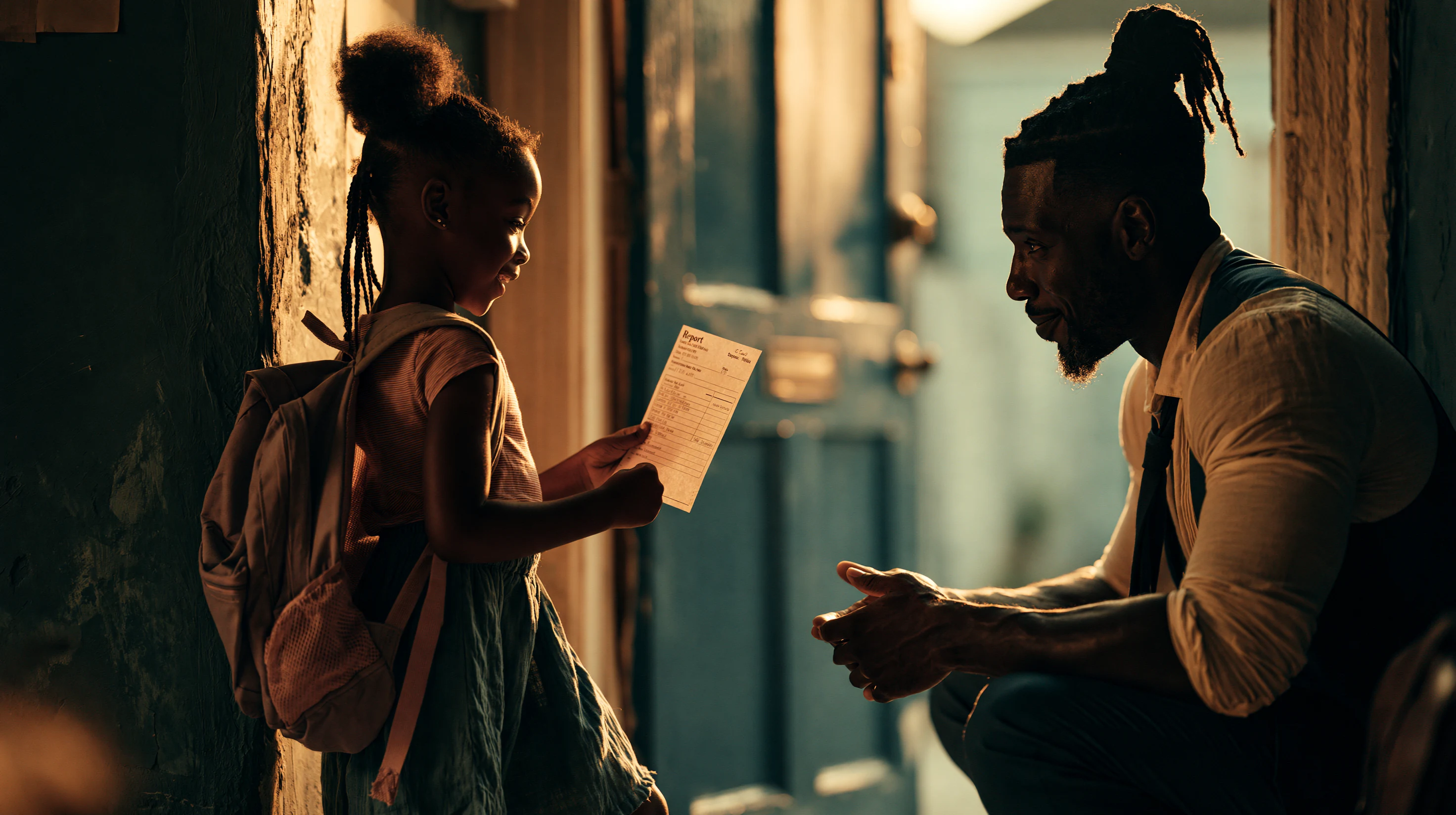
The report card arrives and it's a good one: everything high, the teacher's praise, that proud little face that fills you. Your daughter brings the paper almost running. And you, happy, are about to say the first thing that comes to mind.

What it stirs up inside you

Here the impulse isn't fear but joy — and that's why your guard drops. Pride flares, the urge to reward big, to tell everyone, to raise the bar for next time. All well-intentioned. But it's worth naming an uncomfortable question inside: am I celebrating her and her effort, or am I celebrating the grade? Because how you respond today decides whether school stays a place for learning, or turns into a factory for performing so as not to disappoint you.

What might be going on

Celebrating achievements is important and healthy — a kid needs to feel her effort is seen and celebrated. The question isn't whether to celebrate, but what and how, because something big is at stake there: if the praise goes to the grade as a result, the grade becomes currency (you study to get paid) or identity (I'm worth what I score); if it goes to the process — the effort, the strategy, the persistence, what she learned — it builds someone who learns from within. Read each child's context too: for a kid who struggles with school, a good result deserves a party; for one to whom everything comes easy, praising only the top mark teaches her not to take risks for fear of failing. Age matters: at 6-9 concrete, warm recognition is pure fuel; from 10 on it's worth making sure the grade doesn't become the axis of her identity or of your approval. And beware of what doesn't show up on a report card — kindness, curiosity, courage, talent in her own thing — which deserves celebrating just as much or more.

What's better avoided

Don't turn the grade into currency: rewarding every top mark with money, gifts or screens teaches her to study for the reward, not to learn, and the day there's no prize she switches off. Don't praise only the result («how smart you are!») — better the process («you can tell how much you studied»), because tying praise to being clever makes her avoid the hard thing so as not to risk the label. Don't make it identity or a family banner («this one's the smart one of the house»): a weight that bears down, and that humiliates the sibling next to her. Don't raise the bar instantly («and now next time all top marks!») — it turns the achievement into the new minimum and takes the joy out of it. And don't compare her to anyone, not even favorably: comparison always leaves someone measuring against another instead of against themselves.
Ways in

Several — never just one

No ranking, on purpose: no two children are alike, and yours isn't even the same as yesterday. Read which one fits your home, today — or combine them.

The door of celebrating the process, not the number

The praise points to what she did, not to what she scored: «you can tell you put in the hours», «you didn't give up on the hard part», «you found your own way of studying». Naming the effort and the strategy teaches her that the achievement comes from something she controls and can repeat — not from being «smart», which sounds like a lottery. That way the merit is hers and sustainable.

When it fits: Always the first door. Especially key with the kid to whom everything comes easy and who might stop trying.

The door of the celebration that isn't currency

Celebrate for real — but with recognition and experience, not with a fee. A meal she picks, an outing, telling it with genuine pride, a special while with you. The difference from the reward-payment is that it celebrates the person and the moment, it doesn't buy the result. The good thing about today helps too: making the recognizing of achievements — the ones on the report card and the others — a habit of the house.

When it fits: When you want to mark the achievement without installing the reflex of studying to get paid. Ideal for achievements that really cost her.

The door of widening what counts as an achievement

Use the good report card to remind — her and you — that grades are one part, not the whole: celebrate with the same enthusiasm the time she helped a friend, insisted on something that was hard for her, was honest when it was difficult, got passionate about her own thing (the muscle of passion). Let her know that in this house the whole person is seen, not just her performance.

When it fits: Always, as the underlying frame. Fundamental so she doesn't tie her worth to grades or panic at a future stumble.

The timing

The recognition goes in the moment — joy is celebrated fresh, without letting it go cold. What's worth measuring calmly is the frame: the conversation about what does and doesn't count as an achievement is an everyday one, of sustained example, not a speech on report-card day. And mind the sibling context: celebrating one in front of another who brought weak grades takes tact, so that one's party isn't the other's humiliation. The best celebration is the one that's consistent over time, not the big one of a single day.

When to seek professional hands

A good report card doesn't call for professionals — but it does call for a little attention on our part to signals that sometimes hide right behind success. It's worth looking more closely at the kid whose high performance comes with a cost: intense anxiety before every test, perfectionism that won't let her enjoy or make mistakes, disproportionate fear of failing you, sleep or food sacrificed to studying, or the sense that she's only worth what she produces. The student «who's no trouble» is sometimes carrying a pressure no one sees because the grades cover it. What we offer here is peer commentary, not professional advice: noticing when excellence is being paid for with anguish, and easing the bar in time, is our responsibility as parents — and if that pressure doesn't let up, or she takes it to the limit herself, consulting the school or a childhood professional is not overreacting. A child who learns to enjoy learning is worth more, and lasts longer, than a perfect report card sustained by fear.

Everything in this house is peer commentary and suggestion — it does not replace professional help. It's every mother's and every father's responsibility to notice the situation and to seek it when it can serve. If you need a number, check the directory of helplines by country. The full disclaimer, here.

From the library

Want more perspectives on this situation? Ask the panel — six at once — or talk with a voice from the table.