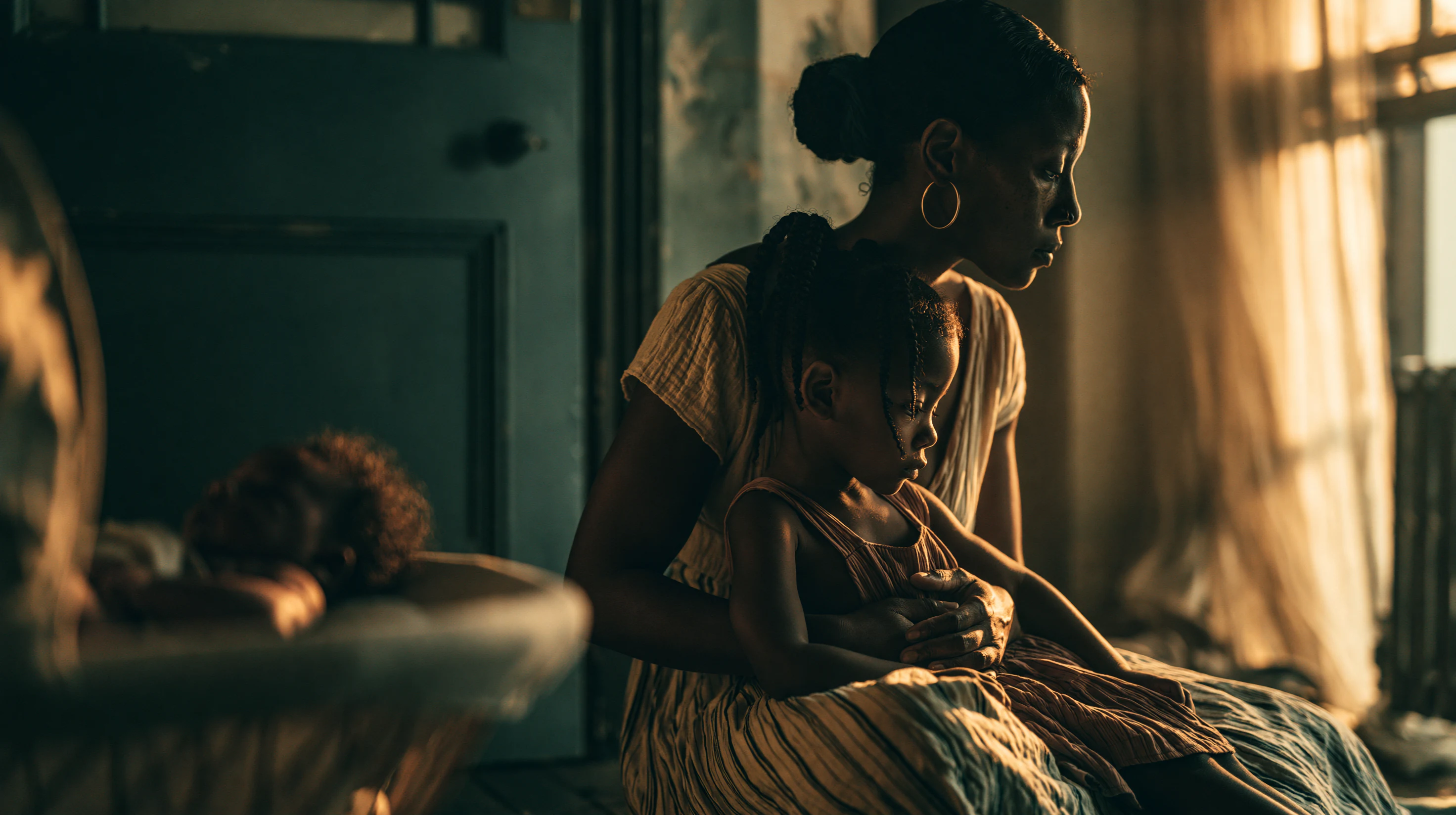
Since the baby arrived — or forever — the older one changed: he talks like a little kid again, demands to be held, gets angry over nothing, or drops a «why don't we give him back?» that chills you. Jealousy has entered the house.
What flares up in you usually carries guilt inside: the suspicion that the older one «lost out» because of your decision to have another, the exhaustion of splitting yourself, and the discomfort at a coldness you don't recognize in your child. Name the guilt inside so it doesn't steer: jealousy isn't a failing of yours nor a wickedness of his. It's the utterly healthy response of someone who fears losing what he loves most — your love — and doesn't yet know how to say it in words.
Jealousy between siblings is as universal and expectable as anything gets: it's not a character problem, it's the geometry of love and attention. Read it by age. Regression — back to the diaper, to baby talk, to asking for the breast — is the way a small child says «am I still your baby too?»; it isn't corrected, it's answered. At 3-5 jealousy is raw and unfiltered; from 6 to 9 the bookkeeping starts («you give him more»); in tweens it disguises itself as indifference or a fight over territory. And mind the household forecast: jealousy squeezes harder when the older one arrives tired, hungry or displaced from his routine. Behind almost every «I hate him» there's a «do you still love me?».
Don't deny the feeling («you have no reason to be jealous, you love him too») — denying what he feels doesn't erase it, it only teaches him to hide it. Don't shame him («big kids don't do this», «don't be mean to your brother») — shame turns jealousy into guilt, and guilt into more fighting. Don't compare («look how well your brother behaves») — you pour exactly the right fuel on the fire. Don't punish regression as a whim: the one asking for a bottle at four isn't manipulating, he's asking for security. And don't demand he love the sibling right now: the affection between them is cultivated, not ordered.
No ranking, on purpose: no two children are alike, and yours isn't even the same as yesterday. Read which one fits your home, today — or combine them.
The most direct antidote to «I've been replaced» is exclusive time, his own, with no sibling in the middle — his version of the two of you for coffee: fifteen fixed minutes that are only his, with a name and no conditions. Not as a reward: as a right. A child with the certainty of a guaranteed while with you fights much less over everything else.
Put words to what he feels, without a scene: «sometimes it makes you angry that the baby needs so much of me, right? You can feel that and still be his brother». Naming the jealousy makes it sayable, and what's sayable stops coming out in bites and slammed doors. The name of what I feel is exactly this practice.
Give him a place that doesn't compete with the baby but enlarges him: the one who knows things the baby doesn't, the older one with real older-kid privileges (an extra hour, a responsibility he enjoys). Not «look after your brother» as a burden, but «you're the one who…» as identity. Let being the older one add, not subtract.
Distribute by need, not in equal parts, and say it out loud: «I don't give you the same, I give each of you what you need — and right now the baby needs more hands; you, at your age, need other things he can't». Fairness isn't timing identical minutes; it's each one receiving what's theirs and knowing it.
None of this gets fixed in the minute of the fight: hot, you separate and contain, you talk afterward. The one-on-one time is daily and sacred — shield it even when the day comes hard. The naming is for the moment you see the jealousy surface, calmly. And choose the windows with the forecast in hand: the older one negotiates worse when hungry, sleepy or just displaced from his routine. Jealousy isn't resolved all at once; it's accompanied across a whole stage.
Jealousy between siblings is an expected part of growing up with company — it's annoying, exhausting, and worked through at home. Consider professional hands if the thing changes in nature: real, repeated physical aggression toward the younger sibling (beyond the shove), cold, sustained cruelty with no awareness of the harm, a marked regression that doesn't let up in months, or if the jealousy comes wrapped in a sadness or an anxiety that overwhelm the child and don't lift. There the jealousy may be the tip of something that asks for a look — school counseling or a child-behavior professional. What we offer here is peer commentary, not professional advice: telling normal rivalry from the signal that asks for help is our responsibility as mothers and fathers, and consulting early is never overreacting.
Everything in this house is peer commentary and suggestion — it does not replace professional help. It's every mother's and every father's responsibility to notice the situation and to seek it when it can serve. If you need a number, check the directory of helplines by country. The full disclaimer, here.
A fixed date, you and your teen, at the same table in the same café: no siblings, no agenda, no interrogation. One hour …
A child who can say "I'm frustrated" hits less than one who only knows how to scream. Naming emotions, day by day, hands…
Ten seconds before stepping in: did they sleep? did they eat? what kind of day are they carrying? Not to excuse everythi…