This Monday, July 27 · 7 PM — Parents’ meetup in Santo Domingo Free registration →
beta · situation in draft — peer commentary, not professional advice
Situations

He defied a rule head-on

delicate situation 6–910–1213–1516–18

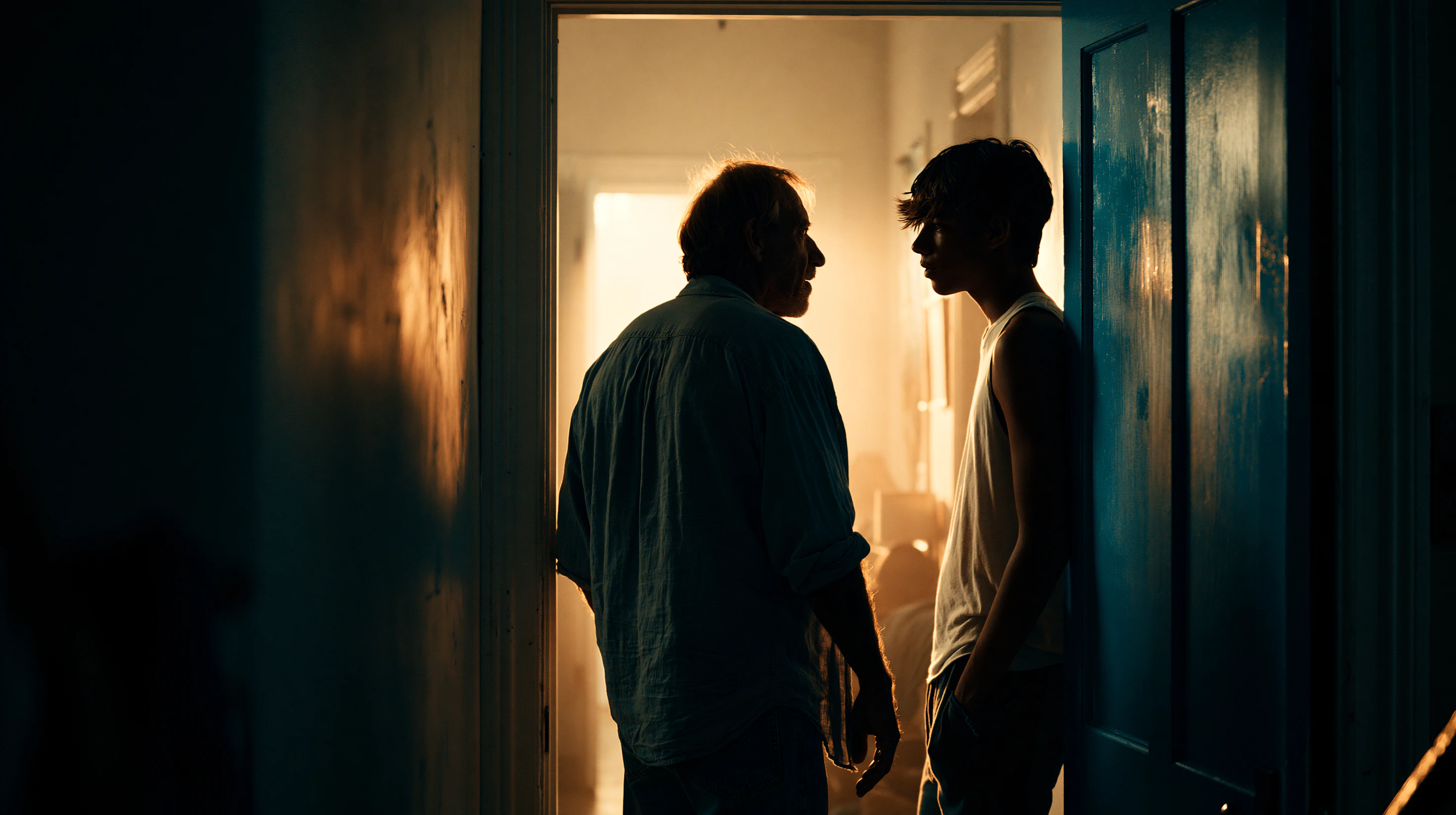
It wasn't in secret. You said no and he did it looking you in the eye: «I'm not doing it», «what are you going to do?», or he just crossed the line in front of you, on purpose. Not hidden mischief — it's an open standoff, and he knows it.

What it stirs up inside you

A head-on challenge lands on a tender spot: your authority questioned to your face. What fires is the urge to win the standoff NOW, to prove who's in charge, to raise the stakes until he folds. Name that impulse, because it's a poor advisor: the goal isn't to break him this minute, it's for the rule to still stand tomorrow. A parent who needs to win every standoff raises someone who only obeys when watched — or someone who learns to win standoffs.

What might be going on

A head-on challenge is almost never only about the rule of the moment. Read it: is it an autonomy experiment with clumsy tools (normal and growing from 10 on), a discharge of something he's carrying from elsewhere (check the forecast — sleep, a bad day, a fight), an attempt to renegotiate rules that really did get too small for him, or a provocation fishing for your reaction? Age matters: at 6-9 it's usually boundary-testing and dysregulation; in tweens and teens legitimate autonomy poorly expressed comes in — sometimes the rule deserves review, even if the way he raised it was terrible. Tell the challenge to the manner (how he said it) from the challenge to the substance (whether the rule still makes sense).

What's better avoided

Don't enter the «who can push harder» escalation — a shouted standoff forces you both to hold positions neither can climb down from without humiliation. Don't concede the rule mid-challenge to end the scene: giving in under pressure teaches that defiance is the key that opens whatever he wants. But don't confuse manner with substance either: punishing the «how» and refusing to look at whether the rule was already unfair leaves you with resentful obedience. Don't threaten punishments you won't carry out — an unkept threat is worth less than silence. And don't humiliate him in front of siblings or guests to «make clear who's in charge»: you win the scene and lose the bond.

Ways in

Several — never just one

No ranking, on purpose: no two children are alike, and yours isn't even the same as yesterday. Read which one fits your home, today — or combine them.

The door of the calm limit, no standoff

The rule holds without raising your voice or entering the duel. Short sentence, tone lower than his: «The rule stands. We'll talk this over cool-headed, not shouting.» You don't argue the substance hot or negotiate under defiance; you mark that the standoff changes nothing and lower the heat. Calm isn't weakness: it's living proof that the house's authority doesn't shift because someone pushes it.

When it fits: The default door when it's hot and there's an audience. It stops without humiliating; it leaves the deeper conversation for when thinking is possible.

The door of separating the manner from the substance

Cool-headed, two different questions. On the manner: «You can disagree; like this, defying me, no.» On the substance: «Has the rule got too small for you? I'm listening — but it changes by talking, not by defiance.» Sometimes the challenge signals that a rule has aged and deserves review; conceding it when he's right, by the right path, teaches him that words work better than a standoff. Respect runs both ways.

When it fits: Tweens and teens, especially when the rule has gone years without review. Here the defiance can be useful information poorly delivered.

The door of the proportional consequence

If the line was really crossed, there's a consequence — announced calmly, proportional and enforceable, not dictated hot or from the top of your anger. It's separate from the deeper conversation: the consequence answers the act, it doesn't avenge your wounded pride. And once served, it closes; it isn't dragged out for weeks. Proportion and follow-through teach that rules have real weight, not that mom or dad blow up.

When it fits: When the challenge went from word to deed. Essential that it be enforceable: a consequence you can't hold up teaches that rules are make-believe.

The door of looking at what's under the standoff

If head-on defiance becomes the tone of the house, the issue is no longer the rule: it's what's happening to him. Less prosecution and more presence — more one-on-one time with you (the two of you for coffee), more daily channel, looking at whether something is weighing on him from outside (friendships, school, the other home, mood). The child who defies all the time is usually saying something he can't say another way.

When it fits: When the pattern resists the other doors. Here the episode is the window, not the subject; sometimes it calls for a deeper look — see the professional block.
The timing

Two times, always: the limit is of the moment (it doesn't wait), the deeper conversation waits for both your tides to drop — and if you're still hot, your time counts equally: «we'll talk tomorrow», said calmly, is the same self-control you're asking of him. Never the substance in front of the original audience. Choose the window with the forecast in hand. If there's another adult parenting, it helps to align rules and consequences between the two homes so the defiance finds no cracks — but that's agreed between adults, never aired in front of the child.

When to seek professional hands

Defiance is an expected part of development — it tires, but it's worked at home. Consider professional hands when it changes in nature: constant head-on hostility that yields to no door, physical aggression toward you or siblings, disproportionate blowups he himself can't stop, or a new and sustained defiance that arrived with other changes — sleep, friendships, mood, school, substances — because there the standoff may be the symptom of something underneath, not the subject. If the defiance crosses with real risks (going out without permission, lying about where he was, substances), read the situations on bigger risks. This is peer commentary, not clinical evaluation: telling the normal standoff of growing up from the one that asks for help is our responsibility as parents, and consulting early with the school or an adolescent-behavior professional is not overreacting — it's reading the signal in time.

Everything in this house is peer commentary and suggestion — it does not replace professional help. It's every mother's and every father's responsibility to notice the situation and to seek it when it can serve. If you need a number, check the directory of helplines by country. The full disclaimer, here.

From the library

Want more perspectives on this situation? Ask the panel — six at once — or talk with a voice from the table.