They announce, very seriously, that they're going to be a youtuber or content creator; that this is their thing. Between your skepticism and the fear of exposure, you don't know whether to laugh, forbid it or take it seriously.
The impulse is to deflate the dream ('that's not a real job') or to get alarmed about the exposure. Bring both down. Behind the wish there's something legitimate: a desire to express themselves, to create, to be seen and recognized. You don't have to approve the whole fantasy to honor the impulse driving it; nor do you have to crush it to set safety limits.
Separate three layers: the desire (to create, express themselves, be recognized), the fantasy (fame, money, being famous) and the real risks (public exposure, contact with strangers, pressure over likes, body image). You can nourish the first, land the second with affection and not give in on the third. Creating content can be a great school —writing, editing, public speaking, sustaining a project—; the problem isn't creating, it's publishing without protection. And the engine of likes can hook self-esteem to a number. Distinguishing 'making' from 'publishing to everyone' gives you a big yes to the first and a careful no to the second.
Don't mock or dismiss the dream —'that's not work'— because you close a channel and change nothing. Don't give in to total public exposure so as not to spoil the fun: open profiles, location, contact with strangers are real risks. Don't tie your approval to their 'making it': the worth is in creating, not in the numbers. And don't ignore the terrain of image: pressure over likes and over the body is part of the package.
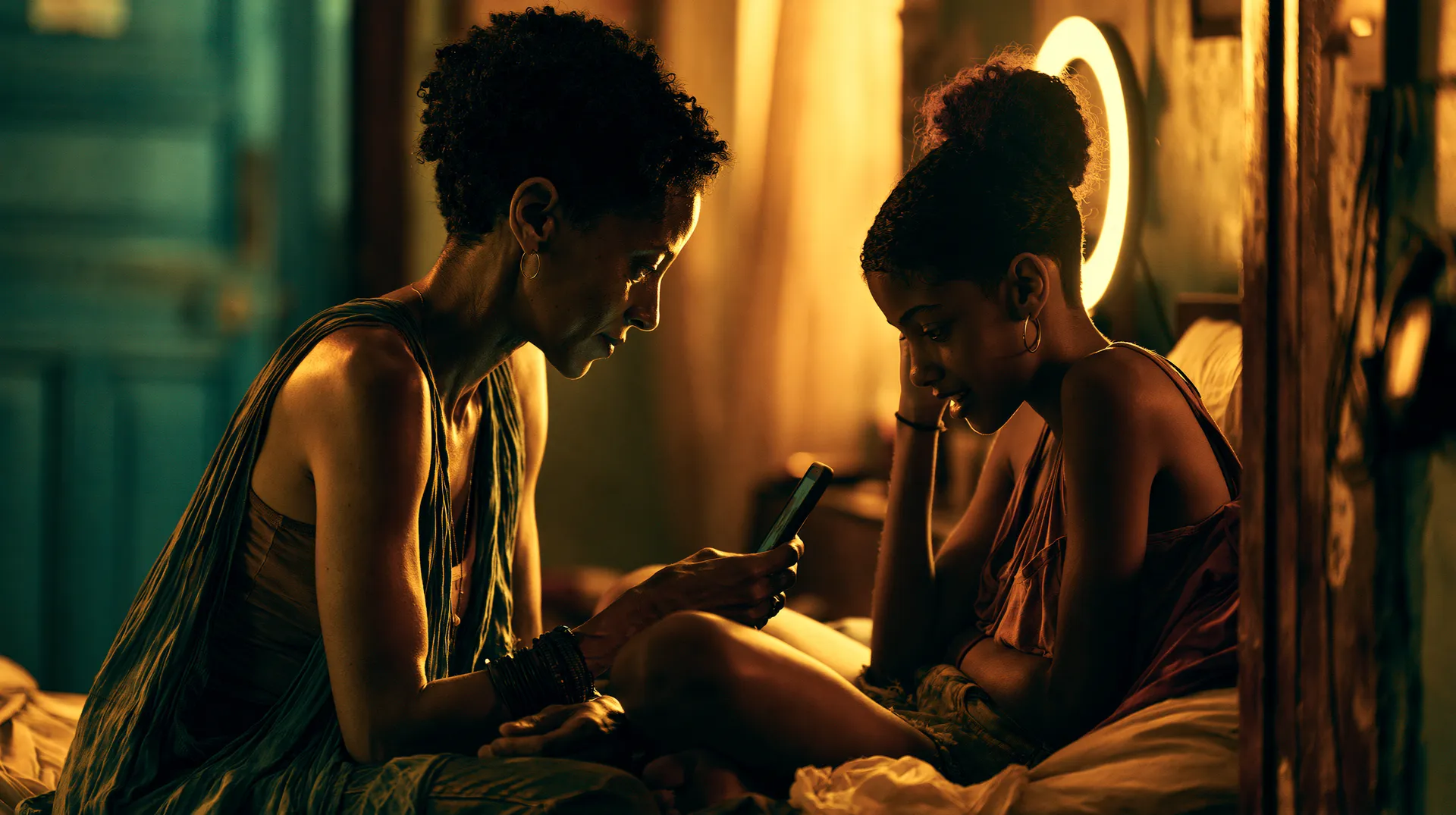
No ranking, on purpose: no two children are alike, and yours isn't even the same as yesterday. Read which one fits your home, today — or combine them.
Say yes to the impulse concretely: let them record, edit, write scripts, put together their project —for the family, for a closed group, to practice—. That's where they learn real craft. Taking the making seriously, without conditioning it on fame, teaches them that creating is worth it in itself, not for how many people applaud.
The public side is where you set the firm limit, guilt-free: no open profiles, no location, no contact with strangers, and you accompany what gets published. It's not distrust in them: it's that the world on the other side isn't safe for a minor alone. It's agreed clearly, like any rule of care.
Without a lecture, name the engine: likes are designed to hook you, and your worth isn't a number. Talk about how what's shown is usually filtered and staged. Putting words early to the validation game protects them from tying their mood to the count.
Use the enthusiasm in the moment for the yes (nourishing the making) and choose a calm moment for the limits, not a dry no that snuffs everything out at once. If there's another adult parenting or two houses, align on what can be published and what can't: safety can't depend on which house they're in. Review together, every so often, how it's going —the project and their mood—, without turning it into surveillance.
Wanting to create content is healthy and part of the everyday terrain; it needs no outside help. It's worth looking more closely when self-esteem gets tied to the likes —the mood rises and falls with the numbers—, when obsession with image, the body or filters appears, when they expose personal data or seek contact with strangers despite the agreements, or when failing to 'get famous' collapses their sense of worth. There the topic stops being the hobby and touches self-esteem or safety, and school guidance or a professional can help. This is peer commentary, not clinical advice.
Everything in this house is peer commentary and suggestion — it does not replace professional help. It's every mother's and every father's responsibility to notice the situation and to seek it when it can serve. If you need a number, check the directory of helplines by country. The full disclaimer, here.
'Everyone in my class has it.' Your daughter wants to open an account on that network, and the platform's minimum age is…
He failed a test, lost the game, or it's simply Tuesday — and suddenly he says it almost to himself: 'I'm good for nothi…