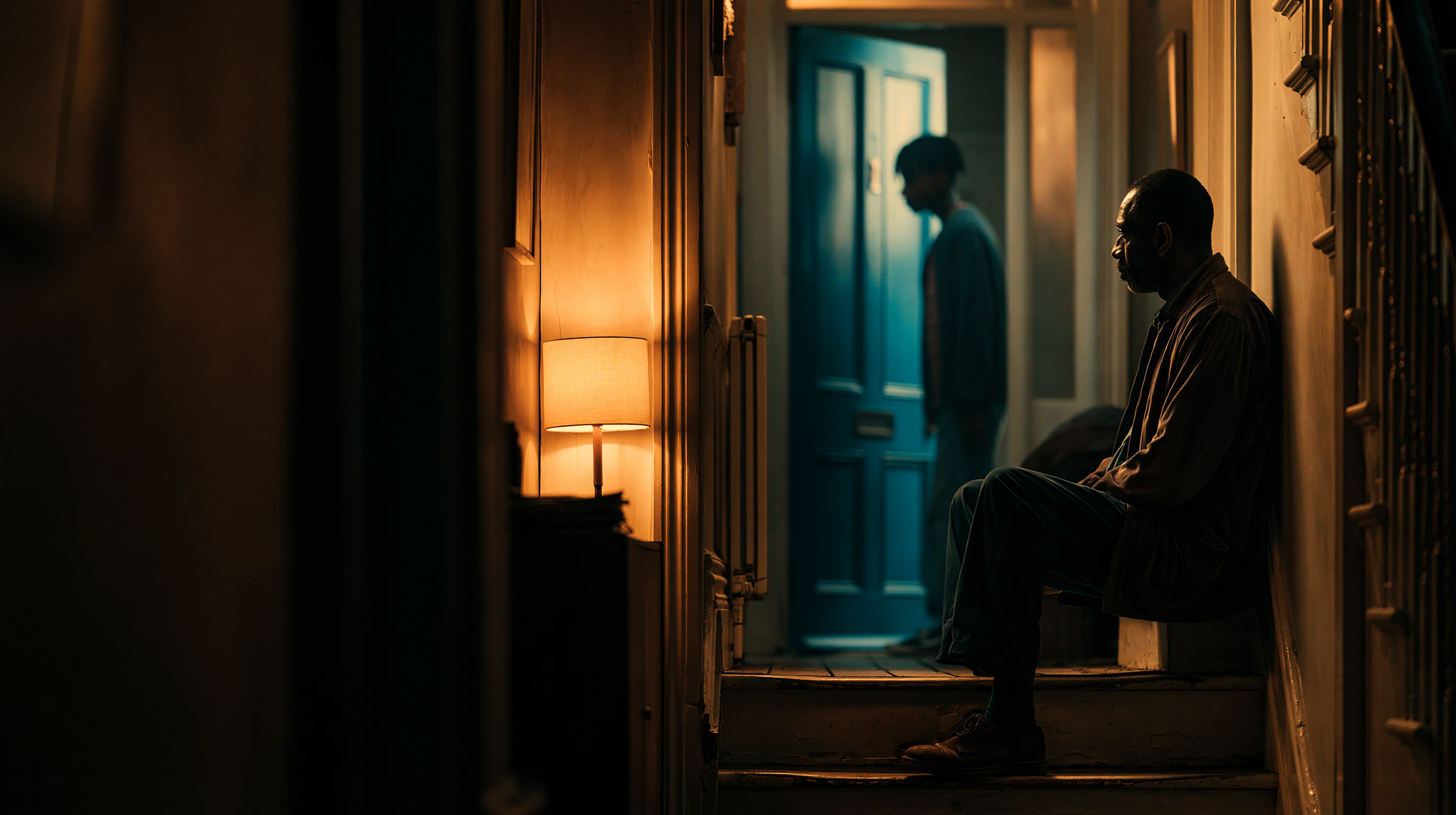
It's later than agreed and you hear him come in different: the laugh too loud or the silence too careful, the glassy eyes, the unmistakable breath. Your fifteen-year-old son came home drunk — and he reads your face just as you read his.
Fear disguised as fury: that's what likely fires first. The flash of images (the street, whose car, what else there was), the sense of failure («where did I go wrong?»), the urge to hold the whole trial tonight, with a verdict. And underneath, the question that truly matters and that the rage buries: is he safe NOW? Name the fear inside — it's your best compass tonight and your worst spokesman.
That a teen tries alcohol is within the statistically common; that he comes home drunk is another thing: dose, context and how he got back matter more than the raw fact. Before deciding how big your response should be, tell apart: a clumsy party experiment (first visible time, got home on his own, someone sober drove him) or a sign of a pattern (not the first time, hiding it, changed groups, coming home different for weeks)? How much? With whom? How did he travel? — the answer to «who drove?» may be the most important thing of the night. Tonight you will NOT get to the bottom of all that; tomorrow you will.
Don't hold the trial tonight: with alcohol on board there's no conversation that teaches anything — there's theater you'll both remember badly. Don't meet him with the punishment already handed down from the stairs: a hot-headed verdict is usually disproportionate and later indefensible. Don't search his phone or his room that same night as payback — a surveillance decision made with fear and rage, the worst combination. Don't turn it into a shameful secret between the two of you if there's another adult parenting: the other home / the other parent finds out, calmly and without using it as a weapon. And most important: don't shut the door that made him come HOME — if tonight's lesson is «better not come back like this», next time he doesn't come back, and that is more dangerous.
No ranking, on purpose: no two children are alike, and yours isn't even the same as yesterday. Read which one fits your home, today — or combine them.
Tonight your role is guard, not judge: water, something to eat if he can hold it down, checking he can walk and answer, laying him on his side if he falls asleep, and the short line that leaves everything pending without opening the case: «I'm glad you came home. We'll talk tomorrow.» Nothing more. Your self-control tonight IS the first message: in this house even crises are handled with a cool head.
Tomorrow, with no hangover of pending shouting, the conversation in two acts: first really listen («tell me about the night — what, how much, with whom, how you got back») making clear that honesty now weighs in his favor; then your part: the legal and health frame at his age, what truly scared you (say it as fear, not fury — telling him how you feel works here too), and the proportional consequence you decide, announced calmly and enforceable.
Something valuable can come out of this situation: the «always call me» pact — if he's ever in trouble with alcohol (him or whoever's driving), he calls you and you pick him up WITH no interrogation in the car; the consequences, if any, are talked over the next day. Many parents fear this pact («isn't that giving permission?»); it's the opposite: it's making sure that in the worst minute of his adolescence, he dials your number and no one else's.
If it's not the first time, if there was an elaborate lie, if it comes with other changes (new group, mood, school, sleep), the conversation isn't about Saturday: it's about what's going on. Less prosecution and more sustained presence: more one-on-one time with you (the two of you for coffee), more daily channel, and an honest assessment of whether this already calls for outside help — see the professional-hands block.
The sequence is the lesson: tonight safety, tomorrow the facts, the day after the consequences if they're needed — each thing in its time and none hot-headed. The big conversation is held in the first sober, calm window (not at breakfast with a hangover in front of the siblings). And once the episode is closed, it's closed: re-airing it in every argument for months turns a lesson into a file.
This episode calls for professionals without hesitation if that night there are signs of serious intoxication — he can't stay awake, vomiting that won't stop, confusion, strange breathing, he hit his head: that's a medical emergency NOW, not a conversation for tomorrow (when in doubt, emergency services; shame is not a vital sign). Beyond the night: seek professional help if there are repeated episodes, if he drinks alone or in secret on weekdays, if alcohol shows up alongside a sustained drop in mood or in school, if there were memory blackouts, or if there's a family history of addiction — that context changes the risk and a professional weighs it better than we do. And the usual frame, said plainly: this is peer commentary, not medical or psychological advice; spotting in time when an episode is experiment and when it's symptom is our responsibility as parents, and consulting early — pediatrician, school counseling, adolescence specialist — isn't overreacting: it's exactly what we'd do with any other health sign.
Everything in this house is peer commentary and suggestion — it does not replace professional help. It's every mother's and every father's responsibility to notice the situation and to seek it when it can serve. If you need a number, check the directory of helplines by country. The full disclaimer, here.
A strange smell on her clothes, a little gadget you don't recognize, money that doesn't add up, a new, closed-off group.…
She said she was at a friend's house studying, and it wasn't true. You find out through a message, another mother, a det…
Ten seconds before stepping in: did they sleep? did they eat? what kind of day are they carrying? Not to excuse everythi…
Does «how did it go?» only get you a «fine»? Flip the flow: tell them your day — who showed up late, what challenge you …
A fixed date, you and your teen, at the same table in the same café: no siblings, no agenda, no interrogation. One hour …