A grandparent with a serious illness or who needs a lot of care lives with you. The house has changed: less energy, hard scenes. Your child sees it all, asks, or goes quiet. And you, between caring and parenting, can't get to everything.
You're torn between caring for your father or mother and holding up your child, with guilt at not managing on either front. And you're tempted to protect the child by hiding what's happening, or —without meaning to— to leave him in the background because the urgency rules. Breathe. Children perceive far more than we say: silence doesn't protect them, it leaves them alone, imagining. Your job isn't to shield him from reality or to turn him into a little adult, but to give him a truth cut to his size, a place in what's happening, and the certainty that he's still a child who is cared for.
Separate the fact from what we load onto the child. That a sick grandparent lives at home transforms family life: it changes the routine, lowers the adults' energy and availability, brings hard scenes (pain, decline, sometimes difficult behavior if there's dementia), and the possibility of a loss hovers. The child lives it all even if he doesn't name it, and he may react in many ways: fear, sadness, curiosity, jealousy over the attention he no longer gets, guilt at feeling annoyance, or oddities of behavior that really speak of what he can't put into words. What helps: talking to him with the truth at his level (children tolerate a fitting truth better than a distressing mystery), allowing him his emotions —including the uncomfortable ones, like anger or jealousy—, giving him a small, voluntary role that makes him part of it without overloading him, and protecting him from responsibilities that aren't his. The risk to watch is parentification: that the child ends up acting as caregiver or emotional support for the adults, carrying a weight that isn't his. And take care of yourself too: you can't hold him up if you're empty.
Don't hide everything 'to protect him': the secret doesn't calm him, it leaves him alone imagining worse things. Don't give him raw adult information that overwhelms him: the truth, yes, but at his size. Don't leave him in the background in a sustained way or take for granted that he 'understands' there's no time for him now: he still needs his place. Don't load him with the role of caregiver or of consolation for the adults (parentification): it isn't his job. Don't force him to show affection to the grandparent (kisses, closeness) if something about the decline frightens him. Don't punish his uncomfortable emotions (jealousy, anger, annoyance): they're normal. And don't forget yourself: exhausting yourself to the limit helps no one.
No ranking, on purpose: no two children are alike, and yours isn't even the same as yesterday. Read which one fits your home, today — or combine them.
Explain what's happening in words he can handle: 'grandpa is very sick, that's why he needs a lot of care and is sometimes different; the doctors help him and so do we.' Answer what he asks without overwhelming, and don't lie about how serious it is if it is. A clear, warm truth distresses him less than a climate of secrets he senses but doesn't understand — and it teaches him that hard things can be talked about.
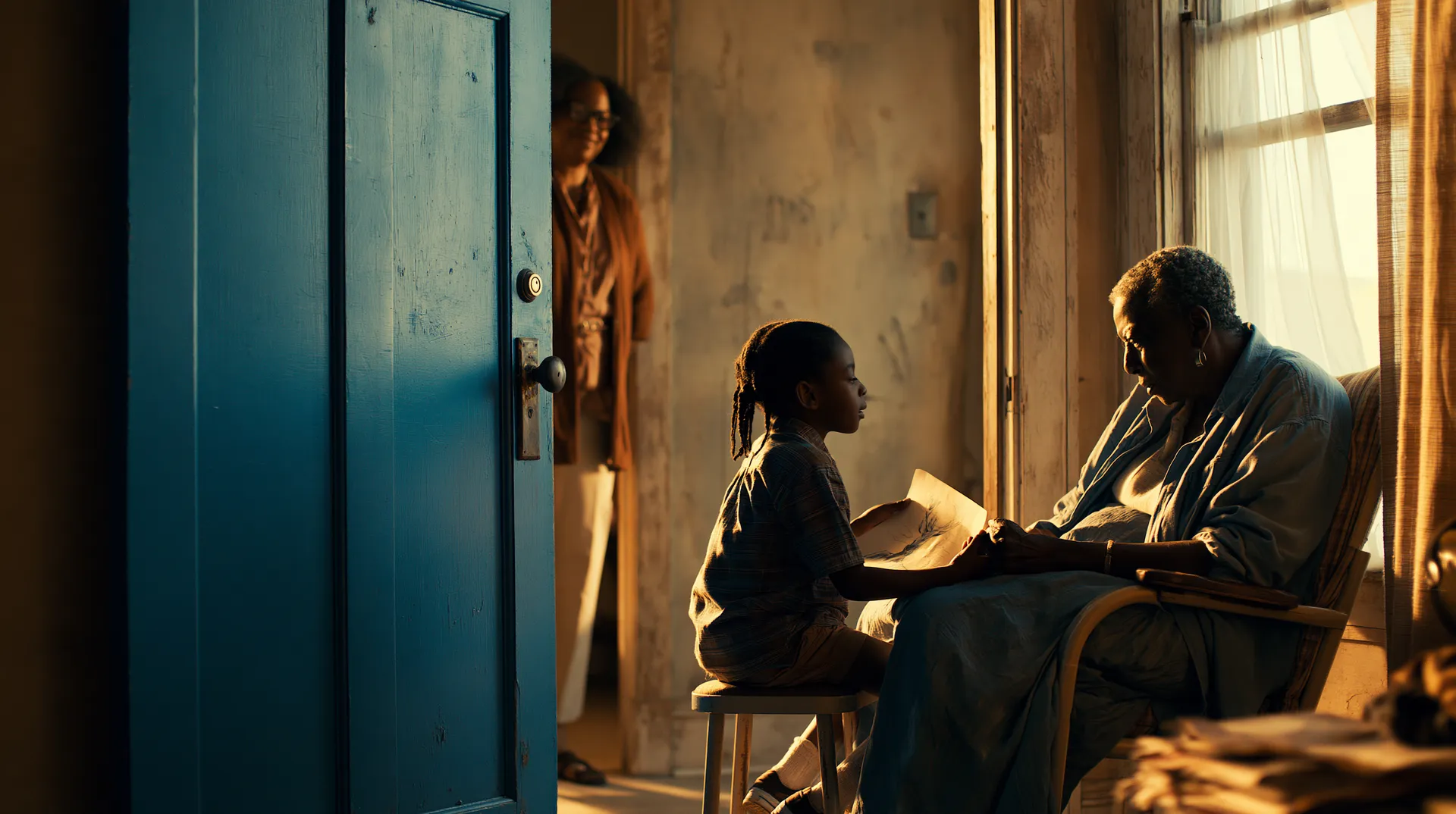
Offer him a small, voluntary way to be part of it —a drawing for grandpa, keeping him company a while, a task within his reach— that includes him without turning him into a caregiver. And protect him from what isn't his: he's not responsible for grandpa's health or the adults' mood. Feeling useful at his size helps him; carrying an adult's weight harms him. The key is the dose and that it be his choice, not an obligation.
In the midst of the urgency, make sure he still has his life: moments of attention just for him, his play, his routine, times when the house doesn't revolve only around the illness. Name that you understand it's sometimes hard and that it's not wrong to feel mixed things. And take care of yourself: lean on others, share the caregiving, ask for help — an emptied adult can't hold up a child, and you also matter in this equation.
Talk to him when the need and his questions arise, in calm moments, with the truth at hand and without dramatizing. Align with whoever parents and cares alongside you, and with the rest of the family, so the child gets a coherent message and not opposing versions. Reserve protected moments just for him even when the schedule is maxed out. And if the illness advances toward a loss, prepare the ground with kind honesty: this crosses over with the sister situations on grief and the fear of death. Don't make it the only topic in the house; let life, play, and laughter in too, which also heal.
Accompanying a child while a sick grandparent lives at home is done above all with truth, presence, and care over how the burdens are shared. It's worth seeking support —pediatrician or child psychologist— if the child shows sustained signs that it's weighing too much on him: anxiety or sadness that doesn't ease, regressions (wetting the bed again, new fears), nightmares, a drop at school, isolation, or if he took on a caregiver or emotional-support role improper for his age (parentification) that should be relieved. Also if the family situation overwhelms you: asking for help to hold yourself up —support networks, shared care, your own containment— is part of taking good care of your child. This is peer commentary, not clinical advice: when in doubt, seeking support early for him and for you holds up the whole family in a hard moment.
Everything in this house is peer commentary and suggestion — it does not replace professional help. It's every mother's and every father's responsibility to notice the situation and to seek it when it can serve. If you need a number, check the directory of helplines by country. The full disclaimer, here.
Grandpa died, or the dog that was with her all her life. Your daughter looks at you with a huge question on her face — o…
At bedtime he drops the question that squeezes your chest: «are you going to die?», «am I going to die?». It's not a plo…
One of your children needs far more —a condition, intense care— and the other feels it: he demands attention, behaves «t…