It's not that he plays anymore — it's that nothing else exists. Every «five more minutes» ends in a fight, and when you turn off the console he reacts as if you'd taken away something vital. You're starting not to recognize him.
Fear says «he's getting hooked» and anger says «it's an addiction». Lower both and look before you label: the game is rarely the deep problem, it's almost always the refuge from something else — boredom, friends who are only there, something in the day that weighs on him. Sort out what really worries you: the hours, the reaction when you cut it off, or what the game is covering up?
Tell apart three things that get confused: a lot of game time, an intense reaction to stopping, and the displacement of everything else (sleep, food, flesh-and-blood friends, school). The first one alone, without the rest, is usually an intense phase, not an addiction. What sets off the real alarm is displacement: when the game evicts the rest of life and stopping it produces disproportionate distress. Many games are designed to hold on to him — variable rewards, the social pressure of a team waiting for him — and that isn't a weakness of character on his part: it's design. Read it as design, not moral failure, and the response shifts from punishment to structure.
Don't rip the console away in the heat of the moment or make it the enemy: the dramatic ban teaches that the game is the most powerful thing in the house. Don't casually label him «addicted» — it's a heavy word, and one he may start to believe. Don't fight the game with more game (take it away and give it back, take it away and give it back): that's a roller coaster, not structure. And don't ignore the social side: for many, the game is where their friends are, and cutting it off flat cuts off their group.
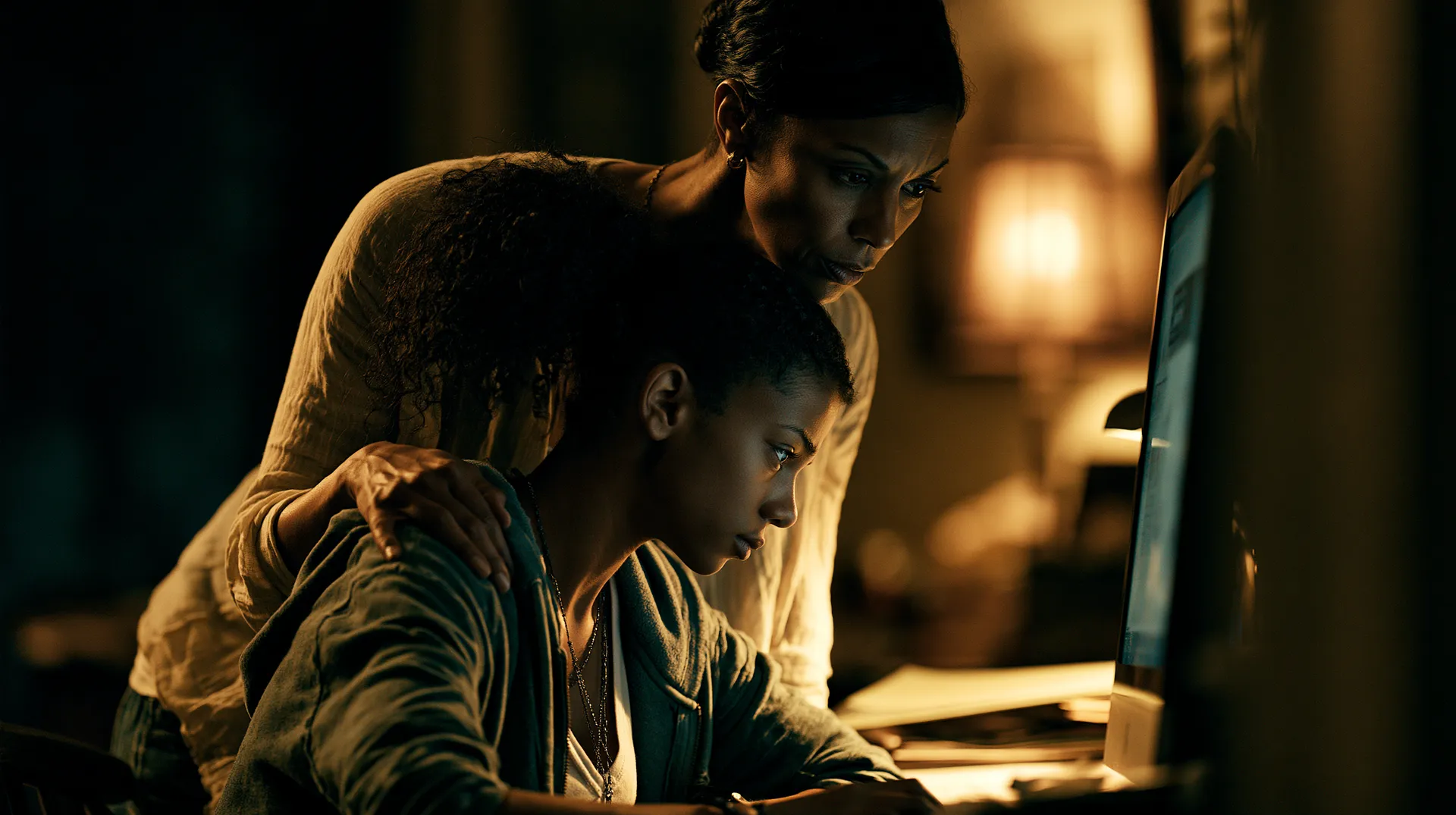
No ranking, on purpose: no two children are alike, and yours isn't even the same as yesterday. Read which one fits your home, today — or combine them.
Game time lives inside a routine agreed on cool-headed: after this, until this hour, out of the room at night. It isn't renegotiated every afternoon and doesn't depend on your mood. Clear structure fights less than a ban and holds more: you take the daily battle out of the way.
With curiosity and no prosecution, look at what the game fills: is it where his friends are? the only place he feels good at something? the escape hatch from a day that's hard for him? The game is usually the symptom, not the cause. Widening everything else — other moments where he shines, more life off the screen — subtracts more than any control.
The transition is what blows up: going from total immersion to the real world all at once hurts. Warnings with time («ten to go, save your game»), respecting the save point, a closing ritual. It's not giving in: it's recognizing that leaving there has a real cost and helping him do it without a wrench.
The structure is agreed on calm and cool-headed, not in the middle of a shutdown fight. Choose the moment with the day settled — no hunger, no sleep debt, no siblings in front. If there's another adult parenting, or two homes, the agreement on time and where the console charges is aligned between them: a rule that exists in only one home doesn't protect in the other. And if you're going to look at what the game covers up, that's a separate conversation, one-on-one, without the console in the middle.
Intense gaming is almost always handled at home with structure. It's worth a closer look — and consulting the pediatrician or school counseling — when the game sustainedly displaces sleep, food, school and real friends; when stopping it produces intense distress, aggression or dysregulation that don't ease; when he lies about how much he plays or steals time at night; or when the game coincides with withdrawal, sustained sadness or isolation. In those cases the hook is usually a symptom of something underneath — anxiety, loneliness, a low mood — and a professional assesses it better. This is peer commentary, not clinical advice: consulting early is not overreacting.
Everything in this house is peer commentary and suggestion — it does not replace professional help. It's every mother's and every father's responsibility to notice the situation and to seek it when it can serve. If you need a number, check the directory of helplines by country. The full disclaimer, here.
«Five more minutes» that turn into twenty, the tablet that won't be put down, the «coming!» that never comes. The same s…
You get up for water and see the line of blue light under the door. Your daughter has been awake for hours on her phone …
You see the charge and it doesn't add up: in-game purchases, one after another, sometimes on your saved card. Between th…