You started noticing weeks ago: they eat less and less, cut food into tiny pieces, say they already ate, slip to the bathroom right after, or skip meals with excuses. Something in how they eat changed, and an alert lights up in you.
Fear fires, and the temptation to solve it yourself, at your table, by sheer insisting («you have to eat», «you're not getting up until you finish»). Stop yourself there: this is the most important thing in this whole card — serious changes in eating aren't fixed at home by willpower, and turning food into a battle usually makes things worse. Name your fear inside, because it's a correct compass: it's telling you to look at this seriously and in time. An eating disorder is one of the illnesses where early help truly changes the prognosis; your role isn't to cure it yourself, it's to detect it and seek professional hands soon.
First of all, the essential thing: if you notice signs of restriction, purging or obsession with food or the body, this is not a situation to handle alone at home — it's time for professionals, and early ones. That said, distinguish what kind of change you're seeing, because not everything is the same: an isolated dip in appetite from stress, an exam or a virus is one thing; a sustained pattern of eating less and less, hiding or throwing away food, going to the bathroom after eating, compulsive exercise, terror of gaining weight, or a relationship with the plate that turned into anguish, is another — and that one calls for evaluation now. The opposite direction counts too: binges, eating in secret, eating to soothe emotions. Eating disorders don't distinguish by gender: they happen to boys too, and in them they're detected later precisely because no one looks for them. The age of greatest risk is adolescence, and time works against you: the sooner you intervene, the better.
Don't fight over food at the table («you're not getting up until you finish», «one more spoonful») — coercion turns every meal into a battlefield and usually reinforces exactly the behavior you want to stop. Don't comment on their body or their weight, neither favorably nor unfavorably: in this terrain any comment about the physical is fuel. Don't try to be the treatment yourself through surveillance, punishment or blackmail — an eating disorder is an illness, not a disobedience, and it doesn't yield to anyone's willpower. Don't wait «to see if it passes»: in this, waiting costs, because the more it settles in, the harder it is to treat. And don't minimize it with «it's just their age» if your instinct tells you something is wrong.
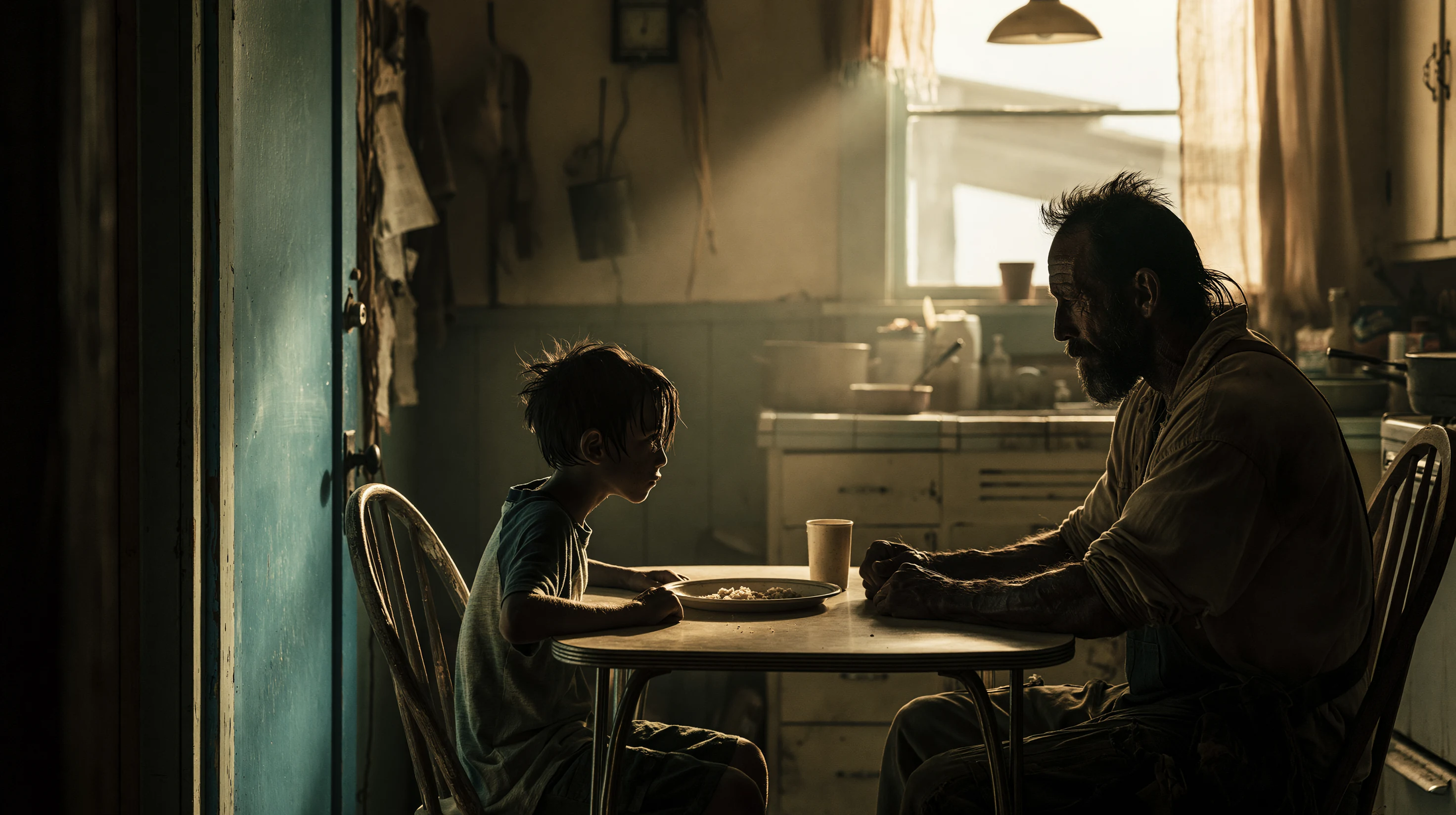
No ranking, on purpose: no two children are alike, and yours isn't even the same as yesterday. Read which one fits your home, today — or combine them.
Before acting, observe with clarity and without denial. Note what you really see: how much and how they eat, what they avoid, what happens after eating, what they say about their body, how the mood, the energy, the sleep are. That honest look — without dramatizing but without minimizing — is what tells you whether you're facing a passing dip or a pattern that asks for help. On this subject, seeing in time is half the battle; denial is the costliest enemy.
If there are signs of restriction, purging or obsession, the main door of this card isn't a home technique: it's asking for professional help as soon as possible. Start with the pediatrician — who assesses the physical and guides the route — and from there to mental health specialized in eating behavior if needed. It's not overreacting nor «over-alarming»: it's exactly what's done with an illness where time matters. Going early is never too much; arriving late does hurt.
While help is sought and received, your home can do something valuable: lower the temperature of food. Eating as a family without surveillance or comments, without rewards or punishments tied to the plate, without conversations about weight or diets. It's not your treatment — the treatment is carried by the professionals — it's the climate that doesn't make things worse and that holds the bond. A table where eating isn't scary is a safe place to come back to.
Eating differently is almost never about food: it's about control, anxiety, self-image, a pain that finds no other way out. Without becoming a therapist, keep the channel open for that: more presence, more one-on-one time (the two of you for coffee), putting a name to what they feel (the name of what I feel), and making it crystal clear that you love them no matter what happens with their body. That doesn't cure, but it accompanies — and it makes them accept better the help that does cure.
Here time is different from almost everything else in this house: it doesn't wait. If you see alarm signals, the professional consultation isn't «let's see how it evolves in a few months» — it's soon, because in eating behavior delay makes the treatment more costly. The war-free table climate is installed right away and sustained. The deeper conversations are held cool-headed, without the plate in the middle and without an audience. And once in treatment, you follow the professional team's instructions, which set the timing better than the anguish at home.
This is the card where early professional consultation is the main advice, not the last resort. Seek help NOW — pediatrician as the first door, and mental health specialized in eating behavior — at any of these signals: sustained restriction (eating less and less, skipping meals, eliminating whole food groups), purging (self-induced vomiting, laxatives, always going to the bathroom after eating), binges or eating in secret, compulsive exercise, terror of gaining weight, obsession with weight/calories/image, hiding or throwing away food, or physical changes (weight loss, fainting, constant cold, fatigue, in girls the period disappearing). And immediate medical emergency if there's fainting, serious dizziness, palpitations or extreme weakness. Eating disorders also affect boys and are detected in them later: don't rule them out by gender. They are serious illnesses with a very good prognosis when treated in time — and very hard when left to advance. What we offer here is peer commentary, not medical or psychological advice, and on this subject we say it more forcefully than on any other: detecting in time and seeking professional help soon is the most important thing we can do as parents; consulting early is not overreacting — it's what saves.
Everything in this house is peer commentary and suggestion — it does not replace professional help. It's every mother's and every father's responsibility to notice the situation and to seek it when it can serve. If you need a number, check the directory of helplines by country. The full disclaimer, here.
They said it at recess, or you read it in a chat, or she said it herself in the mirror: «you're fat», «what a huge nose»…
You notice it in the clothes that no longer close, in a photo, a pediatrician's comment. And with the worry about his he…
She's started to hide: loose clothes to cover what's growing, crossing her arms, not wanting to be seen, a 'don't look a…
Want your son to open up emotionally? Show him how: don't answer «fine» on autopilot. If you're tired, say so — with the…
A child who can say "I'm frustrated" hits less than one who only knows how to scream. Naming emotions, day by day, hands…
A fixed date, you and your teen, at the same table in the same café: no siblings, no agenda, no interrogation. One hour …