You notice it in the clothes that no longer close, in a photo, a pediatrician's comment. And with the worry about his health comes an intimate fear: that of your own history with the body, the scale, and what they told you.
Two things mix that are worth separating: the legitimate worry about his health and a burden of your own —your relationship with your own body, what you suffered over weight, the fear of him being teased. The classic impulse is to 'do something now': the diet, the comment, the plate-watching. Name the fear inside and separate it from him, because almost everything you want to say about his body, said to him, does more harm than good. The goal isn't a number: it's a child who grows up healthy and doesn't learn to hate his body at your table.
First, the basic and most forgotten: a child's or adolescent's body is under construction. There are growth spurts preceded by a rounder stage, weights that settle on their own with growth, builds that are simply theirs. What looks like overweight to you may be normal development — that's why the judgment about health belongs to the pediatrician, not the mirror or the fear. Tell apart: is there a real, assessed medical concern, or is it a comparison with an ideal? Second: a child's health is built with home habits, not children's diets — and the habits are the whole family's. A child doesn't eat differently from the rest: the whole house eats better, moves more, and no one is singled out.
Don't talk to the child about diet or weight — ever. Putting a child on a diet, counting calories for him, or watching his plate is one of the most direct ways to sow a broken relationship with food and, often, an eating disorder later. Don't single him out at the table ('not you, you're a bit chubby'): singling out one while the others eat freely is daily humiliation, not care. Don't make comments about his body, neither 'affectionately' nor 'to motivate him' — they get engraved forever and motivate nothing. Don't turn food into a reward, punishment, or battlefield. And don't pass your own war with the scale onto him: your story is yours, not the script of his.
No ranking, on purpose: no two children are alike, and yours isn't even the same as yesterday. Read which one fits your home, today — or combine them.
Before moving anything at home, the health question is medical. Take your worry to the pediatrician —without the child listening if there's going to be weight talk— and let the professional be the one to determine whether there's something to address or whether it's normal development. If action is needed, let the plan come from there, adapted to a growing body. This takes off you the weight of deciding by eye and protects you from intervening on a problem that maybe doesn't exist.
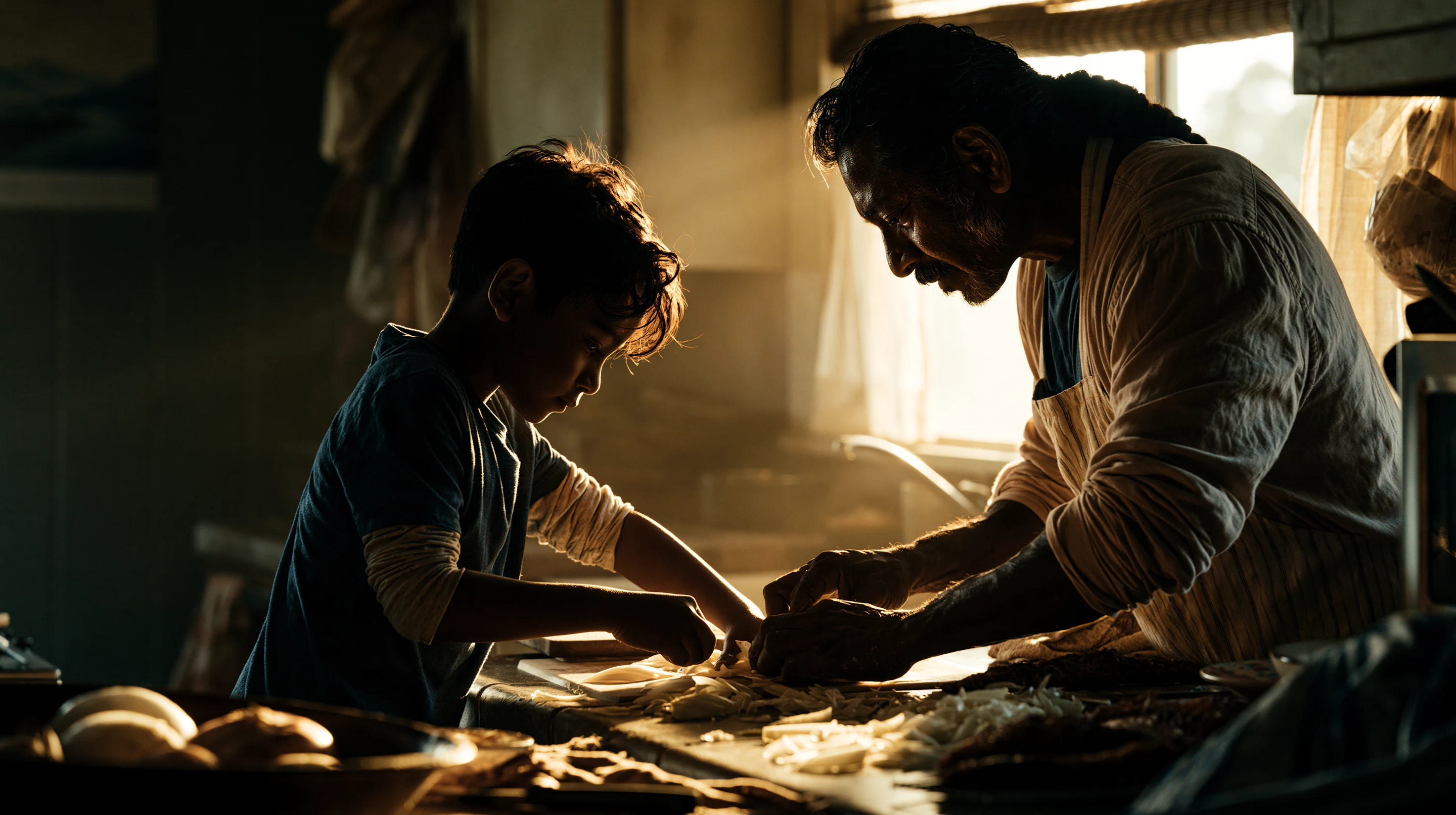
If habits need improving, change the house, not the child. More water and less sugar for everyone, the pantry with better options in sight, cooking together, eating at the table and not in front of the screen. No one is 'on a diet': the whole family lives healthier and the child joins a current, not a defendant's bench. Cooking Saturday's menu or going together to the market with the five senses turns the change into a shared adventure, not a regimen.
Movement enters through pleasure, not through the sermon or the guilt. No 'you have to exercise to lose weight'; yes, looking together for something he truly enjoys —dancing, swimming, biking, a sport with friends, training with you for the pleasure of being together—. A body that moves because it's having a good time keeps at it for life; one that moves as punishment abandons it as soon as it can. See also 'He barely moves'.
Whatever happens with the weight, your home is the place where his body isn't under examination. Mind how you talk about bodies —yours, his, the TV's—: if at your table the thin is praised and the fat is criticized, he learns to measure himself by that yardstick even if you never say anything direct to him. Let him get from you that he's worth for who he is, not for how he looks. That base protects him from teasing outside better than any change of size.
None of this is a weight conversation with the child — it's a change of environment installed calmly and sustained over time. The consultation with the pediatrician is the first step and happens apart from him if numbers need talking. The home changes are introduced little by little and with no dramatic announcement ('from today we take care of ourselves'): better they appear as the new normal. Movement is offered when there's willingness, not as a chore. And minding the language about bodies is an everyday thing, forever.
This topic asks for the pediatrician from the start: they're the one who can say whether the weight is a real health matter or a body in full growth, and who draws any plan —never improvise it at home. Seek professional accompaniment (pediatrician, and if needed pediatric nutrition and mental health) if signs appear that go beyond weight: an abrupt change of weight in a short time, associated medical signs, teasing that's sinking his self-esteem, or —very important— any hint that the worry about the body is turning into obsession: skipping meals, hiding food, eating in secret, vomiting, compulsive exercise, terror of gaining weight. That's no longer overweight: it's an alarm of an eating disorder and asks for professionals now (see 'He stopped eating well'). What we offer here is peer commentary, not medical or nutritional advice: caring for our child's health without harming his relationship with his body is our responsibility as parents, and leaning early on the pediatrician isn't overreacting — it's exactly what's called for.
Everything in this house is peer commentary and suggestion — it does not replace professional help. It's every mother's and every father's responsibility to notice the situation and to seek it when it can serve. If you need a number, check the directory of helplines by country. The full disclaimer, here.
From the couch to the chair to the bed. Your son spends his afternoons with the screen and his body still, and when you …
They said it at recess, or you read it in a chat, or she said it herself in the mirror: «you're fat», «what a huge nose»…
You started noticing weeks ago: they eat less and less, cut food into tiny pieces, say they already ate, slip to the bat…
One dish of the week is decided, prepared, and served by the child — with your help shrinking each time. The kitchen is …
Not "taking the kid to practice": the two of you training, with a fixed schedule, real goals, and the same sweat. Twice …
A morning at the market isn't a shopping trip: it's a sensory expedition. Smelling the basil, touching the rough pineapp…