This time she's not the victim: she's the one who hurt. A comment that humiliated someone, a group mocking a classmate, a screenshot to ridicule. You see it with your own eyes and something tightens — the one who harmed is from your house.
It hurts differently than when she's the one harmed. Shame mixes in («did I raise this?»), the impulse to defend her all the same («it can't be that bad, everyone does it»), and the temptation of an exemplary punishment to wash your own guilt. Name that mix inside: your task isn't to decide whether your daughter is «good» or «bad», nor to save your parental pride. It's for her to take responsibility for the real harm she caused and learn to repair it. For that she needs a mother firm with the behavior and on the side of the person — not a prosecutor nor a defense lawyer.
To respond well, understand without excusing. Online cruelty has its own ingredients: the screen's distance erases the other's face (she doesn't see the harm she does, and that makes it easier), the audience amplifies (a mockery before fifty spectators weighs differently), the group dynamic drags along (sometimes she's the one who follows the current, not the one who starts it), and everything is recorded and spreads. None of that excuses her; all of it locates her. Read her role: did she instigate, follow, or watch without stopping it? Was it an outburst or a pattern? Does she understand there was a real person hurt, or does she live it as «it was a joke»? The lack of registering the harm — believing that online it doesn't count — is the first thing to work on, and at the same time the best news: it can be taught.
Don't excuse her or minimize it («kids' stuff», «the other girl asked for it», «it's just the internet») — playing it down teaches her that harm on a screen doesn't count, which is exactly the belief that made it possible. Don't go to the other extreme either: humiliating her in public or with a crushing punishment to wash your shame teaches her cruelty to correct cruelty, and puts her on the defensive instead of on repair. Don't make this a verdict on who she is («you're an abuser») — the child who believes herself bad stops trying to be good; separate the behavior from the identity. Don't defend her by reflex before the school or the other family without looking at what happened — sometimes parenting well is holding that your daughter was wrong. And don't close it just between the two of you if the school or the other family are involved: that's handled with the other parties, calmly.
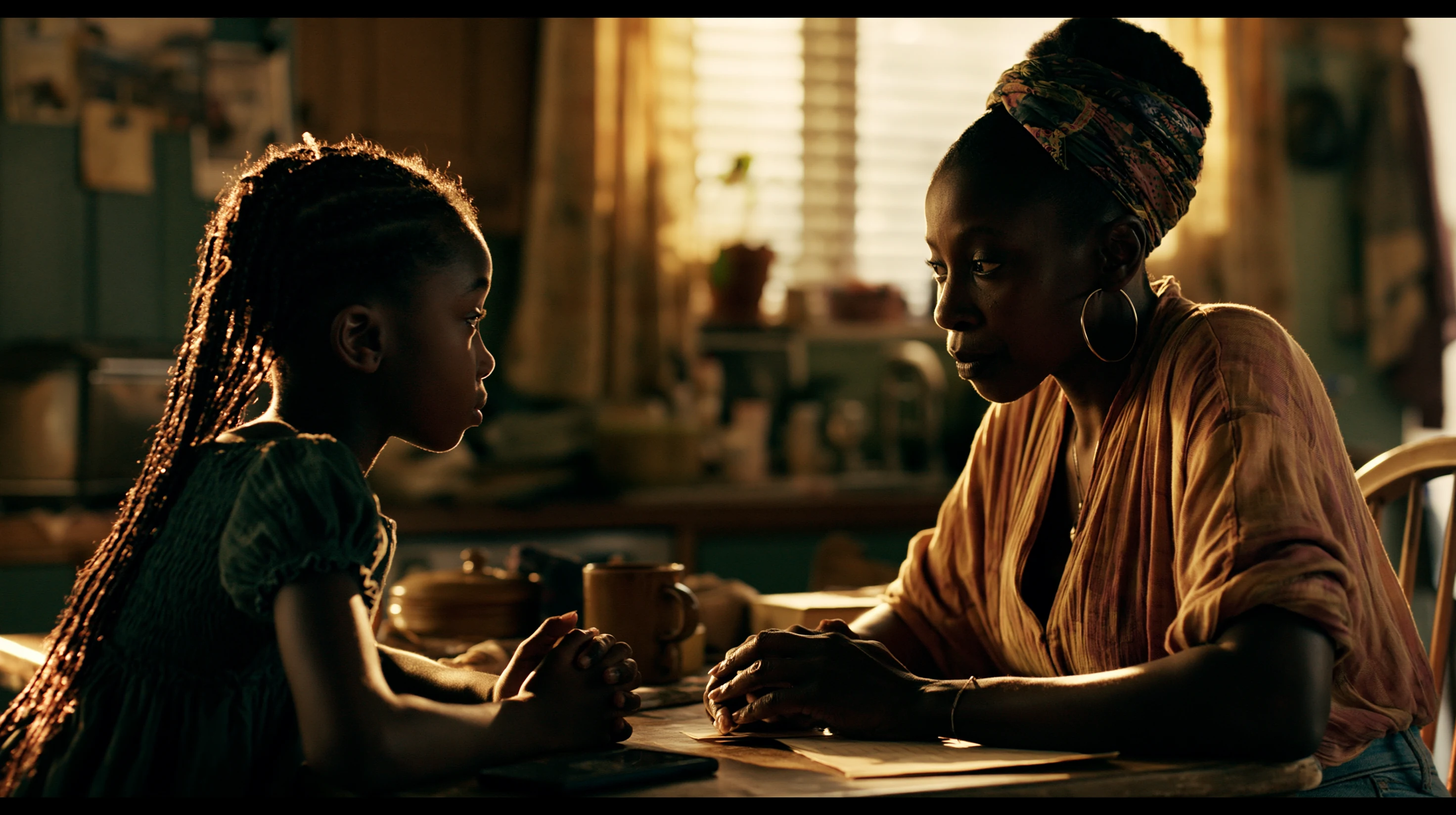
No ranking, on purpose: no two children are alike, and yours isn't even the same as yesterday. Read which one fits your home, today — or combine them.
The heart of the matter and the first thing: that your daughter recovers the other's face. No sermon, with questions that return her to the real person: «How do you think they felt reading that? What would you do if it were done to you in front of everyone?». The screen erased the victim; your job is to draw them back in. When she truly registers that she hurt someone — not an avatar — almost everything else (the repair, the change) starts moving on its own.
Taking responsibility isn't a going-through-the-motions «sorry»: it's repairing as far as possible. Deleting what she shared, pulling it from the groups where she put it, a genuine apology if the other person wants to receive it (the sibling situation «The real apology» has the mold), and sometimes repairing also before those who saw it. Repair is uncomfortable on purpose — that discomfort is the lesson — but it's done with dignity, not as public punishment. Repair leaves learning; punishing alone leaves resentment.
Cool-headed and with honesty: where did this come from? Sometimes it's group drag (easier to be cruel in a pack); sometimes it's her own pain discharged outward; sometimes it's language and attitudes she breathes somewhere — including home: how we talk about others, what mockery we let pass. Understanding it doesn't excuse her, but it decides your next step: an outburst isn't the same as a pattern, nor a one-off discharge as sustained cruelty with no registering of the harm.
If the cruelty touched a schoolmate or the harm was wide, other parties come in. The school usually has a protocol and can help close the social part; the other family deserves, depending on the case, a calm communication. Here parenting well is sometimes holding before others that your daughter was wrong and is taking responsibility — not defending her by reflex. Accompanying her to answer for what she did, without abandoning her to public shaming, is the biggest lesson available.
The registering of the harm and the deeper conversation are had cool-headed, with the forecast in hand — not in the rush of the discovery, when only a scene would come out. The repair, on the other hand, is best not left to cool too much: the sooner what was shared is withdrawn and mended, the less harm spreads and the cleaner the lesson stays. The school or other-family part is handled calmly and soon. Once the episode is closed and the repair done, it closes: re-editing it for months turns a lesson into a sentence, and teaches that taking responsibility frees you from nothing. If there's another adult parenting, they align to respond with a single voice.
An episode of cruelty is worked at home with registering the harm and repair — it doesn't call for professionals. It's worth looking deeper when a pattern appears: sustained cruelty toward one or several, no registering of the harm despite the conversations, enjoyment of another's suffering, or a hostility that also shows up off-screen — with siblings, classmates, animals. Also if the cruelty arrives alongside other changes (mood, group, something that hurts her and she discharges outward), because sometimes the one who hurts is hurt. There the behavior may call for the look of the school or of a behavior professional, not just discipline at home. This is peer commentary, not clinical evaluation: telling the outburst that gets corrected from the pattern that asks for help is our responsibility as parents, and consulting early with the school or a specialist is not overreacting — it's taking seriously both the hurt person and your own daughter.
Everything in this house is peer commentary and suggestion — it does not replace professional help. It's every mother's and every father's responsibility to notice the situation and to seek it when it can serve. If you need a number, check the directory of helplines by country. The full disclaimer, here.
Your son comes home dimmed, or you find out yourself: a group where they humiliate him, comments that crush him, an imag…
A new word comes out of your daughter's mouth — a round swear word, or something worse: a slur that targets a group of p…
In front of the guests, or in the middle of the supermarket, your son answers you with a contempt you'd never seen in hi…
"Say you're sorry" forced out teaches nothing. A real apology — acknowledge, repair, change — is learned above all by wa…
A fixed date, you and your teen, at the same table in the same café: no siblings, no agenda, no interrogation. One hour …
Want your son to open up emotionally? Show him how: don't answer «fine» on autopilot. If you're tired, say so — with the…