This Monday, July 27 · 7 PM — Parents’ meetup in Santo Domingo Free registration →
beta · situation in draft — peer commentary, not professional advice
Situations

He doesn't help with the housework

everyday situation 6–910–1213–15

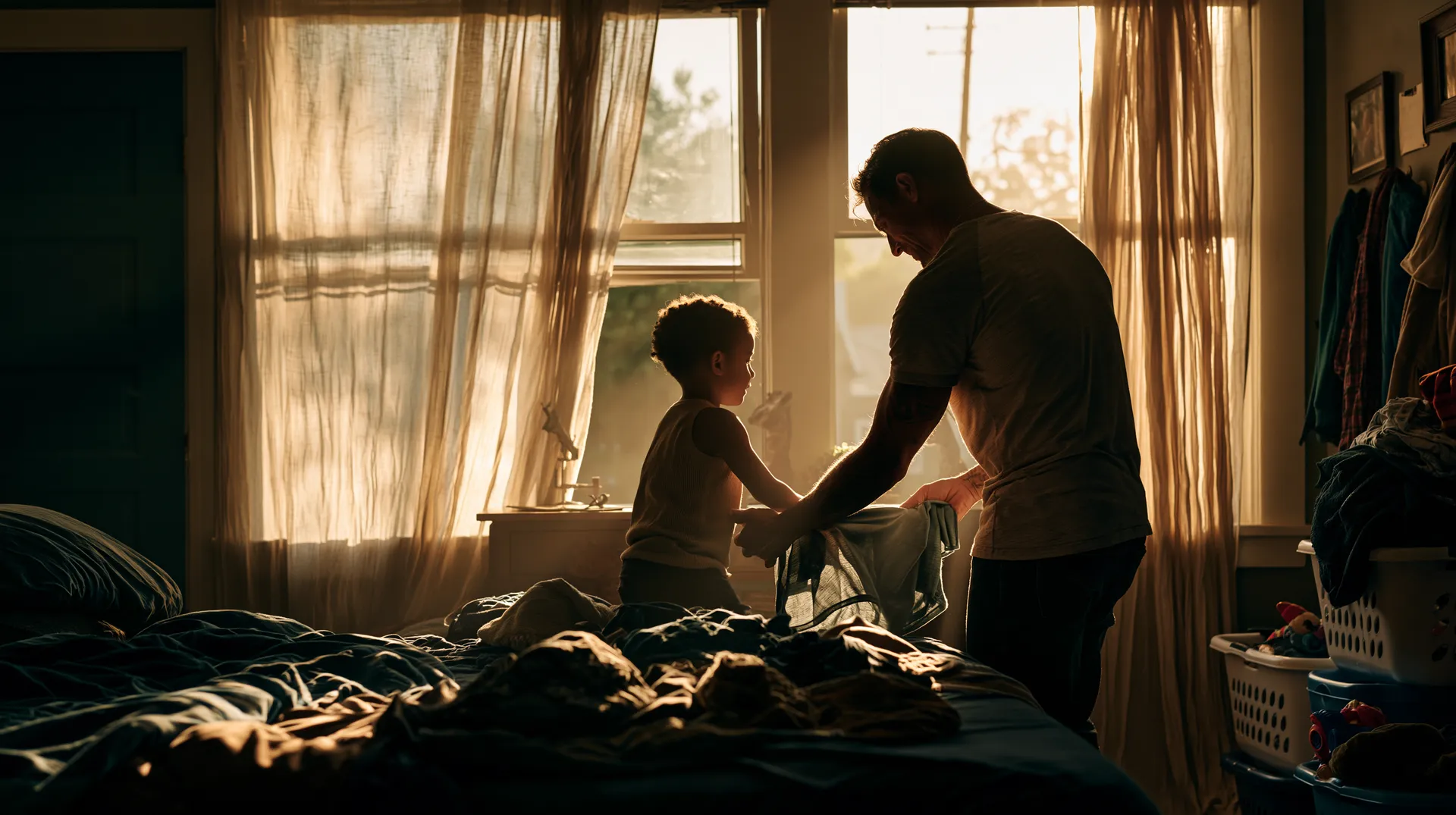
The room is a disaster, the dishes stay where he left them, 'I'm coming' that never comes. You ask him to help and he sighs as if you'd asked the impossible. You end up doing it yourself, between anger and resignation.

What it stirs up inside you

The wear pushes you to two exits: doing it yourself to avoid the fight (and loading it all onto you) or turning every chore into a sermon about laziness. Breathe. That he doesn't help is rarely malice: housework is boring, competes with everything he'd rather do, and often he isn't even clear on the rules or on why it falls to him. He's not an unrecoverable slacker, nor are you a victim: it's a habit that's taught, with structure and meaning, not with guilt or with doing it all in his place.

What might be going on

Separate the fact from the moral reproach. That a child or teen finds it a drag to help at home is completely normal — household chores are unappealing and compete with far more tempting things. But helping isn't optional: it's part of belonging to a family and a school of responsibility, autonomy and consideration for others that serves him for life. The problem is usually one of system, not character: unclear chores ('help at home' is vague; 'set the table' is concrete), expectations not adjusted to his age, lack of routine, or an implicit message that things 'appear done' because someone else always does them. The model weighs in too: if he sees that helping is everyone's business and not a favor being asked, he takes it on differently. The goal isn't to subdue him, but for him to take on his part as a member of the house — and that's achieved with clear, age-appropriate chores, routine, natural consequences and recognition, far more than with the daily complaint.

What's better avoided

Don't do it all yourself to avoid the fight: you teach him that chores are someone else's problem and that resisting is enough to get out of them. Don't turn every request into a sermon about how lazy he is: the label ('you're a disaster') doesn't motivate, it demoralizes and fulfills itself. Don't give vague, shifting orders ('tidy this', 'help a little') that he can't tell when he's finished. Don't use only punishment or only bribery: neither builds the underlying habit. Don't expect from him what doesn't match his age or demand adult perfection. And don't be inconsistent with whoever parents with you, or ask of him what the adults of the house don't do.
Ways in

Several — never just one

No ranking, on purpose: no two children are alike, and yours isn't even the same as yesterday. Read which one fits your home, today — or combine them.

The door of clear, right-sized chores

Swap the vague for the concrete and age-appropriate: not 'help at home' but 'your job is to set the table and take out the trash, these days'. Few, clear, with a defined when, and stably his so they become routine, not a daily negotiation. When he knows exactly what falls to him and when, half the fight ends — which was almost always about fuzzy rules.

When it fits: The base. Essential if the requests are generic or change every day: the concrete and stable eliminates the argument.

The door of the sense of belonging

Frame it as part of living together, not as a favor to you: 'in this house we all take care of each other and each one does their part'. Him seeing the adults helping and his contribution really mattering (not an invented chore) shifts the frame from 'I'm being forced' to 'this is mine too'. The sense of belonging holds the habit far more than the repeated order.

When it fits: When he lives it as someone else's imposition. Key so cooperation takes root instead of depending on your surveillance.

The door of natural consequences

Let reality teach, when you can, instead of your sermon: if he doesn't put his clothes in the hamper, they're not washed when he wants them; if he doesn't tidy up, there's no screen until it's done. Consequences that are linked, known and applied calmly —not surprise punishments dictated by your anger— teach that chores have a real why. Calm consistency weighs more than the threat.

When it fits: When there are already clear chores but he doesn't do them. The coherent, sustained consequence teaches without turning it into war.

The timing

The system (which chores, when, what consequence) is agreed calmly, not shouting in the middle of the mess. Meet as a family to share it out fairly and review it as they grow. Align deeply with whoever parents with you: if one demands and the other does the chore for him, no habit is possible. Recognize what he does do, without overdoing it, more than you point out what's missing. And be patient: the habit of helping is built over years and with relapses; holding structure and meaning without turning it into a daily battle pays off more than winning every fight over the messy room.

When to seek professional hands

Resistance to housework is an everyday matter of limits and habits handled at home. It rarely asks for professionals, but it's worth looking deeper if the 'not helping' is part of a larger picture: extreme, sustained opposition and defiance to every rule, aggression, or an abrupt change (a once-helpful child who dims and stops doing everything, which can speak of sadness, anxiety or something happening to him). Also if behind it there's a real difficulty with organization, attention or development that keeps him from sustaining routines, more than pure sloth. There the pediatrician or a psychologist helps read what's underneath. This is peer commentary, not clinical advice: when in doubt, telling normal laziness apart from a sign of something bigger is what an early consultation helps clarify.

Everything in this house is peer commentary and suggestion — it does not replace professional help. It's every mother's and every father's responsibility to notice the situation and to seek it when it can serve. If you need a number, check the directory of helplines by country. The full disclaimer, here.

From the library

Want more perspectives on this situation? Ask the panel — six at once — or talk with a voice from the table.