From the couch to the chair to the bed. Your son spends his afternoons with the screen and his body still, and when you suggest going out, moving, doing something, the answer is a 'can't be bothered' you already know by heart.
Worry about his health fires and, right next to it, a moral judgment ('how lazy, what a lack of willpower') that doesn't help. Beware the gym sermon: if movement reaches him wrapped in reproach and a health speech, he'll associate it with a telling-off, and what you're told off for, you flee. Name your worry inside and strip it of the reproach tone — the goal isn't a son who exercises out of obligation, but one who discovers that moving his body feels good, and for that the worst path is guilt.
Before alarming yourself, look at the whole. Is he really moving little, or moving differently from how you moved? There are active kids who hate organized sport and love walking, dancing, or biking; the mold doesn't have to be a field. Also tell whether the stillness is preference or arrived alongside a dip (a kid who used to move and dimmed may be telling you something else: mood, something that happened, a screen that ate everything). At 6-9 movement is play; in tweens and teens it competes with the screen, friends, and a new comfort. And look at the home mirror: it's hard to ask for an active body from a home where no one moves. Movement catches on better than it's ordered.
Don't lecture about health, weight, or exercise ('you'll get sick', 'look at the state of you') — the speech turns movement into penance and guarantees rejection. Don't force him into a sport he hates 'for his own good': imposed activity is abandoned as soon as he can, and the bad memory sticks. Don't use his body as an argument to move him (see 'He's overweight'): mixing movement with judgment about his physique sows shame, not habit. Don't compare him with the athletic sibling or with you at his age. And don't demand it from the couch: if the house doesn't move, the message doesn't land.
No ranking, on purpose: no two children are alike, and yours isn't even the same as yesterday. Read which one fits your home, today — or combine them.
Forget the sport you imagine and look for his. There are tons of ways to move the body, and almost everyone likes one: dancing, swimming, biking, climbing, skating, a pickup game with friends, martial arts, walking while you talk. Try several without drama; the one that lights up his eyes, that's the one. A body that moves because it enjoys it needs no one to push it — pleasure is the only engine that lasts.
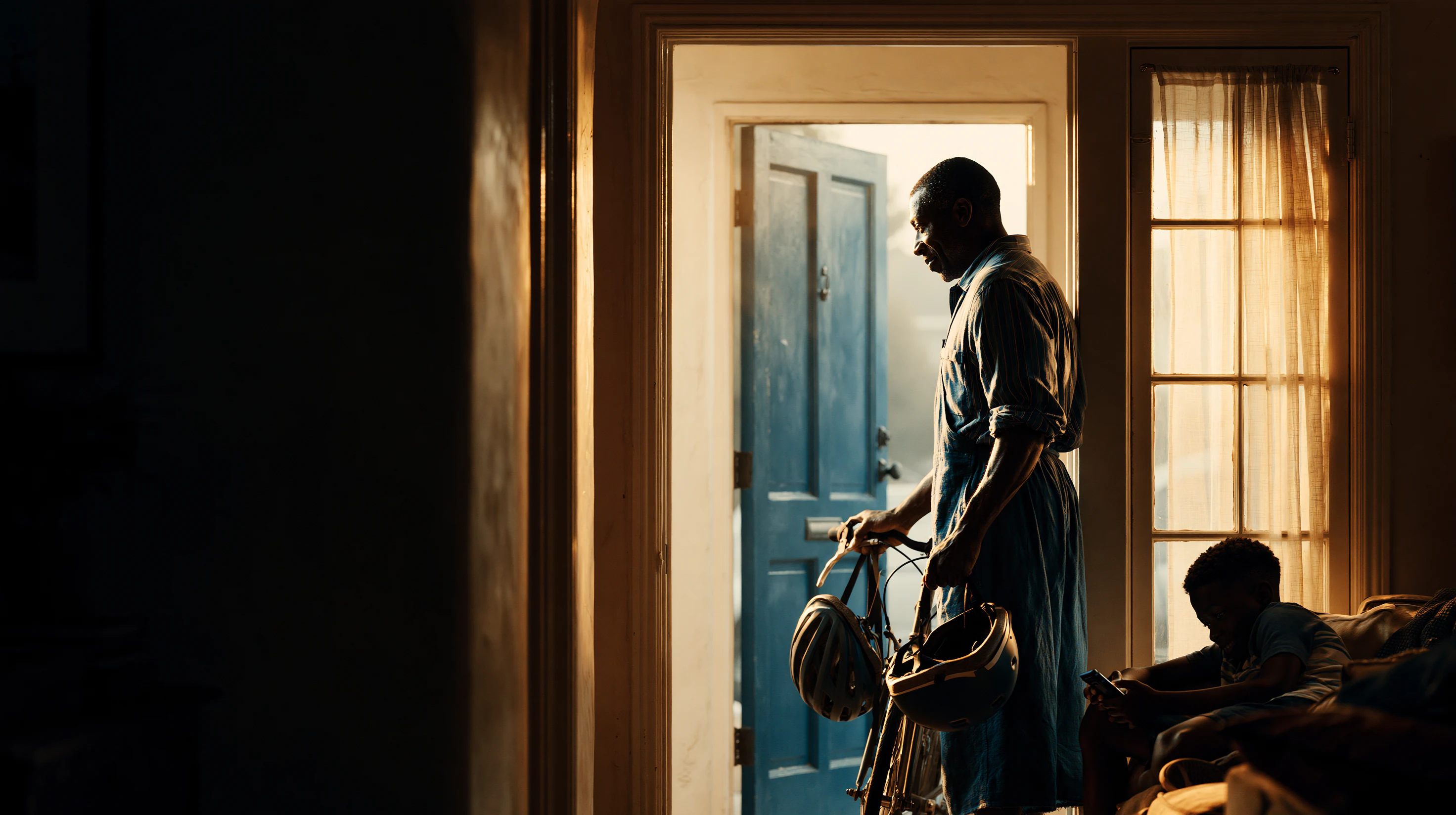
Movement enters better through the bond than through the order. Instead of sending him off to move, move with him: training together, a pickup game on the court, swimming together, the Sunday bike ride, a walk where you talk along the way. It stops being a health task and becomes time with you — and those times get sought out on their own. Along the way, you move too, and the example weighs more than the advice.
Not everything has to be 'doing sport'. Put movement into normal life: walking to the corner store, taking the stairs, getting off a stop earlier, an errand done on foot, dancing while cooking. Adding everyday movement weighs more than it seems and doesn't require signing anyone up for anything or turning it into an obligation. The goal is a body that gets used, not a box that gets ticked.
If the stillness is total and arrived with a change —he used to move and no longer does, he dimmed, it's all screen and bed—, the question stops being about exercise. Sometimes it's the screen that ate the free time and needs a frame; sometimes the stillness is a symptom of a low mood. Tell apart: is it comfort or withdrawal? The first is worked with a plan; the second asks you to look deeper at the mood, not the lack of sport.
This isn't a talk, it's a climate that's changed with patience. Movement suggestions are offered when there's willingness and energy —a weekend, a free afternoon—, never as punishment or right after friction. Trying sports or ways of moving is a matter of weeks and several attempts without pressure: if one doesn't catch, another is tried without drama. Shared movement holds by making it a habit, not an event. And if you detect that the stillness is withdrawal and not comfort, there timing matters: look closely before insisting on sport.
Moving little, on its own, doesn't ask for professionals — it asks you to offer movement with grace and keep it up. It's worth consulting the pediatrician if there's an associated health concern, or if the lack of activity comes with signs that something more is going on: persistent tiredness or lack of energy with no explanation, pain on moving, or —above all— if the stillness is part of a bigger withdrawal (he stopped enjoying what he enjoyed, isolated himself, sustained low mood, changed sleep and appetite). There the sedentariness may be symptom and not cause, and what asks for a look isn't the muscle but the mood. What we offer here is peer commentary, not medical advice: telling normal comfort apart from an underlying signal is our responsibility as parents, and consulting it early with the pediatrician or counseling isn't overreacting.
Everything in this house is peer commentary and suggestion — it does not replace professional help. It's every mother's and every father's responsibility to notice the situation and to seek it when it can serve. If you need a number, check the directory of helplines by country. The full disclaimer, here.
You notice it in the clothes that no longer close, in a photo, a pediatrician's comment. And with the worry about his he…
They said it at recess, or you read it in a chat, or she said it herself in the mirror: «you're fat», «what a huge nose»…
Another Friday at home. Your daughter has no plans, no one calls her, she doesn't seem to look for any. You remember you…
Not "taking the kid to practice": the two of you training, with a fixed schedule, real goals, and the same sweat. Twice …
Not taking him to the field: playing on the field. An informal neighborhood pickup game, with improvised teams and rules…
Not from the edge: in the water with them. Learning to swim is one of the few skills that can one day save their life — …