This Monday, July 27 · 7 PM — Parents’ meetup in Santo Domingo Free registration →
beta · situation in draft — peer commentary, not professional advice
Situations

He wakes up screaming and doesn't recognize you

delicate situation 3–56–9

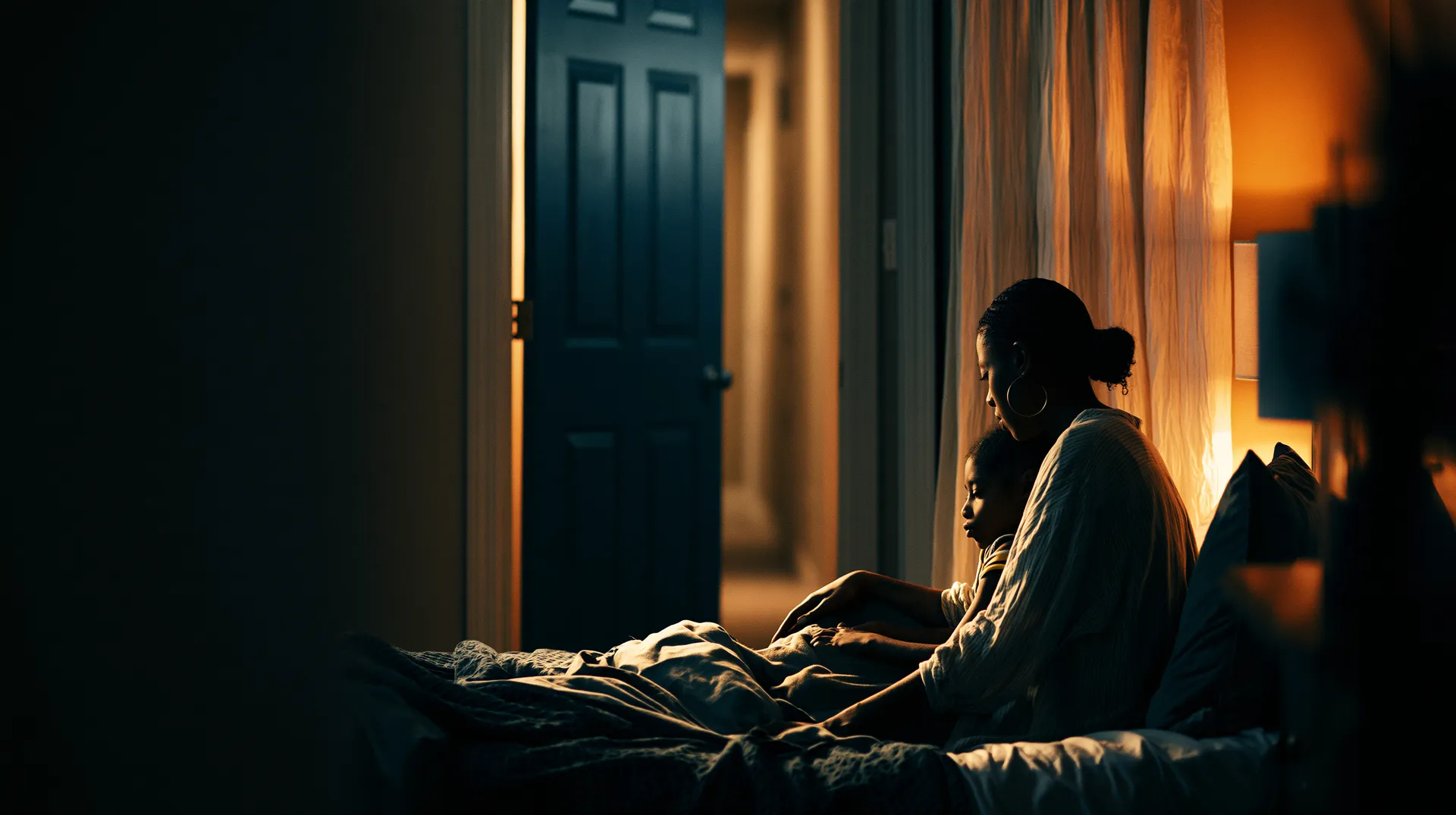
A couple of hours after falling asleep, he bolts upright screaming, eyes open, sweaty, agitated. You call him, no answer: he seems awake but doesn't see you, doesn't recognize you, and all you do to calm him seems to make it worse.

What it stirs up inside you

Seeing him like this is terrifying: he looks possessed, he doesn't connect with you, and your instinct to wake him and hug him doesn't work — it even stirs him up more. Panic appears ('is something seriously wrong?') and a horrible helplessness at not being able to console your own child. Breathe: though it looks dramatic, this is almost never dangerous. It's not a nightmare or pain: it's the brain getting tangled as it moves from one sleep phase to another. He isn't suffering the way it looks, and by morning he won't even remember it.

What might be going on

Separate the dramatic from the real. Night terrors are a phenomenon of deep sleep, different from a nightmare: they happen in the first half of the night, the child isn't really awake even with his eyes open, he doesn't respond, and the next morning he remembers nothing (with a nightmare he truly wakes up, seeks you out, and does remember the dream). It's common in preschoolers and school-age children, has a strong developmental and hereditary component, and usually disappears on its own over the years. It's triggered by whatever fragments deep sleep: extreme tiredness, a missed nap, fever, sleeping little or at odd hours, overexcitement or a lot of stress during the day. Most important: it almost always frightens the parents far more than the child, who isn't living it the way you see it. Your job isn't to wake him, it's to make sure he doesn't hurt himself and to wait for it to pass.

What's better avoided

Don't try to force him awake or shake him — he's in deep sleep, and waking him abruptly disorients him more and lengthens the episode. Don't interrogate him or demand that he react: he can't, he doesn't hear you. Don't hug him tightly to 'contain' him if that stirs him up more; sometimes your touch makes it worse, and being close is enough. Don't punish or shame him in the morning for something he neither remembers nor controls. And don't recount the next day, dramatically, what happened: you'll create a fear of sleep over something he didn't even experience.
Ways in

Several — never just one

No ranking, on purpose: no two children are alike, and yours isn't even the same as yesterday. Read which one fits your home, today — or combine them.

The door of waiting while you watch over him, without waking him

During the episode, the most effective thing is usually the hardest: not waking him. Stay close with a low voice, move away anything that could hurt him, make sure he doesn't fall or bump himself, and let the episode run its course — it usually lasts from a few minutes to a little while and ends on its own, with him going back to deep sleep. 'I'm here, you're safe', said calmly, more for you than for him. Your stillness is the care.

When it fits: Always, during the episode. The golden rule: protect and accompany without forcing the waking.

The door of tending the underlying sleep

Since they're triggered by disturbed deep sleep, the best prevention is orderly rest: putting him to bed before he reaches exhaustion, keeping naps if he still needs them, regular schedules, and a calm last hour with no screens or overexcitement. A less exhausted child has fewer episodes. It's no guarantee, but it moves the needle more than anything you do during the episode.

When it fits: Between episodes, as an underlying strategy. Key if the terrors coincide with stretches of great tiredness or changes in routine.

The door of the calm of the house

Lower your own alarm and that of the rest of the house: it's terrifying to watch, but knowing what it is takes the drama out. Explain to your partner, the grandparents, or whoever cares for him what to do (don't wake him, just watch over him). And don't pass your fright on to the child the next day. Having the whole house understand the phenomenon keeps a benign episode from becoming an anxiety problem for everyone.

When it fits: For the whole family, especially if the episodes repeat and are straining the atmosphere or the adults' sleep.

The timing

During the episode there's no conversation possible — it's pure silent care. Prevention (sleep, schedules) is worked on by day and with consistency. If you notice the terrors happen at a fairly fixed time, some parents try a gentle, brief waking about twenty minutes before that time to 'reset' the cycle; do it only if the pattern is clear and with guidance. Align with whoever parents alongside you so everyone responds the same, and be patient: this is one of those things time almost always resolves on its own.

When to seek professional hands

Night terrors are usually benign and disappear with age, needing nothing more than care and good sleep. It's worth consulting the pediatrician or a sleep specialist if the episodes are very frequent (several a week over a long time), if they last a long time, if they appear or intensify abruptly in an older child or in the second half of the night, if they come with rhythmic movements, stiffness, or strangeness that make you doubt it's something else, if he hurts himself during them, or if they're affecting his rest and his day. It's also worth looking at if they coincide with strong stress or a big change worth attending to. This is peer commentary, not clinical advice: when in doubt, an early consultation with the pediatrician reassures and rules out the uncommon.

Everything in this house is peer commentary and suggestion — it does not replace professional help. It's every mother's and every father's responsibility to notice the situation and to seek it when it can serve. If you need a number, check the directory of helplines by country. The full disclaimer, here.

From the library

Want more perspectives on this situation? Ask the panel — six at once — or talk with a voice from the table.