This Monday, July 27 · 7 PM — Parents’ meetup in Santo Domingo Free registration →
beta · situation in draft — peer commentary, not professional advice
Situations

She doesn't want to sleep alone

everyday situation 3–56–9

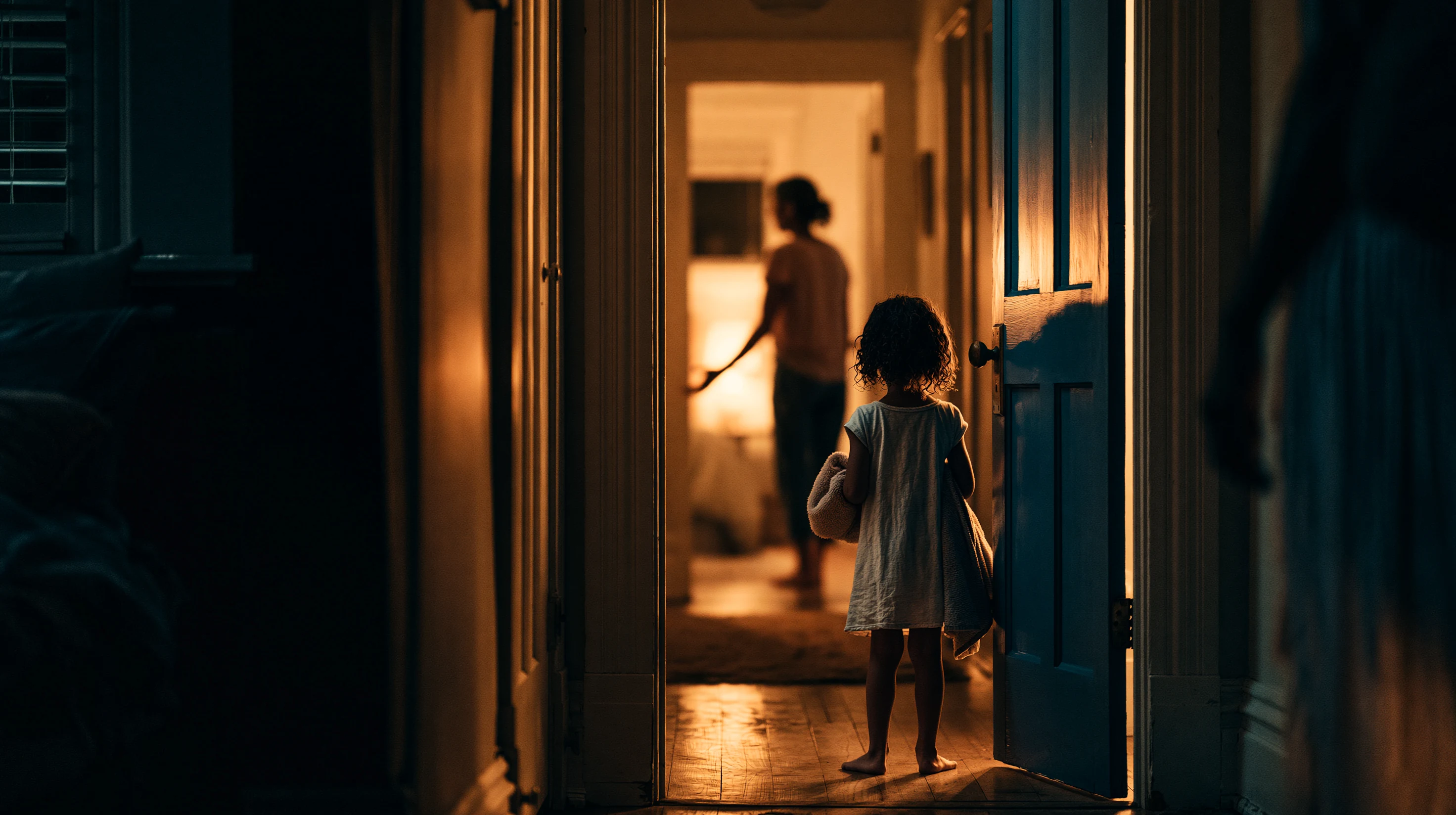
You've put her to bed, read to her, given her water. And ten minutes later she appears again at your door: 'I can't sleep alone'. Your seven-year-old asks it every night, and every night you waver between giving in and holding firm.

What it stirs up inside you

The classic end-of-day mix fires: tenderness at her little face in the doorway, the tiredness of someone with no more night left to give, and a nagging doubt ('am I spoiling her or abandoning her?'). Sometimes the guilt of secretly enjoying that she seeks you slips in, or the reproach at the other adult for 'how we got her used to this'. Name it inside: tonight's decision shouldn't be made by your exhaustion or your guilt, but by what really helps her learn that she can.

What might be going on

That a child prefers not to sleep alone is among the most common and expected things — the night is separation, and separation is hard; it's not a whim or a parenting failure. Before deciding, read what the request is made of with the house forecast in hand: is it fear (of the dark, of a dream, of being without you), is it habit (she always fell asleep with company and learned that's how it is), or is it a streak tied to a change (a move, a new school, a sibling, tension she picks up)? The answer changes the door. Families weigh in too: there are homes where co-sleeping is a valid cultural choice and not a problem to solve — the topic is only a topic if it's weighing on someone in the house. At 3-5 the need for company is very high and normal; at 6-9 she can learn to sleep alone in stretches, with accompaniment and without rushing.

What's better avoided

Don't resolve out of exhaustion what you didn't decide calmly: taking her into your bed at eleven because you can't anymore is fine on a hard night, but made the default out of tiredness it teaches her that insisting works. Don't do the opposite either — closing the door and 'let her cry' all at once doesn't teach her to sleep alone, it teaches her that when she's afraid you don't come. Don't shame her ('you're too big for this') or compare her with siblings or cousins: shame doesn't give courage, it takes it away. And don't change the plan every night according to your mood: the inconsistency between the two adults, or from one day to the next, is what most lengthens the process.
Ways in

Several — never just one

No ranking, on purpose: no two children are alike, and yours isn't even the same as yesterday. Read which one fits your home, today — or combine them.

The door of accompaniment that withdraws bit by bit

Sleeping alone is learned by steps, not in one leap. You start where she is (sitting beside her) and every few nights you withdraw a little: the chair farther, then by the door, then peeking in. She conquers her own sleep at a pace she can sustain. Each stretch is named ('you did it') so the evidence that she can is hers, not yours.

When it fits: The default door from 4 to 9 when the goal is autonomy without rupture. Requires both adults to follow the same plan.

The door of her own tools

If behind the request there's fear, the way out isn't your presence but giving her resources to hold herself alone: a guardian flashlight (see The flashlight of fears), a stuffed animal on guard, a dim light, the calm jar, an object of yours that 'watches over' the room. Company stops depending on your body and becomes something she controls.

When it fits: When the 'I can't alone' is really 'I'm afraid'. Combine it with the step-by-step withdrawal.

The door of the ritual and the clear walk-back

A stable, predictable closing routine lowers the anxiety of separation, and a kind, consistent rule for when she reappears ('I walk you back to your bed, no drama and no argument') gives her safe edges. The calm walk-back, repeated calmly, teaches more than any sermon — with no reward for coming and no punishment for doing it.

When it fits: When habit, more than fear, is the engine: nighttime visits to your room turned into a habit.

The door of looking at whether something changed

If it started suddenly in a girl who did sleep alone, the question isn't how to return her to her bed but what shifted: a change at home, something at school, a scare, a tension she picks up. Here you accompany by day —more channel, more time alone together— before treating the night, because the nighttime request may be the symptom and not the topic.

When it fits: Clear regression (she slept alone and stopped) or coincidence with a recent change or tension.

The timing

The night is for holding, not for negotiating new rules or giving lessons — any plan is explained and agreed by day, with her and between the two adults, so nothing is improvised at ten. Choose the window with the forecast: routine changes hold better starting in a calm week, not mid-move or mid-exam. And give yourself weeks, not days: letting go of sleeping with company is a process with advances and relapses, and one hard night doesn't erase what's been learned. Your own window counts: if you come in exhausted, taking turns with the other adult is part of the plan.

When to seek professional hands

Preferring company to sleep is normal and resolves at home with patience; it doesn't ask for professionals on its own. It's worth looking more closely if the resistance to sleeping alone is intense and doesn't ease over many weeks despite accompaniment, if it comes with a separation anxiety that also shows up by day (you can't leave her at school, she follows you around the house, panic when you go), if sleep is so disrupted that the day suffers (exhaustion, irritability, low mood), or if it started suddenly after a strong event and doesn't improve. What we offer here is peer commentary, not professional advice: telling the expected preference apart from an anxiety that's already interfering with life is our responsibility as parents, and consulting it early with the pediatrician or counseling isn't overreacting — it's caring for her in time.

Everything in this house is peer commentary and suggestion — it does not replace professional help. It's every mother's and every father's responsibility to notice the situation and to seek it when it can serve. If you need a number, check the directory of helplines by country. The full disclaimer, here.

From the library

Want more perspectives on this situation? Ask the panel — six at once — or talk with a voice from the table.