It was a crash, a dog that lunged at him, an earthquake, a moment lost in a crowd. The danger passed, but your son is different now: he jumps at any noise, won't sleep alone, and keeps retelling it.
The scare was yours too. Relief that he's safe wrestles with the after-fear of what could have happened, and with the guilt — fair or not — of whether you could have prevented it. You may be tempted to turn the page fast so you don't relive it yourself, or the opposite, to over-protect so it never happens again. Name your own part inside: if your scare is still raw, he reads it in your face and your voice, and your steadiness is part of his medicine today. You don't have to be made of steel — but present and firm.
After a real scare, a child staying rattled for a few days isn't a failure: it's a normal reaction to something that truly frightened, and the brain needs to process it. Retelling the story, sleeping worse, being clingier or jumpier for a while is within what's expected in the first weeks. What matters is reading the trajectory: what's expected slowly improves; what worries stays the same or worsens over the weeks. Read the context with the forecast in hand too: a child already tired or carrying other tensions processes a scare worse. And weigh the age: at 3-5 the fear slips into play and into the night and can't be put into words; at 6-9 he narrates and asks ('will it happen to me again?'); at 10-12 he may play it down on the outside and drag it around on the inside. That he saw the danger pass doesn't mean he's processed it.
Don't force him to 'get over it now' or demand he go straight back to what scared him (get in the car, near the dog) as if nothing happened — meeting the fear again is done in stretches, not by shoving. Don't forbid him from talking about it so you don't relive it: he needs to tell it as many times as he needs, and bottling it up leaves him alone with it. Nor fall into the other extreme — don't turn his life into a bubble where the whole world is dangerous, because that teaches him to fear everything, not just what happened. Don't minimize what he felt ('it wasn't that bad, it's over') and don't pass on your own panic if the scare still has hold of you. And don't let him learn from your face that you almost lost him: your fear, unfiltered, becomes his.
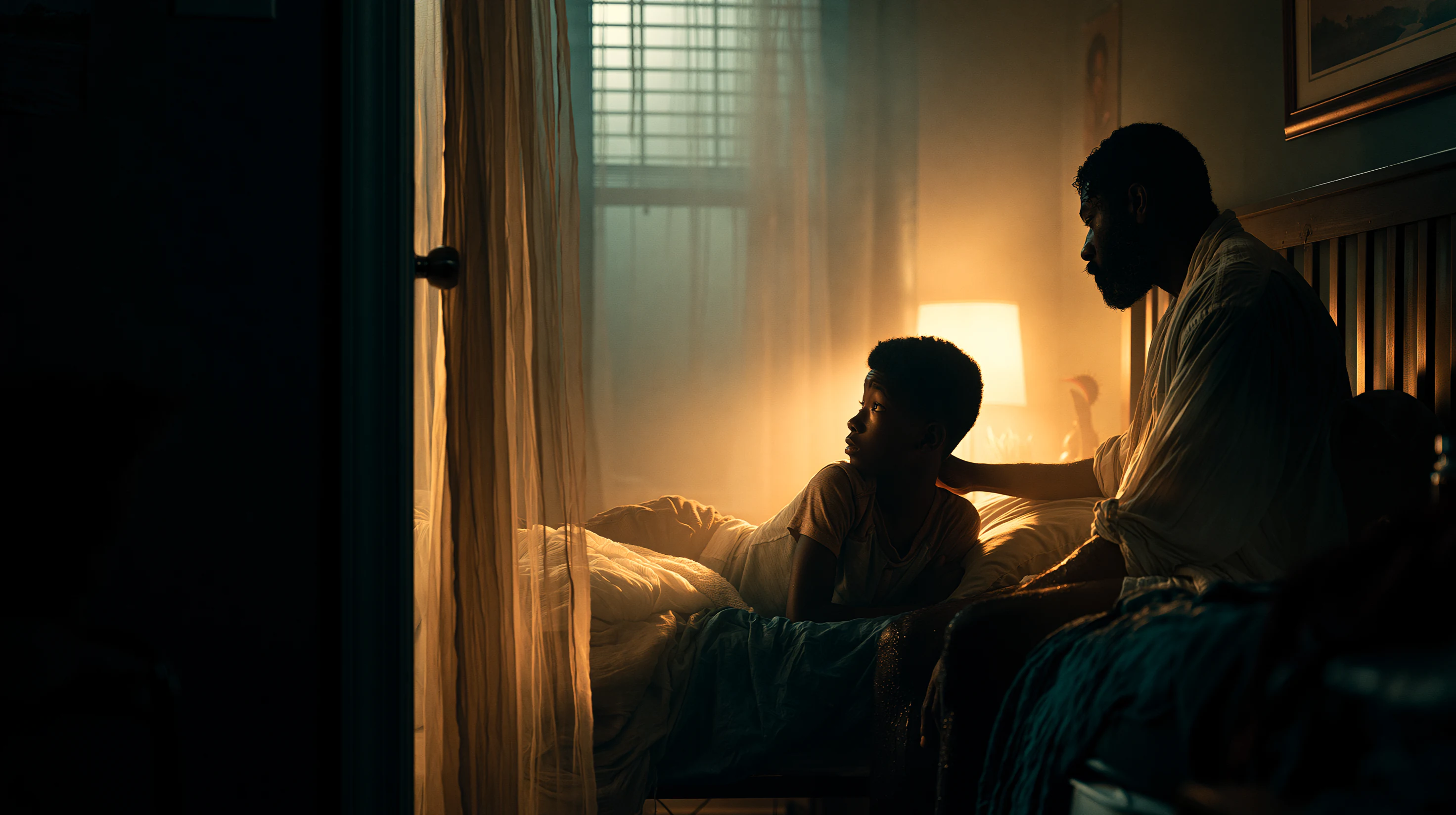
No ranking, on purpose: no two children are alike, and yours isn't even the same as yesterday. Read which one fits your home, today — or combine them.
Retelling the story isn't being stuck — it's how the brain digests what frightened. Your job is to be the witness who never tires: listening again, without dramatizing and without rushing the ending, helping him put into words what he felt (with The name of what I feel). Each time he tells it calmly at your side, the memory loses a little of its charge.
After the scare, what calms him most is concrete evidence that the world became predictable again: firm routines, your available presence, and clear, un-alarming answers to his underlying question ('am I safe now?'). Not impossible promises ('nothing will ever happen again'), but sustainable truths: 'I take care of you, and what happened was rare, not an everyday thing.'
If the fear left him avoiding something (the car, dogs, the street, sleeping alone), he goes back to it in steps and at his own pace, never all at once: look at the car, sit in it parked, go around the block. Each step won is named and celebrated. Avoiding completely relieves today and grows the fear tomorrow; approaching little by little, with you beside him, defuses it.
The least visible and often the most decisive: tending to your own scare so his has something to lean on. If you stay on alert, he catches it and doesn't come down. Finding your own outlet (with your partner, with someone you trust), not loading your after-fear onto him, and showing him a real calm — not faked — is part of the treatment only you can give.
The first days and weeks are for holding and patience, not for demanding normalcy — processing takes its time and isn't hurried by willpower. The return to what was feared begins when he's already somewhat calmer, in stretches and with no deadline. And there's a window worth watching: if as the weeks pass things don't improve or get worse, that's the moment to add help, not to wait longer. Tend to your own window too — an adult still in shock isn't the best support; asking for relief or support for yourself is part of caring for him.
A child being shaken after a real scare is normal, and the first weeks are accompanied at home. This topic asks for professional hands with more reason than an everyday fear, and it's best not to wait too long if signs appear that the scare isn't being processed well: symptoms that instead of easing hold on or grow after a few weeks — persistent nightmares about the event, reliving it over and over without relief, startling and a constant state of alert, intense avoidance of anything that recalls it, marked regressions (wetting the bed again, talking younger), or an emotional shutdown (he disconnects, stops enjoying). If the scare was severe, if he saw someone hurt or feared for his life or yours, or if you yourself were left so affected that holding him is hard, seeking early support is especially sensible. What we offer here is peer commentary, not medical or psychological advice: real trauma is assessed and treated by a child mental-health professional, and recognizing when a scare has stopped being something that heals on its own with time and love is our responsibility as parents — consulting it early with the pediatrician or a childhood specialist isn't overreacting, it's reading the signal in time.
Everything in this house is peer commentary and suggestion — it does not replace professional help. It's every mother's and every father's responsibility to notice the situation and to seek it when it can serve. If you need a number, check the directory of helplines by country. The full disclaimer, here.
You turn off the light and the negotiation begins: the door a little more open, water again, «stay a little while». Your…
Again, at the same hour, the crying from his room. You arrive and your son is sitting up, sweaty, telling you in pieces …
You've put her to bed, read to her, given her water. And ten minutes later she appears again at your door: 'I can't slee…
A child who can say "I'm frustrated" hits less than one who only knows how to scream. Naming emotions, day by day, hands…
A jar of water and glitter that, when you shake it, takes exactly as long to settle as a tantrum takes to pass. An ancho…
Want your son to open up emotionally? Show him how: don't answer «fine» on autopilot. If you're tired, say so — with the…